



RIYADH: Saudi designers and entrepreneurs are making bold strides in the field of artificial intelligence, helped along by training schemes, mentors and new technologies provided by some of the world’s leading tech companies.
Silicon Valley heavyweight Apple recently unveiled a new program to train students to use the latest emerging technologies, creating opportunities for Saudi Arabia’s tech-savvy workforce of the future.

The Apple Developer Academy in Riyadh is among the institutions that will implement this training. Not only is it the first in the Middle East and North Africa region — it is also the only all-female academy of its kind in the world.
“Our mission is to empower female developers in KSA and the region, with skills for the tech jobs of tomorrow,” Ohood Al-Nayel, director of the Apple Developer Academy, told Arab News.

Ohood Al-Nayel. (Supplied)
“We aim to pioneer new frontiers in education. By empowering more women to be leaders in technology, we hope Saudi Arabia can become a hub for AI research, entrepreneurship and development in the region.”
Established as part of a collaboration between Apple and Tuwaiq Academy, the scheme is currently accepting 200 learners per year for its nine-month “The Academy” program, 330 for “The Foundation” four-week program, and 50 for its second-year visionary program.
Scheduled to launch this autumn, the new custom-built core curriculum will teach students and alumni how to build, train and use machine-learning models across Apple devices.
“We have three goals,” Al-Nayel said. “The first is to teach our developers to always use and advocate for use of native tools like Xcode, Swift, and Apple frameworks, as this is important for iOS and app development.

“Our second goal is to produce local Arabic apps that apply accessibility. Our final goal is not just to teach our learners how to code, but to instill in them a passion for lifelong learning and give them the tools to drive meaningful change.
“We want our graduates to leave equipped with both strong technical skills and an innovative, entrepreneurial spirit that can transform any industry.”
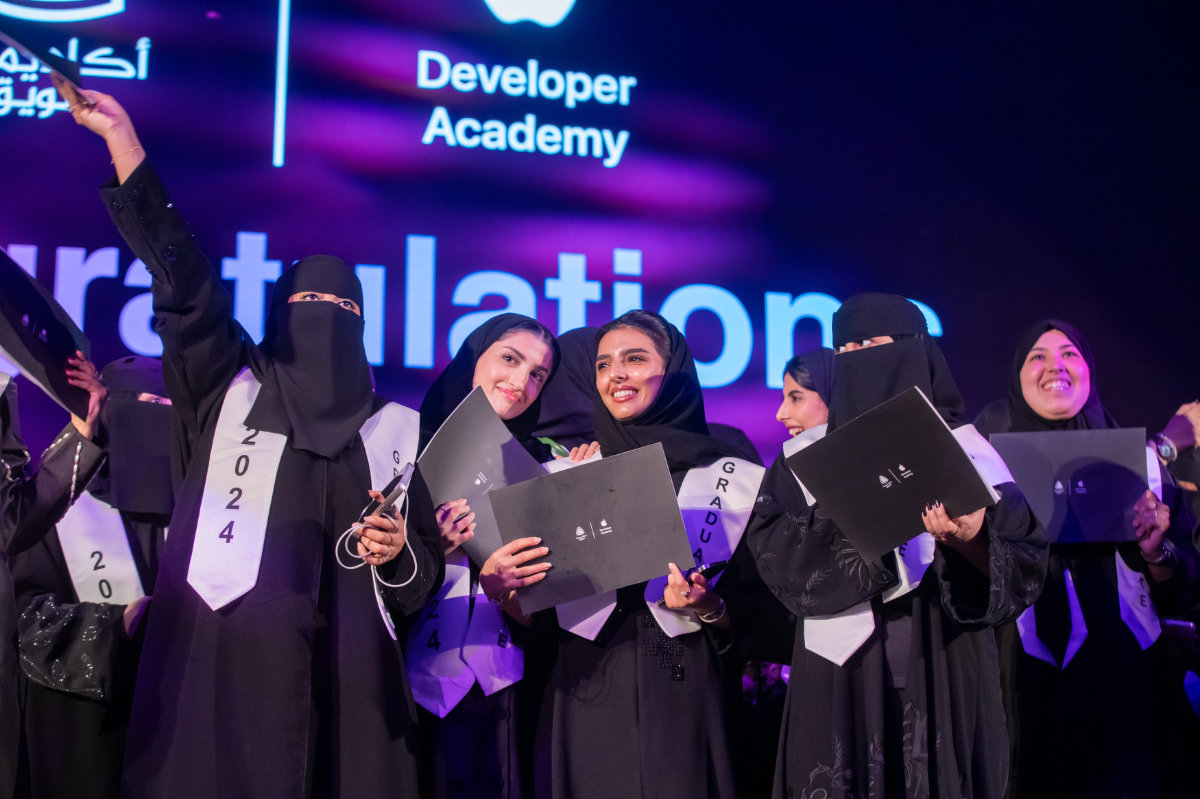
The scheme is currently accepting 200 learners per year for its nine-month “The Academy” program. (Supplied)
Courses will include the fundamentals of AI technologies and frameworks, core machine learning and its ability to deliver fast performance on Apple devices, and guidance on how to build and train AI models from the ground up.
Students will learn from a guided curriculum and project-based assignments that include assistance from hundreds of mentors and more than 12,000 academy alumni worldwide.
With a focus on AI, learners will be able to apply the latest technology to fields as diverse as healthcare, education and transport.
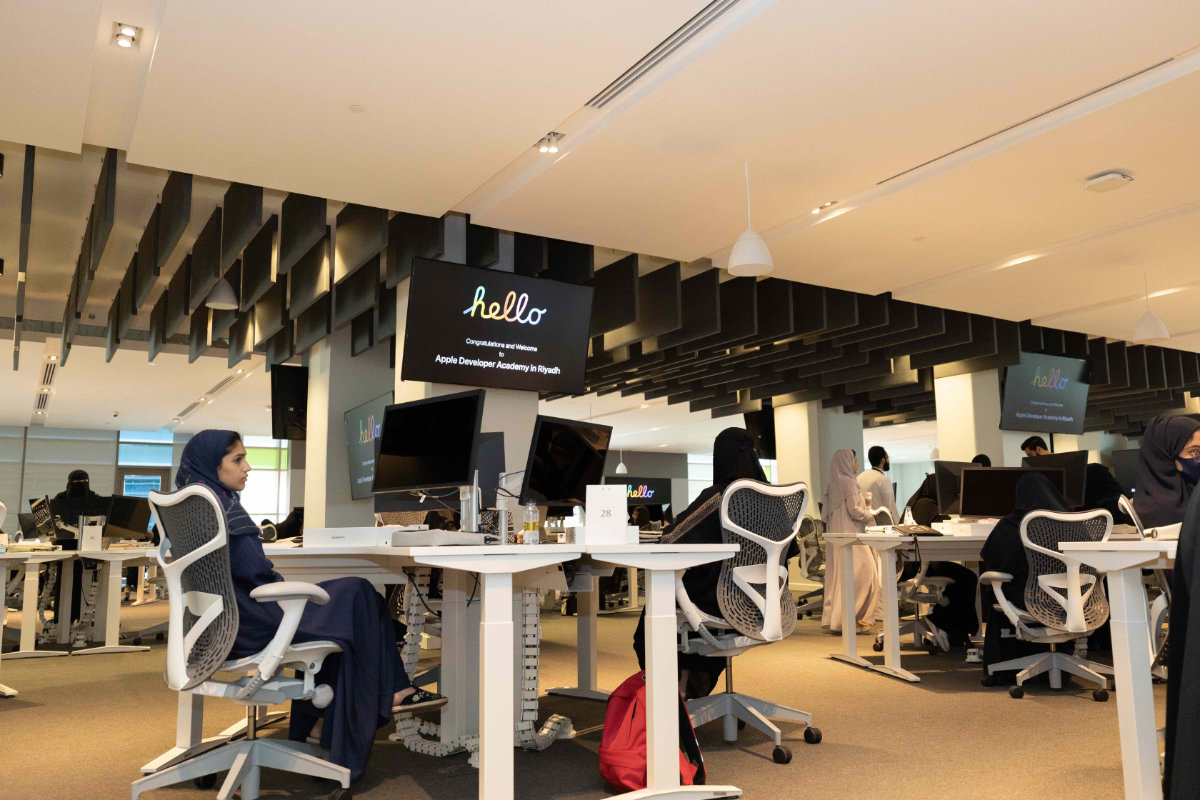
With a focus on AI, learners will be able to apply the latest technology to fields as diverse as healthcare, education and transport. (Supplied)
Although the curriculum is yet to begin, students are already incorporating AI models to innovate the app market.
One example is the “Artector” app, developed by Farah Al-Amri, Lujain Yahya, and Baynah bin Hathlin for art lovers who are visually impaired.
They found that the application programming interfaces of a current AI model contained biases and did not reflect the true nature of a given artwork. The team therefore trained their own AI model to better analyze art and describe it using a voiceover feature.
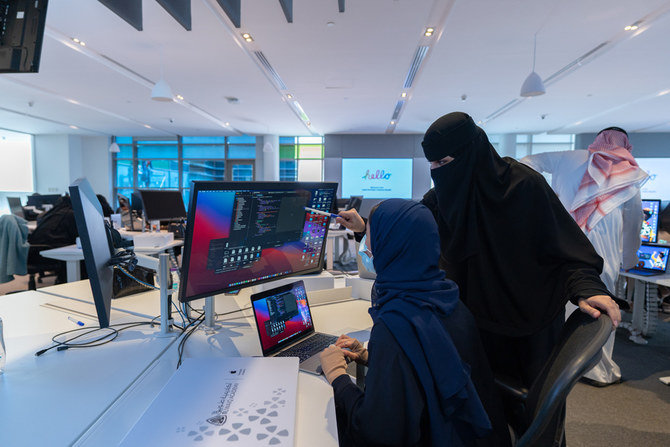
The scheme is currently accepting 200 learners per year for its nine-month “The Academy” program. (Supplied)
The app functions as a visual tour guide, Al-Nayel said, providing an accessible auditory alternative.
“Users can explore various artworks and gain insights into their historical context, artistic techniques and symbolic meanings by accessing detailed descriptions either by reading or listening,” she said.
“This app enhances the art appreciation journey, enabling users to engage with and comprehend art pieces more effectively.”
Other apps include “PiClean,” which helps students clean up their surroundings and enhance environmental awareness, and “iSpeak,” which helps people conquer their fear of public speaking and communicate more clearly.

By encouraging this kind of innovation, the academy wants students to learn important skills to contribute to local businesses and communities, and increase opportunities for developers, designers and entrepreneurs to build the growing iOS app economy.
“Our curriculum is agile and customized yearly based on feedback from regional industry leaders so learners gain skills that are applicable in the Saudi job market,” said Al-Nayel.
The latest technologies and application programming interfaces unveiled at Apple’s Worldwide Developer Conference — WWDC24 — in San Francisco earlier in June offered students access to powerful new tools.
Xcode 16, for instance, raises the bar in developer productivity. New features and performance improvements like Swift Assist streamline coding tasks and encourage students to explore new frameworks and innovate freely.
Opinion
This section contains relevant reference points, placed in (Opinion field)
Swift 6 also introduces enhancements designed to improve code clarity and simplify concurrent programming.
“At Apple, we see coding as a universal language and believe in empowering developers, creators, and entrepreneurs across the world with tools and technologies that will allow them to create phenomenal experiences,” Susan Prescott, vice president of developer relations at Apple, said in a statement.
“With the introduction of a curriculum dedicated to AI and other new technologies we introduced this week, we’re excited to see what students will build to share with their communities and the world.”
The new core curriculum will be provided to thousands of students and alumni across 18 developer academies in six countries — Saudi Arabia, Brazil, Indonesia, Italy, South Korea and the US.


