

Saudi Arabia leads Middle Eastern banking growth amid favorable conditions: Fitch

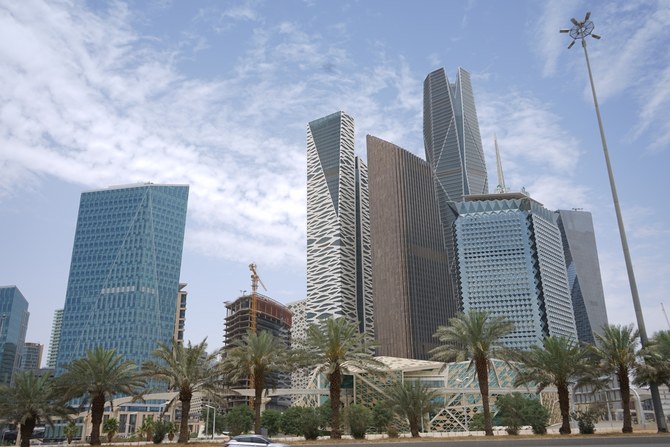
This expansion presents new business opportunities for the Kingdom’s financial institutions and heightens competition for liquidity. Shutterstock
Short Url
Updated 01 October 2024
Follow

Saudi Arabia leads Middle Eastern banking growth amid favorable conditions: Fitch

RIYADH: High oil prices and interest rates are creating favorable operating conditions for banks across the Middle East, despite regional tensions, according to Fitch Ratings.

During a recent webinar on the region’s banking sector, Fitch Ratings highlighted that in Saudi Arabia, lending growth is expected to be around double the regional average of 5-6 percent for the fiscal year 2024, driven by significant non-oil gross domestic product growth.

This expansion presents new business opportunities for the Kingdom’s financial institutions and heightens competition for liquidity.

The agency noted the Gulf Cooperation Council as a standout in the global banking landscape, adding that the region is benefiting from robust oil prices, elevated interest rates, substantial government expenditure, strong non-oil sector growth, and high investor and consumer confidence.

These factors contribute to solid business conditions and healthy financial metrics for banks in most markets.

Fitch Ratings highlighted that GCC financial institutions experienced record US dollar issuance in the first quarter of 2024, fueled by favorable pricing conditions, lending increases, refinancing needs, and strong investor demand.

However, the credit rating agency noted that regional banks are currently at the peak of their cycle. Lower hydrocarbon prices pose a risk to financial operating environments across the Middle East, and each country faces unique challenges.

In contrast to Saudi Arabia, the UAE has enjoyed stronger liquidity conditions, enhancing banks’ profitability metrics in 2023 and the first quarter of 2024, with the sector’s average net interest margin improving by 100 basis points over 2022–2023.

Qatar’s banking sector notably relies on non-domestic funding, which constituted 42 percent of total holdings at the end of the first quarter of 2024. This dependence makes Qatari banks vulnerable to external political and economic shocks, as well as shifts in investor sentiment.

In October last year, Fitch Ratings affirmed that banks in the GCC are thriving due to high oil prices, contained inflation, and rising interest rates.

It also highlighted that financial institutions in the UAE are improving, and banks in Saudi Arabia, Qatar, and the UAE are well-positioned to benefit from rising interest rates due to quick loan book repricing and substantial low-cost funding.


The Family Office to host global investment summit in Saudi Arabia

Updated 18 January 2026
Follow

The Family Office to host global investment summit in Saudi Arabia

RIYADH: The Family Office, one of the Gulf’s leading wealth management firms, will host its exclusive investment summit, “Investing Is a Sea,” from Jan. 29 to 31 on Shura Island along Saudi Arabia’s Red Sea coast.

The event comes as part of the Kingdom’s broader Vision 2030 initiative, reflecting efforts to position Saudi Arabia as a global hub for investment dialogue and strategic economic development.

The summit is designed to offer participants an immersive environment for exploring global investment trends and assessing emerging opportunities and challenges in a rapidly changing financial landscape.

Discussions will cover key themes including shifts in the global economy, the role of private markets in portfolio management, long-term investment strategies, and the transformative impact of artificial intelligence and advanced technologies on investment decision-making and risk management, according to a press release issued on Sunday.

Abdulmohsin Al-Omran, founder and CEO of The Family Office, will deliver the opening remarks, with keynote addresses from Saudi Energy Minister Prince Abdulaziz bin Salman and Prince Turki Al-Faisal, chairman of the King Faisal Center for Research and Islamic Studies.

The press release said the event reflects the firm’s commitment to institutional discipline, selective investment strategies, and long-term planning that anticipates economic cycles.

The summit will bring together prominent international and regional figures, including former UK Treasury Commercial Secretary Lord Jim O’Neill, Mohamed El-Erian, chairman of Gramercy Fund Management, Abdulrahman Al-Rashed, chairman of the editorial board at Al Arabiya, Lebanese Minister of Economy and Trade Dr. Amer Bisat, economist Nouriel Roubini of NYU Stern School of Business, Naim Yazbeck, president of Microsoft Middle East and Africa, John Pagano, CEO of Red Sea Global, Dr. Anne-Marie Imafidon, MBE, co-founder of Stemettes, SRMG CEO Jomana R. Alrashed and other leaders in finance, technology, and investment.

With offices in Bahrain, Dubai, Riyadh, and Kuwait, and through its Zurich-based sister company Petiole Asset Management AG with a presence in New York and Hong Kong, The Family Office has established a reputation for combining institutional rigor with innovative, long-term investment strategies.

The “Investing Is a Sea” summit underscores Saudi Arabia’s growing role as a global center for financial dialogue and strategic investment, reinforcing the Kingdom’s Vision 2030 objective of fostering economic diversification and sustainable development.