

Pilgrims prepare for the final stages of Hajj

1 / 7
The symbolic stoning of the devil marks the final days of Hajj pilgrimage and the start of the Eid Al-Adha celebrations for Muslims around the world. (AFP file photo)
2 / 7
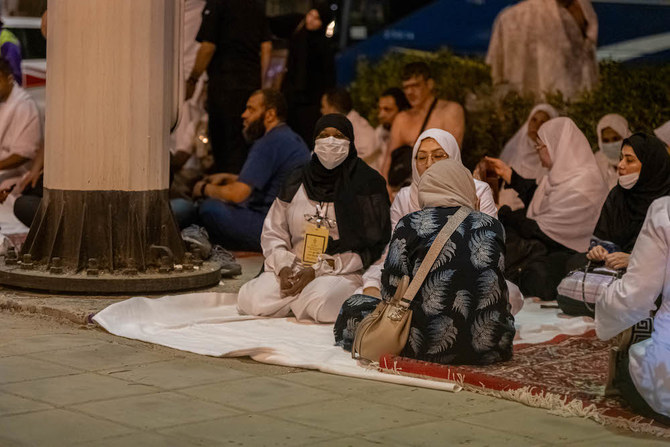
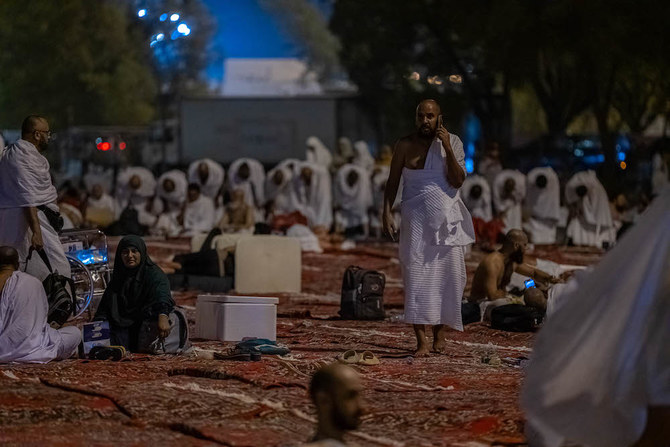
All Muslims are required to make the Hajj once in their lives if they are physically and financially able to do so. (Huda Bashatah/AN)
3 / 7
All Muslims are required to make the Hajj once in their lives if they are physically and financially able to do so. (Huda Bashatah/AN)
4 / 7
All Muslims are required to make the Hajj once in their lives if they are physically and financially able to do so. (Huda Bashatah/AN)
5 / 7
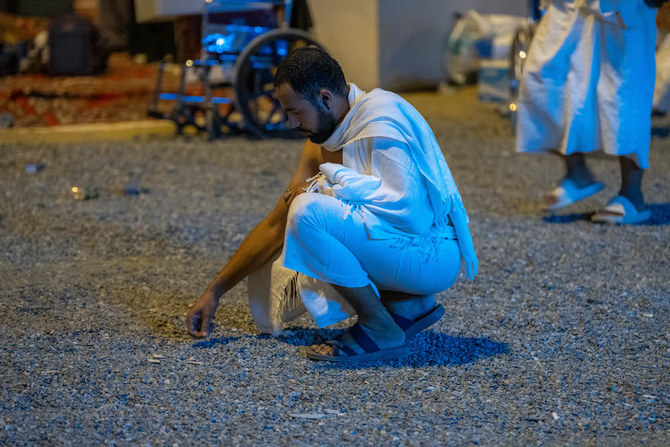
A Muslim pilgrim picks up pebbles for the symbolic stoning of the devil. (Huda Bashatah/AN)
6 / 7
Muslim pilgrims pick up pebbles for the symbolic stoning of the devil. (Huda Bashatah/AN)
7 / 7
A Muslim pilgrim picks up pebbles for the symbolic stoning of the devil. (Huda Bashatah/AN)
Short Url
Updated 16 June 2024
Follow

Pilgrims prepare for the final stages of Hajj

  • Pilgrims spent the night in Muzdalifah, under the open sky, where they took the time to rest and refresh

MAKKAH: Hajj pilgrims have begun preparing for the final stages of this year’s pilgrimage, arriving in Muzdalifah after spending the entire day performing prayers and supplications in Arafat.

After they arrived in Muzdalifah, pilgrims performed Maghrib and Isha prayers and collected pebbles for the stoning rituals at the Jamarat area in Mina, which begin Sunday morning.

These stones are used once they reach Mina, where pilgrims perform the “first throwing” of Jamarat, before heading to the Grand Mosque in Makkah for tawaf (circumambulation) and “sacrificing the lamb,” a commemoration of the sacrifice Prophet Ibrahim had intended to make of his son Ismail as an act of obedience to Allah.

Pilgrims spent the night in Muzdalifah, under the open sky, where they took the time to rest and refresh.

The first day in Mina, the 10th of Dhul Hijjah, marks the first day of Eid Al-Adha. On this day, pilgrims sacrifice animals. Male pilgrims have their heads shaved and take off their ihram clothes. Female pilgrims cut only a portion of their hair.

Hisham Thamin, an Indian pilgrim living in Qatar, told Arab News that it had been a seamless Hajj experience.

“It’s a very nice (and) very spiritual feeling. I’m enjoying the vibes here. The people here are very calm. It’s a very peaceful atmosphere.”

Thamin said that he was initially concerned about the arrangements given the heat and high numbers of people, but he was pleasantly surprised by the coordination and organization by the Saudi government.

“I’m glad the Saudi government has made very good arrangements. There’s cold water, cold juices, and breakfast boxes for everyone. They have spread out all the sheets on the sand, to make sure it’s comfortable for everyone. So I’m liking it very much. And it’s not what I expected, it’s much better than what I expected.”

Nawaf Alhabib, a Saudi pilgrim, said his experience had been “perfect.”

Alhabib planned to walk to Mina on Sunday morning before Fajr prayer.

“By 12 in the morning, we will finish from Muzdalifah and make our way towards Mina. We will rest and then perform Jamarat and it will hopefully be a beautiful day tomorrow.”

Saudi pilgrim Tawfeeq Alquraishi said he was proud of the developments and initiatives fulfilled by the Kingdom.

“The services provided to ensure a smooth Hajj experience for pilgrims is something I am so proud of as a Saudi national. This is a successful and comfortable Hajj.”

Waleed Mohammed, a pilgrim from Egypt, was grateful for being able to perform Hajj.

“This is a feeling I cannot explain. Thank God for everything,” he said. “This is an experience that everyone dreams of … everyone is happy and the organization is beyond our expectations.”


Absher Hackathon finalists highlight scale of Saudi tech talent

Updated 14 December 2025
Follow

Absher Hackathon finalists highlight scale of Saudi tech talent

  • World’s largest hackathon underscores growing national enthusiasm for tech innovation

RIYADH: Saudi Arabia’s push to position itself as a global hub for digital innovation was on display this weekend as the Absher Tuwaiq Hackathon 2025 — billed as the world’s largest hackathon — concluded with the announcement of finalist teams competing for prizes totaling SR1 million ($266,000). 

The three-day hackathon, organized by the Ministry of Interior in partnership with Tuwaiq Academy, brought together innovators from across the Kingdom to develop digital solutions aligned with the ministry’s digital transformation goals. 

The finalist teams recognized for their projects were: Shadow, Wusool, Watheeq , Tanabbah, HRS, Ikhlaa, Amal, Mustabiq, Al‑Dahna, Inspire, Saqour Al‑Watan, Thaqib, Sawt Al‑Mustaqbal, Manee, and YS Advance International. 

The finalists were announced at the end of the three-day Absher Tuwaiq Hackathon organized by the Ministry of Interior in partnership with Tuwaiq Academy. (AN photo/Supplied)

In addition to cash prizes, the competition offered SR450,000 in support from the National Technology Development Program, along with incubation opportunities at Invi Lab to help teams turn prototypes into market-ready products.   

Tariq Al‑Hamid, official spokesperson for the Absher Conference, told Arab News that the hackathon has generated strong momentum nationwide.  

This year’s event included more than 4,000 participants from all regions of the Kingdom — “a reflection of the growing national enthusiasm for digital innovation,” he said. 

HIGHLIGHT

The Absher Tuwaiq Hackathon brought together innovators from across the Kingdom to develop digital solutions aligned with the ministry’s digital transformation goals. 

According to Al‑Hamid, the 2025 event was structured around four specialized tracks: digital identity and security applications; artificial intelligence for predictive and proactive security; Internet of Things applications supporting field operations; and innovations to enhance or expand services on the Absher Platform. 

Tariq Al-Hamid (center) said that the hackathon’s impact extends beyond prize money. (Supplied)

He added that this focused approach allowed participants “to present high‑quality ideas and advanced prototypes at levels comparable to international competitions.” 

Participants also took part in more than 80 training programs delivered by global partners including Google Cloud, Meta, NVIDIA, and Huawei, an experience Al-Hamid said significantly strengthened both the competition and participants’ skills. 

Al-Hamid said that the hackathon’s impact extends beyond prize money. “More important than the cash reward is the opportunity to turn creative ideas into real products that make an impact on citizens, residents, and visitors.” 

Standout participants often attract the attention of leading national technology companies seeking new talent, he added. 

Participation was open to individuals and teams from across Saudi Arabia, from high school students to industry professionals, highlighting the inclusivity of the event and the breadth of the Kingdom’s innovation ecosystem.  

The hackathon forms part of the wider Absher Tuwaiq initiative, a core pillar of the upcoming Absher Conference 2025, which will empower more than 100,000 participants across seven technical tracks in 16 cities, in partnership with 20 local and international organizations. 

The conference, organized by the Ministry of Interior and Tuwaiq Academy, sponsored by Elm Company and held in strategic partnership with the Saudi Data and Artificial Intelligence Authority, will take place in Riyadh from Dec. 17 -19. 

The event will showcase national digital innovations and reinforce Saudi Arabia’s role in global technology.