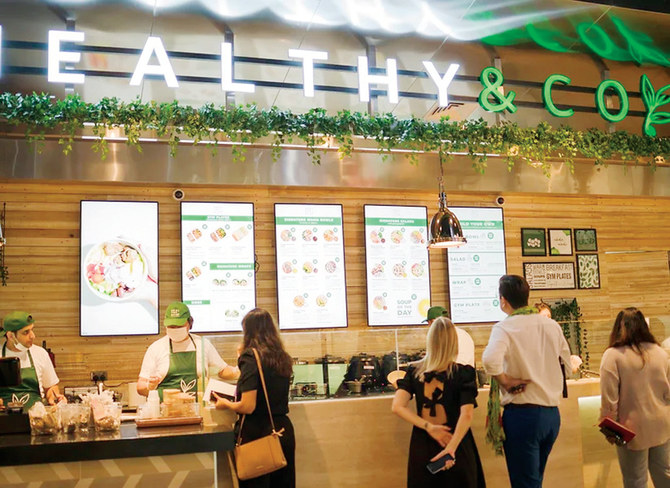

CAIRO: Saudi Arabia’s food and beverage sector is attracting interest from new businesses at home and abroad, and startup Epik Foods is one of those eying significant expansion in the burgeoning market.
Founded in 2017, the company now operates over 100 brands and 50 locations across the UAE, Saudi Arabia, and Oman.
The UAE-based firm has emerged as a dynamic and multifaceted F&B group, operating virtual brands, dine-in restaurant concepts, meal plan services, and catering services.
In an interview with Arab News, Epik Foods CEO and co-founder Khaled Fadly shared the company’s strategy for acquiring a 20 percent share of the Kingdom’s market.
A strategic Kingdom
Epik Foods has outlined clear objectives for its operations in Saudi Arabia, with Fadly saying the company’s immediate goal is to lay the groundwork for sustained growth and success in the Kingdom.
“Through strategic initiatives, strong partnerships, and a relentless focus on quality and innovation, we aim to carve out a significant presence and become a household name synonymous with exceptional dining experiences,” he said.
“We are committed to establishing a solid foundation that will support our long-term objectives and ensure our continued success in the region,” he added.
Looking ahead, Epik Foods has an ambitious vision for its influence in the Saudi market.
“We aspire to influence the sector by continually innovating, adapting, and setting industry standards,” Fadly said.
The company’s goal is to exceed its customer expectations through culinary experiences, sustainable practices, and community engagement initiatives.
“Over the next five years, we aim to capture at least 20 percent of the healthy fast-casual dining market share in major cities like Riyadh, Jeddah, and Dammam, while also expanding our virtual brand presence to cater to the growing online delivery segment. Through these efforts, we envision reshaping the landscape of the Saudi F&B market,” he said.
Fadly elaborated on the company’s expansion strategy, stating that the expansion strategy in Saudi Arabia is multifaceted, focusing on establishing a strong presence, both physical and virtual.
“Over the next two years, we plan to open 20 dine-in restaurants in key locations such as Riyadh, Jeddah, and Dhahran for our flagship brands,” he stated.
“Additionally, we’re launching multiple virtual brands covering diverse cuisines, including Arabic, Indian, Asian, burgers, fried chicken, and desserts which will be available exclusively for delivery through platforms like Jayez and HungerStation,” he added.
Furthermore, Epik Foods is establishing partnerships with prominent gym institutions to operate Healthy & Co. kiosks within their facilities.
These kiosks will provide convenient and nutritious post-workout meals, catering to health-conscious individuals and expanding the company’s reach into new customer segments, Fadly explained.
Fadly confirmed that his company is “actively seeking opportunities” to collaborate with Saudi governmental bodies, adding: “We aim to work closely with the Saudi Food and Drug Authority to ensure compliance with local regulations and standards. Additionally, we are eager to participate in initiatives like the Saudi Vision 2030’s Quality of Life Program, which aims to promote healthier lifestyles and dining options.”

Through strategic initiatives, strong partnerships, and a relentless focus on quality and innovation, we aim to carve out a significant presence and become a household name synonymous with exceptional dining experiences.
Khaled Fadly, Epik Foods CEO and co-founder
Epik Foods has set ambitious growth objectives for the next year, aiming to open five new dine-in restaurants, achieve a 30 percent increase in online delivery sales, and secure partnerships with at least three major gym chains for its Healthy & Co. and Prep & Co. brands.
“In the Saudi market, we aim to achieve significant milestones including a projected 60 percent increase in revenue, doubling our dine-in restaurant footprint, and establishing ourselves as a recognized leader in healthy dining options,” stated Fadly.
Fadly also shared news about new products tailored for the Saudi market. “We’re excited to launch our Daily Meal Kits featuring pre-packaged meals inspired by both traditional Saudi cuisine and international favorites,” he said.
“The Saudi market plays a pivotal role in Epik Foods’ expansion strategy for several reasons. With its large and growing population, strong economy, and increasing demand for diverse culinary experiences, Saudi Arabia presents a significant opportunity for growth,” Fadly stated.
“By establishing a strong foothold in Saudi Arabia, we can leverage our success to further penetrate neighboring markets and enhance our international brand recognition and reputation. Thus, the Saudi market serves as a cornerstone in our strategic roadmap for sustainable expansion and long-term success,” he added.
“We prioritize maintaining open communication channels with relevant authorities, regularly updating our policies and procedures to align with new regulations, and investing in employee training and development to ensure awareness and compliance at all levels of our organization,” Fadly explained.
Additionally, the company leverages technology to streamline regulatory processes and minimize compliance risks.
“We actively participate in industry associations and forums to stay informed and contribute to shaping future regulations, demonstrating our commitment to responsible business practices and regulatory compliance in Saudi Arabia,” he added.
Business fundamentals
“Throughout our journey within the Saudi Arabian market so far, we’ve encountered various challenges that demanded our attention and strategic maneuvering,” stated Fadly.
These challenges include navigating the intricate regulatory framework, tailoring offerings to resonate with the distinct Saudi culinary palate, efficiently tackling logistical complexities in supply chain and workforce management, and carving a distinctive identity amidst a bustling landscape of local and global competitors.
“To tackle these obstacles, we’ve embraced a holistic approach rooted in cultural insights, agile adaptability, and a commitment to delivering quality and innovation,” he added.
“At Epik Foods, our business model is a fusion of various services tailored to meet the evolving needs of today’s consumers,” Fadly explained.
The company operates a diverse portfolio comprising dine-in restaurants, innovative virtual brands, corporate catering services, personalized meal plans, and convenient meal kits.
“While each avenue contributes to our revenue, the primary sources stem from our dynamic virtual brands and bustling dine-in restaurants,” he added.
“We are proud to share that our company has achieved profitability at the country level,” Fadly revealed.
“We are excited about this achievement and remain focused on further growth and success in the future,” he added.
An Epik inception
“The motivation behind founding our company stemmed from a desire to bring something new and innovative to the F&B market in Dubai,” Fadly recalled.
In 2017, Fadly and his current co-founder Ranya Basyuni, both transitioning from corporate roles, identified a significant gap in the market, the absence of poke restaurants.
This realization led to the opening of their first poke restaurant, marking the beginning of their journey in the F&B sector.
The COVID-19 pandemic in 2020 presented unprecedented challenges, compelling Epik Foods to adapt its business model.
“This period of adversity prompted us to pivot towards virtual brands, a strategy that not only allowed us to sustain our operations but also to explore new culinary avenues,” Fadly explained.
The formation of Epik Foods was a strategic move to consolidate their ventures, merging the operations of Happy Platters Kitchen and Sweetheart Kitchen with KR&CO.
“As we continue to evolve, we are looking forward to announcing the launch of Epik Catering, our catering service, to further expand our culinary footprint and cater to the diverse needs of our clientele,” he added.
“At Epik Foods, we measure success through a multifaceted approach, relying on key performance indicators such as customer satisfaction scores, revenue growth, and the expansion of market share,” Fadly noted.
The company is also committed to customer retention and operational excellence, which relies on prioritizing adaptability to local nuances and swiftly responding to evolving consumer preferences.
“Our top metrics include an analysis of customer feedback and local market penetration,” he added.
“We have raised a significant amount of funding, which we are strategically utilizing to expand our presence in Saudi Arabia,” Fadly shared.
Specifically, these resources are being channeled towards opening more than 20 physical dine-in restaurants within the next two years.
“This investment underscores our commitment to growth and delivering exceptional dining experiences to our valued customers,” he added.
“Yes, we are actively exploring opportunities to secure additional funding to support our expansion plans,” Fadly confirmed.
The focus is on enhancing infrastructure, scaling up operations, and entering new markets within Saudi Arabia.
“Securing additional funds will enable us to accelerate our growth trajectory and better serve our customers in the region,” he said.
He further shared the company’s current objectives that extend beyond financial metrics.
“With Saudi Arabia’s vast population and diverse culture, we anticipate becoming integral to their lives and attracting even more customers,” he said.
“The expansion potential in Saudi Arabia is immense, surpassing that of the UAE, and our success will serve as a regional springboard, enabling us to leverage synergies across neighboring countries,” Fadly elaborated.