



RIYADH: Climate change poses a significant threat to agriculture, with serious implications for food security, livelihoods and access to water. That is why Saudi Arabia is adopting a range of innovative and sustainable farming practices.
As summer temperatures become more intense around the world, crop yields are dwindling and water scarcity mounting, raising the specter of food insecurity in some regions and higher prices on domestic and global markets.
Agriculture is also a major contributor to greenhouse gas emissions. About 24 percent of human-induced emissions are the result of agriculture, forestry and land use activities, according to the Intergovernmental Panel on Climate Change.
Opinion
This section contains relevant reference points, placed in (Opinion field)
To limit the environmental harm caused by farming while also adapting crop production to hotter, drier conditions, governments and businesses worldwide are adopting new technologies, methods and practices in pursuit of sustainable agriculture.
According to the Food and Agriculture Organization of the UN, strategies for agriculture and forestry, unlike in other sectors, can simultaneously increase adaptive capacity and mitigate climate change if implemented sustainably.

Sustainable agriculture refers to methods and practices that preserve the environment, protect natural resources, ensure the security of food supply chains and provide sufficient returns for farmers.
Saudi Arabia has established several sustainable agriculture initiatives, including efforts to promote the use of treated water for irrigation and the adoption of soilless farming techniques — measures designed to meet the needs of a changing demographic.
By 2045, the world’s urban population is projected to increase by 1.5 times to 6 billion, according to the World Bank. With many more people leaving rural areas in search of opportunities in the cities, the way food is produced and distributed requires a rethink.
That is why Saudi Arabia is exploring the use of urban farming technology, including vertical farming or soilless culture, as a potential solution.
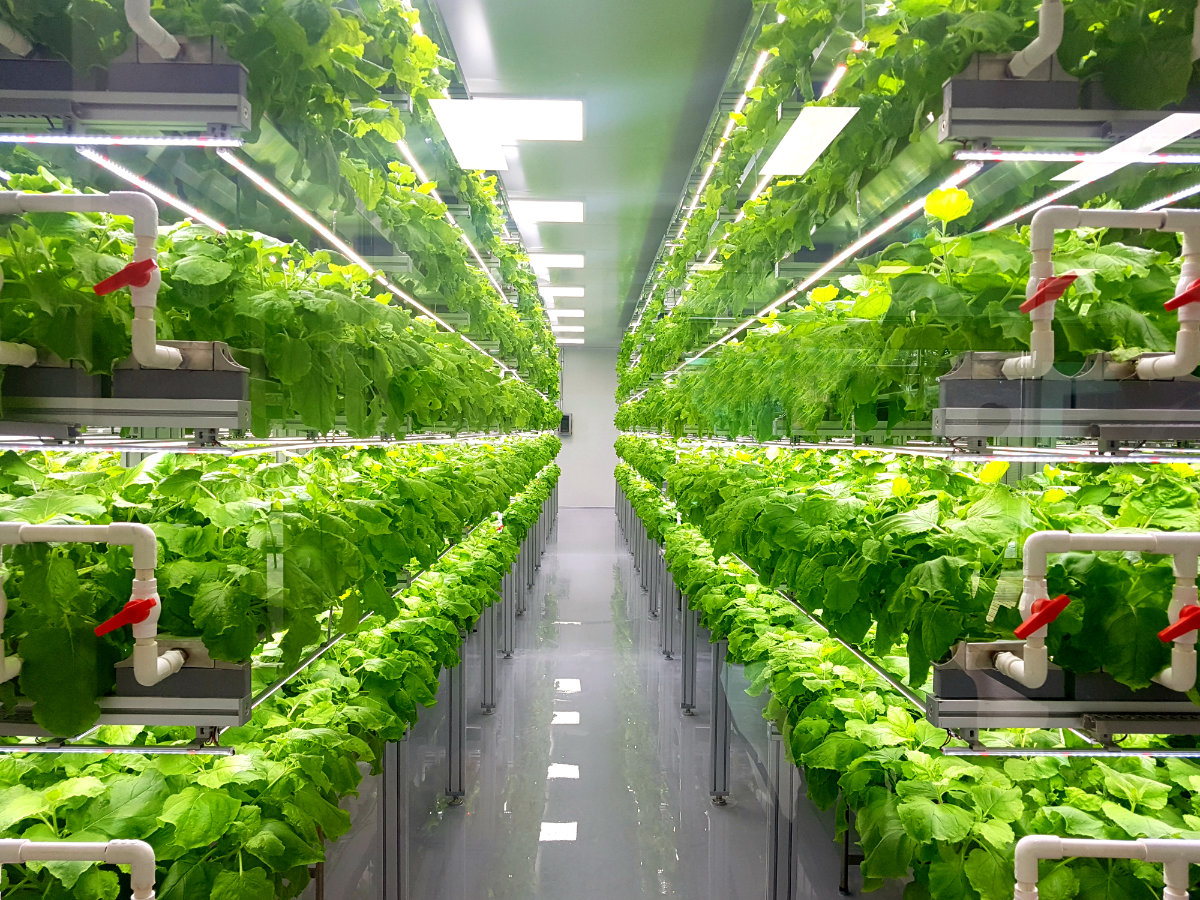
Vertical farming addresses the challenges of limited land availability, seasonality of crops, and a growing global population. (Shutterstock)
Vertical or soilless farming refers to a method of growing plants without the use of soil, whereby nutrients are delivered to the roots through water — a process also known as hydroponics.
Soilless plants utilize drip or mist irrigation techniques, enabling a more controlled dispensation of water, preventing water wastage. This technique saves 98 percent more water than traditional farming, according to the World Economic Forum.
Areas struggling with water scarcity, poor soil fertility, salinity, or sodicity could benefit from this method, not only to conserve water and reduce pesticide usage, but also to allow for year-round crop production.
The National Research and Development Center for Sustainable Agriculture, or Estidamah, is a standalone legal not-for-profit research center based in Saudi Arabia. Its vertical farming program aims to optimize crop production — mainly leafy vegetables and strawberries.
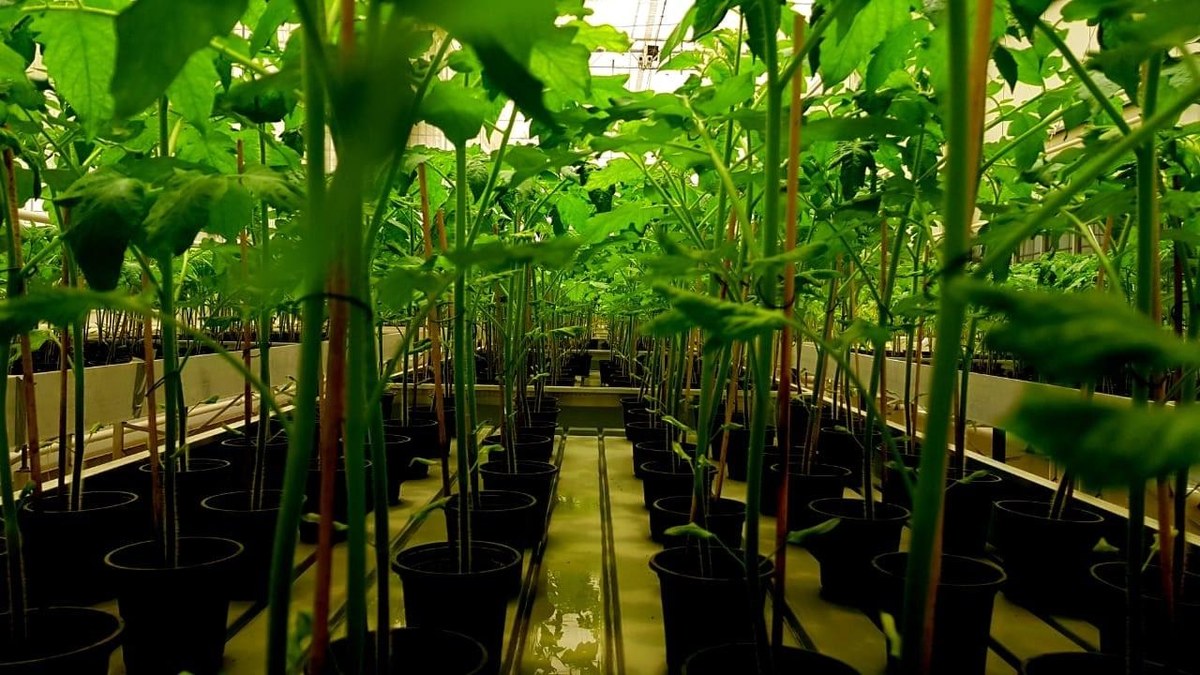
The National Research and Development Center for Sustainable Agriculture, or Estidamah, has been producing high-yield tomatoes at its greenhouses. (Estidamah photo)
To bolster this initiative, the Ministry of Environment, Water, and Agriculture set aside SR100 million ($27 million). In 2021, scientists from Estidamah and Wageningen University in The Netherlands managed to cultivate Estavana variety strawberries in a greenhouse in Riyadh.
The resulting strawberry yield, and that of two other varieties, was considerably greater than that of local farmers, demonstrating the technology’s immense potential.
However, Saudi Arabia’s commitment to sustainable agriculture is perhaps best demonstrated by the methods and practices used at Wadi Bin Hashbal — a mega farm situated in the mountainous southwestern Asir region.
“This farm is the largest sustainable research demonstration or experimental farm in the world, with an area exceeding 3.2 million square meters, as is recognized by the Guinness World Records,” Ahmed Al-Mujthal, director-general of the Ministry of Environment and Water’s Asir branch, told Arab News.
One of the most impressive features of the farm is its use of treated water to irrigate crops. “The treated water is divided into municipal and industrial wastewater, with each type requiring specific treatment plants,” said Al-Mujthal.
DID YOUKNOW?
• Saudi Arabia exports wheat, dates, dairy products, eggs, fish, poultry, fruits, vegetables and even flowers.
• Wadi bin Hashbal’s sustainable farm is recognized by Guinness World Records as the largest in the world using treated water to irrigate crops.
• Urban farming and treating wastewater for irrigation are some of the sustainable agricultural practices adopted by Saudi Arabia.
The primary treatment phase removes large particles and oils, the secondary treatment phase involves aerobic bacteria, and the tertiary treatment uses filters to remove remaining pollutants and odors.
“Chlorination is done to eliminate microbes and treated water is suitable for all uses except direct human consumption,” said Al-Mujthal. “The amount of water produced from the treatment plants in the Asir region exceeds 240,000 cubic meters per day.”
The treated water is then transported across the region to where it is needed. “There are four main treated water plants in the Asir region, all of which rely on the triple treatment method and are completely suitable for irrigating all crops,” Al-Mujthal added.
Wadi Bin Hashbal has about 16,000 trees yielding eight varieties of seasonal fruit, in addition to 2,400 non-fruiting local trees and a field designated for growing fodder and raising livestock. It also contains five protected, air-conditioned farms designated for research.
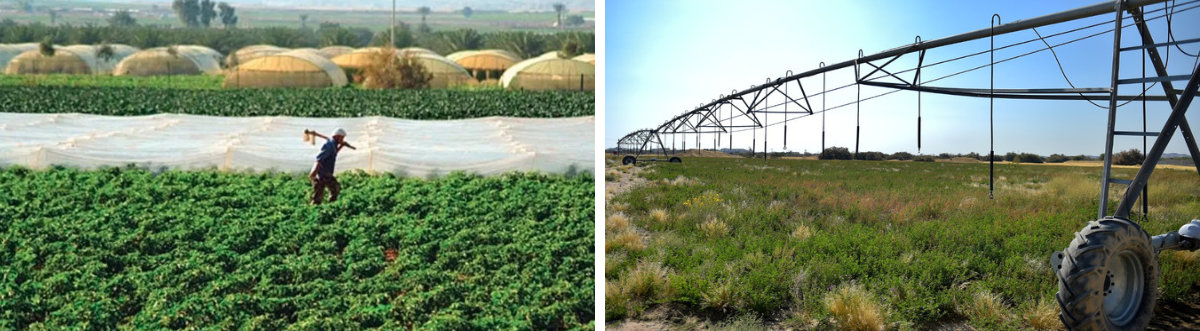
The success of the Kingdom’s sustainable agriculture projects bodes well for climate-vulnerable nations around the globe. (Supplied photos/File)
“More importantly is monitoring the quality of water and soil that is carried out on the farm by constantly taking samples and analyzing them in specialized laboratories accredited by the ministry,” said Al-Mujthal.
This is in addition to measuring the temperature and humidity in the soil, and the amount of rain and wind speed on the site through the climate station established on the farm.
The Asir region was strategically chosen for the farm as it is characterized by a unique geography, the fertility of its soil and its favorable climate.
“In general, the data received from the competent authorities indicates that the average rainfall in the Asir region exceeds 300 mm per year,” said Al-Mujthal. In mountainous areas with dense vegetation, rainfall can even exceed 500 mm per year.
“Other factors include the relative abundance of surface and groundwater in addition to the presence of excellent infrastructure in the Asir region for drainage and water treatment,” Al-Mujthal added.
The success of the Kingdom’s sustainable agriculture projects bodes well for climate-vulnerable nations around the globe that are struggling to adapt to water scarcity and rising temperatures.
Indeed, if crops can be grown sustainably in Saudi Arabia — one of the hottest and driest places on the planet — there is hope yet for agriculture in a changing world.


