

Where We Are Going Today: Ajinet Mariam  in Riyadh

1 / 3
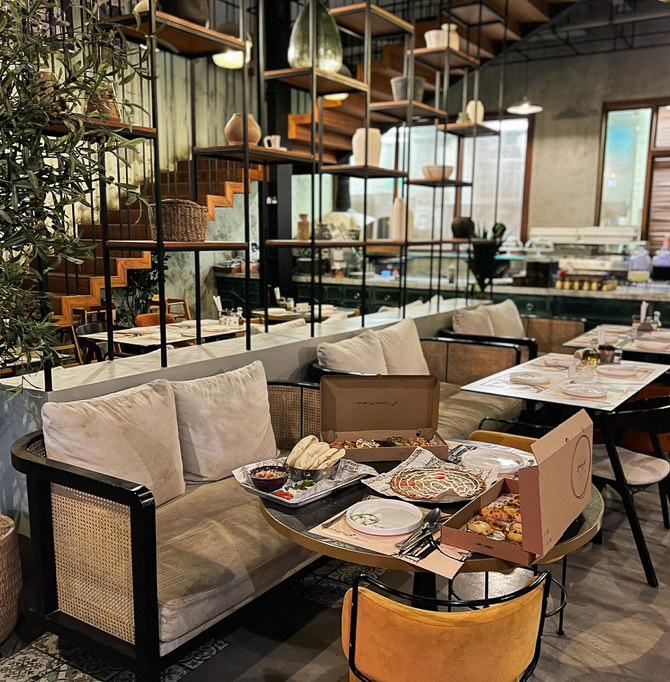
Inside Ajinet Mariam bistro. (Supplied)
2 / 3
3 / 3
Short Url
Updated 30 May 2024
Follow

Where We Are Going Today: Ajinet Mariam  in Riyadh

Ajinet Mariam is a peaceful bistro serving the best of Lebanese cuisine.

It has two branches in Saudi Arabia — in U-Walk Jeddah and Park Avenue Mall in Riyadh.  

The bakery is well-known for its delicious pies made with a special fresh dough. They have beef pesto curry served with pita bread, bakhla salad, as well as sujuk sausage mix. They also offer kofta pie with cheese and batata mahrousa, or potato pie with mozzarella cheese.    

They also serve refreshing juices such as orange and pomegranate. 

Kale salad, mixed-cheese mashrouha, kashkaval cheese mashrouha, and Mariam Moutabal are other favourites.  

They serve delicious hot mezze dishes such as manti, sujuk, and pesto ras asfour. There are plenty of vegan options at the restaurant.    

They also have kashta bel kashta, a cream-based delicacy, and karabig fingers — pistachio shortbread fingers served with a light meringue dip and topped with fine crushed pistachios and scented rose-petal jam. 

All of the branches are large, with both indoor and outdoor areas and a terrific Lebanese music vibe. Prices are reasonable. 

The restaurants are open from 6 p.m. to 1 a.m. 

You can order from the restaurant online through the Chefz app: their Instagram is @ajinetmariam.


Chef serves up a taste of Spain at Ithra Cultural Days in Saudi Arabia 

Updated 20 January 2026
Follow

Chef serves up a taste of Spain at Ithra Cultural Days in Saudi Arabia 

DHAHRAN: Among the attractions of the Ithra Cultural Days: Spain at the King Abdulaziz Center for World Culture (Ithra), visitors can try a tantalizing selection of Spanish foods — none more renowned than its famous paella. 

Arab News spoke with chef Jose Zafra at the event, which runs until Jan. 31, who flew in from Spain to offer a taste of his homeland to the people of Saudi Arabia. 

A “master rice cook, paella researcher and promoter,” according to his business card, his logo is even designed around the recognizable cooking pan and the phrase “Pasion por la paella,” or “Passion for paella.”

“That's why the pan is round because people get around and eat all together — to share culture and passion and life,” Zafra told Arab News as foodies lined up behind him, eager to try a plateful.

Arab News spoke with chef Jose Zafra at the event, which runs until Jan. 31. (Supplied)

“It’s not just a food. It’s a link, a connection. Paella is the symbol of unity and sharing. And people now are going to try it — authentic Spanish paella in Saudi Arabia.”

The word “paella” comes from the Latin “patella,” meaning pan.

In Spanish, it refers both to the rice dish itself and the pan in which it is cooked.

Paella was introduced to Spain during Moorish rule. It originated in Valencia, on the country’s eastern coast, as a rural peasant dish that was cooked by farm workers over open fires using local ingredients. Over time, the dish’s popularity spread and other versions evolved, for example featuring seafood and meat.

It is different to Saudi Arabia’s kabsa, a communal dish which similarly uses rice and meat. Kabsa is cooked in a deep pot to ensure the rice stays soft and aromatic from the meaty broth, whereas paella uses a wide, shallow pan to fully absorb flavors evenly, often creating a prized crispy layer at the bottom. 

Visitors to Ithra’s Culture Days can enjoy the flavors of Spain made with a sprinkling of local love — true to the origins of the dish.

Find the scoops of Spanish joy near the food truck area and try chicken paella, seafood paella —or both! You will see the signs offering a plate, at SR35 ($9) for chicken and SR40 for seafood, or let your nose lead you there.

Zafra concluded: “The chicken is from here, the seafood is from here — and the passion, well, that is from Spain.”