

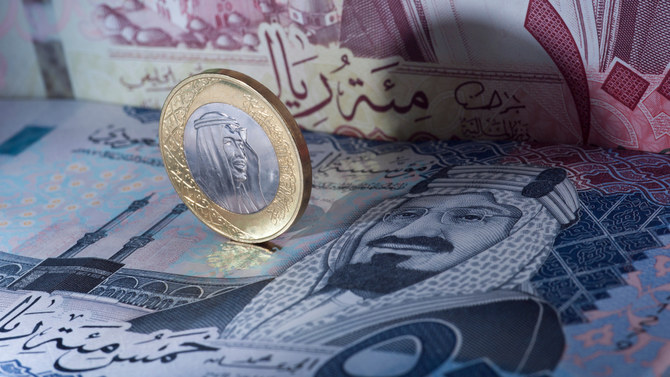
Saudi Exchange approves listing of $12.08bn in govt debt instruments

A Tadawul statement revealed that the exchange approved increasing the issuance of a government debt instrument, dated April 7, from SR15.98 billion to SR17.63 billion. Shutterstock
Short Url
Updated 27 May 2024
Follow

Saudi Exchange approves listing of $12.08bn in govt debt instruments


RIYADH: Saudi Arabia’s stock exchange has approved the listing of SR45.28 billion ($12.08 billion) worth of government debt instruments submitted by the Ministry of Finance. 

A Tadawul statement revealed that the exchange approved increasing the issuance of a government debt instrument, dated April 7, from SR15.98 billion to SR17.63 billion. 

Similarly, the bourse also approved the increase of another instrument, dated April 1, from SR29.29 billion to SR38.53 billion. 

According to a Tadawul statement, the listing commenced on May 27. 

On May 23, the exchange approved the Ministry of Finance’s request to list Saudi government debt instruments with a total value of SR18.84 billion. Trading in these debt instruments will begin on May 27. 

Earlier this month, Saudi Arabia’s National Debt Management Center revealed that the Kingdom completed its riyal-denominated sukuk issuance for May at SR3.23 billion. 

In a press statement, the NDMC disclosed that the Shariah-compliant debt product for the month was divided into two tranches: the first, valued at SR71 million, set to mature in 2029, and the second, valued at SR3.16 billion, due in 2026. 

In April, Saudi Arabia issued sukuk amounting to SR7.39 billion, compared to SR4.44 billion in March and SR7.87 billion in February. 

In March, the NDMC also concluded its second government sukuk savings round, with a total volume of requests reaching SR959 million, allocated to 37,000 applicants. 

In March, the center announced that this financial product, also known as Sah, offers a return of 5.64 percent and has a maturity date of March 2025. 

In April, a report released by credit-rating agency S&P Global projected that global sukuk issuance will hover between $160 billion and $170 billion in 2024. 

The US-based firm also noted that the issuance of this debt product began on a strong footing in 2024, with Saudi Arabia becoming a key contributor to the performance. 

Another study released by Fitch Ratings in April echoed similar views, noting that global sukuk issuance is expected to continue its robust growth in the coming months, propelled by economic diversification efforts and the development of the debt market.


Lebanese social entrepreneur Omar Itani recognized by Schwab Foundation

Updated 23 January 2026
Follow

Lebanese social entrepreneur Omar Itani recognized by Schwab Foundation

  • FabricAID co-founder among 21 global recipients recognized for social innovation

DAVOS: Lebanon’s Omar Itani is one of 21 recipients of the Social Entrepreneurs and Innovators of the Year Award by the Schwab Foundation for Social Entrepreneurship.

Itani is the co-founder of social enterprise FabricAID, which aims to “eradicate symptoms of poverty” by collecting and sanitizing secondhand clothing before placing items in stores in “extremely marginalized areas,” he told Arab News on the sidelines of the World Economic Forum in Davos, Switzerland.

With prices ranging from $0.25 to $4, the goal is for people to have a “dignified shopping experience” at affordable prices, he added.

FabricAID operates a network of clothing collection bins across key locations in Lebanon and Jordan, allowing people to donate pre-loved items. The garments are cleaned and sorted before being sold through the organization’s stores, while items that cannot be resold due to damage or heavy wear are repurposed for other uses, including corporate merchandise.

Since its launch, FabricAID has sold more than 1 million items, reached 200,000 beneficiaries and is preparing to expand into the Egyptian market.

Amid uncertainty in the Middle East, Itani advised young entrepreneurs to reframe challenges as opportunities.

“In Lebanon and the Arab world, we complain a lot,” he said. Understandably so, as “there are a lot of issues” in the region, resulting in people feeling frustrated and wanting to move away. But, he added, “a good portion of the challenges” facing the Middle East are “great economic and commercial opportunities.”

Over the past year, social innovators raised a combined $970 million in funding and secured a further $89 million in non-cash contributions, according to the Schwab Foundation’s recent report, “Built to Last: Social Innovation in Transition.”

This is particularly significant in an environment of geopolitical uncertainty and at a time when 82 percent report being affected by shrinking resources, triggering delays in program rollout (70 percent) and disruptions to scaling plans (72 percent).

Francois Bonnici, director of the Schwab Foundation for Social Entrepreneurship and a member of the World Economic Forum’s Executive Committee, said: “The next decade must move the models of social innovation decisively from the margins to the mainstream, transforming not only markets but mindsets.”

Award recipients take part in a structured three-year engagement with the Schwab Foundation, after which they join its global network as lifelong members. The program connects social entrepreneurs with international peers, collaborative initiatives, and capacity-building support aimed at strengthening and scaling their work.