

Pakistan’s Multan sees increase in patients as heat wave intensifies 

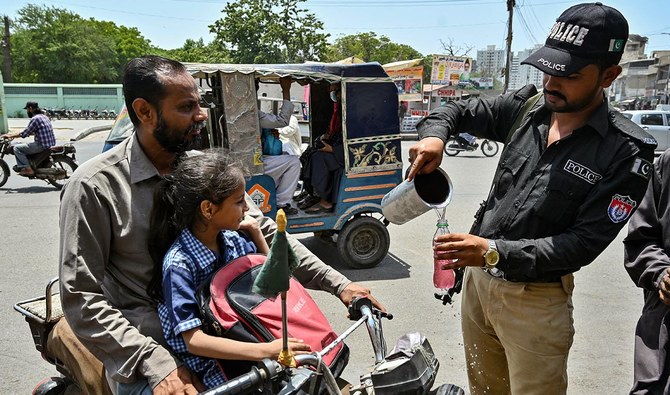
A policeman distribute cold drinks to bypassers near a 'heatwave relief camp' during a hot summer day in Karachi on May 23, 2024. (AFP)
Short Url
Updated 26 May 2024
Follow

Pakistan’s Multan sees increase in patients as heat wave intensifies 

  • Pakistan’s disaster management authority last week warned of heat wave in Punjab from May 25-31
  • Health experts at Multan’s Nishtar Hospital advise people to remain indoors, stay hydrated

ISLAMABAD: Doctors in Pakistan’s Multan this week advised citizens to exercise caution during the ongoing heat wave, as the administration of the city’s main hospital said it has recorded an increase in the number of patients in recent days owing to the extreme temperature. 

The Punjab Disaster Management Authority (PDMA) last week warned that the southern districts in Punjab, namely Multan, Bahawalpur, Rahim Yar Khan and Dera Ghazi Khan would experience a heat wave from May 21-27. Authorities in the province ordered schools to remain shut from May 25-31 due to the extreme heat. 

Heat waves become severe and frequent due to climate change. These events, occurring in summer, are caused by slow-moving high-pressure systems leading to prolonged high temperatures.

“These days the temperature is rising already, it’s almost touching 48 and 47, so the patients are coming with minor symptoms,” Dr. Farooq Ahmad, medical superintendent at Multan’s Nishtar Hospital, told Reuters.

“During summer, we face two things, one is the heatwave, the other is the diarrhea season, both basically cause for dehydration and the losses and everything.”

Health experts advise citizens to take special precautions against the heat and not venture out unnecessarily. 

“We try our best to inform people coming in [to the hospital about the dangers of heat stroke],” Dr. Ayub Qazi, deputy superintendent at the hospital, told Reuters. 

“We tell them to not to leave their homes unnecessarily, and cover their heads when they do.”

Pakistan experienced its first severe heat wave in June 2015 when temperatures as high as 49 degrees Celsius struck the country’s south, causing the deaths of about 2,000 people from dehydration and heatstroke, mostly in the southern port city of Karachi. 

Increased exposure to heat, and more heat waves, have been identified as one of the key impacts of climate change in Pakistan, with people experiencing extreme heat and seeing some of the highest temperatures in the world in recent years. The South Asian country of more than 241 million, one of the ten most vulnerable nations to climate change impacts, has also recently witnessed untimely downpours, flash floods and droughts.

Climate change-induced extreme heat can cause illnesses such as heat cramps, heat exhaustion, heatstroke, and hyperthermia. It can make certain chronic conditions worse, including cardiovascular, respiratory, and cerebrovascular disease and diabetes-related conditions, and can also result in acute incidents, such as hospitalizations due to strokes or renal disease.

According to the Global Climate Risk Index, nearly 10,000 Pakistanis have died while the country has suffered economic losses worth $3.8 billion due to climate change impacts between 1999 and 2018. A deadly heat wave that hit Pakistan’s largest city of Karachi, the capital of Sindh, claimed 120 lives in 2015.

In 2022, torrential monsoon rains triggered the most devastating floods in Pakistan’s history, killing around 1,700 people and affecting over 33 million, a staggering number close to the population of Canada. Millions of homes, tens of thousands of schools and thousands of kilometers of roads and railways are yet to be rebuilt.

Pakistan’s Lahore marks Basant festival after government lifts decades-old ban on kite flying

Updated 5 sec ago
Follow

Pakistan’s Lahore marks Basant festival after government lifts decades-old ban on kite flying

  • Pakistan’s Punjab province outlawed Basant in 2000s after authorities linked metal-coated kite strings and celebratory gunfire to multiple deaths and injuries
  • The three-day festivities began after midnight on Thursday as residents gathered on brightly lit rooftops to fly colorful kites to welcome the cultural festival

ISLAMABAD: The eastern Pakistani city of Lahore on Friday welcomed the return of Basant spring festival after the government this year lifted a more than two-decade-old ban on kite flying for a period three days, with Punjab Chief Minister Maryam Nawaz urging masses to follow precautions.

Provincial officials, including Punjab Information Minister Azma Bokhari, were seen flying kites in videos widely shared online. Meanwhile, the prices of air tickets from various Pakistani cities to Lahore have skyrocketed during the three days of the festival as more and more people try to join the celebrations after over a 20-year-hiatus.

Basant, once a vibrant tradition signaling the arrival of spring with colorful kites and rooftop festivities, was outlawed in Pakistan’s Punjab province in the 2000s after authorities linked metal-coated kite strings and celebratory gunfire to multiple deaths and injuries.

The government of CM Nawaz this year allowed Basant festivities in the provincial capital of Lahore, Pakistan’s cultural heart, on Feb. 6-8, but issued an extensive safety plan regarding kite materials and motorcyclists and pedestrians to avoid any untoward incident.

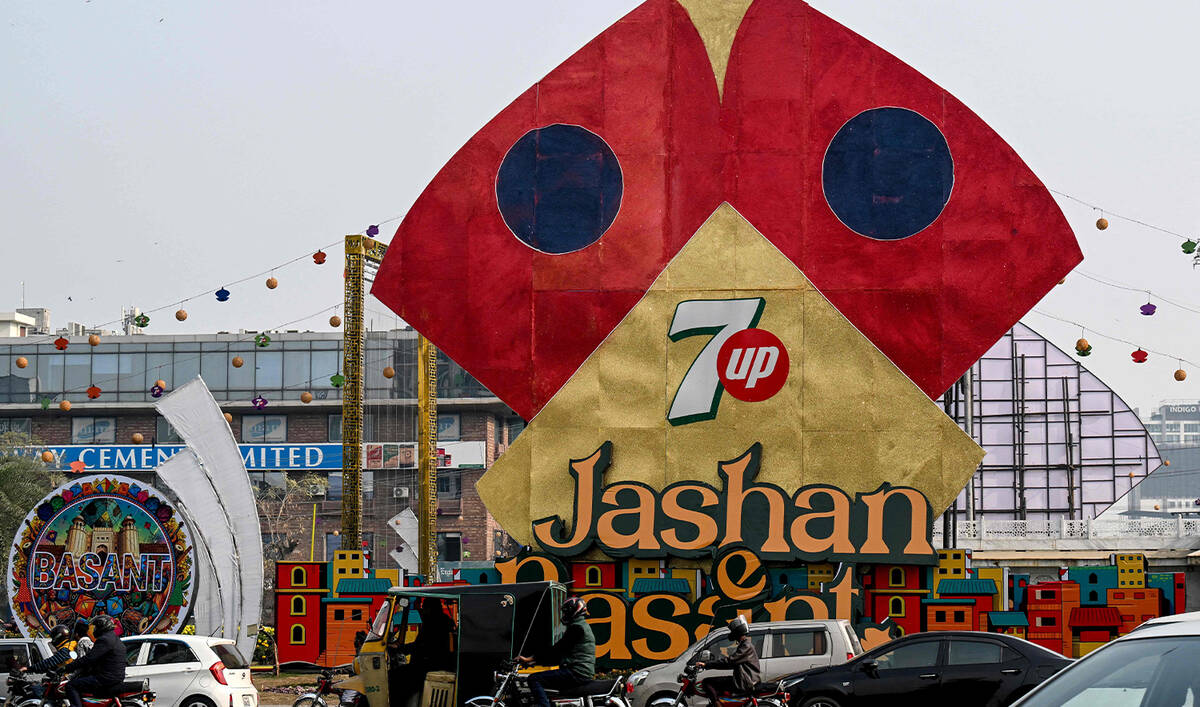
Commuters ride past a large model of a kite celebrating the Basant festival in Lahore on February 3, 2026. (AFP)

The three-day festivities began after midnight on Thursday as residents of Lahore gathered on their brightly lit rooftops along with family, friends and guests visiting from other cities and abroad to fly colorful kites to welcome the return of Basant.

“Kites return to the skies of Lahore as Basant comes alive again after 25 years,” CM Nawaz said on X. “A celebration of culture, color, and community! Let’s enjoy the festivities together responsibly, follow all safety SOPs (standard operating procedures), and make this Basant safe for everyone.”

The Pakistan Meteorological Department (PMD) this week forecast favorable weather conditions for kite flying in Lahore on Feb. 6-8, marked by light westerly winds blowing at speeds of 10–15 kilometers an hour.

Authorities have distributed 1 million safety rods among motorcyclists through designated safety points across Lahore, with spending on the initiative crossing Rs110 million ($392,000), according to local media reports. To enforce regulations and manage traffic flow, around 100 road safety camps have been set up in the city, staffed by teams from the district administration, traffic police and rescue services.

In addition, the Punjab government has launched a free shuttle service to reduce traffic congestion and promote safer travel via 695 buses deployed across Lahore.