

Egypt’s Suez Canal Economic Zone secures $3.2bn in project contracts: chairman 

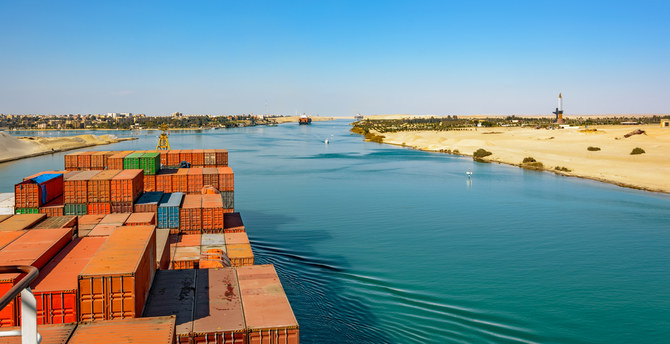
More than 25,000 direct and indirect job opportunities will be created upon the completion and operation of the new projects. Shutterstock
Short Url
Updated 20 May 2024
Follow

Egypt’s Suez Canal Economic Zone secures $3.2bn in project contracts: chairman 

RIYADH: Egypt’s Suez Canal Economic Zone secured 144 projects worth $3.2 billion between July 2023 and April 2024, down from $4.9 billion recorded during July 2022 to May 2023. 

This comes amidst ongoing attacks in the Red Sea since October, leading to significant global economic disruption, particularly affecting container shipping traffic and global trade.  

This is evident in a 50 percent drop in Suez Canal trade in the first two months of 2024 compared to the previous year, and a 32 percent decrease in trade through the Panama Canal, as reported by the International Monetary Fund in a March blog post. 

In a statement issued by the Egyptian Cabinet, Walid Gamal El-Din, chairman of the General Authority for the Suez Canal Economic Zone, revealed that out of the 144 projects in its industrial zones and ports, 67 have obtained final approvals, while 77 have received initial approvals. 

He added that more than 25,000 direct and indirect job opportunities will be created upon the completion and operation of these projects. 

This reflects the authority’s ongoing efforts and activities despite the negative impact of regional developments on port revenues. 

It also aligns with the entity’s mission to attract businesses from around the region by offering easy access to local markets and talent. 

Furthermore, the chairman disclosed that the implementation rates of investment projects within the industrial zones reached 77 percent, while those in ports reached 71 percent. 

Regarding Chinese investments in the special economic zone TEDA, El-Din explained that there are 42 existing projects, with an additional 12 projects under construction awaiting operating licenses. Additionally, 40 projects are currently in the process of completing procedures to obtain building licenses. 

On green hydrogen projects, the chairman highlighted that between January and April, 12 framework agreements and six memorandums of understanding were signed, with an additional MoU set to be signed soon. 

Furthermore, El-Din provided insights into the development work progress in the authority’s ports, noting a 94 percent implementation rate in Ain Sokhna Port, 86 percent in East Port Said Port, and 93.8 percent in West Port Said Port. 

Additionally, he mentioned a 73.7 percent implementation rate in Al-Arish Port and 75 percent in the West Qantara West zone.   

Moreover, the chairman reviewed the ship bunkering operations and marine services at the authority’s ports. He noted that the body implemented the first ship bunkering operation with green fuel in East Port Said Port in August 2023. 

He also highlighted that the development work of the East Ismaili Zone has reached 100 percent implementation of some works. 

About 15 percent of world shipping traffic transits via the Suez Canal, the shortest shipping route between Europe and Asia. The Suez Canal is also an important source of foreign currency for Egypt. 


Lebanese social entrepreneur Omar Itani recognized by Schwab Foundation

Updated 23 January 2026
Follow

Lebanese social entrepreneur Omar Itani recognized by Schwab Foundation

  • FabricAID co-founder among 21 global recipients recognized for social innovation

DAVOS: Lebanon’s Omar Itani is one of 21 recipients of the Social Entrepreneurs and Innovators of the Year Award by the Schwab Foundation for Social Entrepreneurship.

Itani is the co-founder of social enterprise FabricAID, which aims to “eradicate symptoms of poverty” by collecting and sanitizing secondhand clothing before placing items in stores in “extremely marginalized areas,” he told Arab News on the sidelines of the World Economic Forum in Davos, Switzerland.

With prices ranging from $0.25 to $4, the goal is for people to have a “dignified shopping experience” at affordable prices, he added.

FabricAID operates a network of clothing collection bins across key locations in Lebanon and Jordan, allowing people to donate pre-loved items. The garments are cleaned and sorted before being sold through the organization’s stores, while items that cannot be resold due to damage or heavy wear are repurposed for other uses, including corporate merchandise.

Since its launch, FabricAID has sold more than 1 million items, reached 200,000 beneficiaries and is preparing to expand into the Egyptian market.

Amid uncertainty in the Middle East, Itani advised young entrepreneurs to reframe challenges as opportunities.

“In Lebanon and the Arab world, we complain a lot,” he said. Understandably so, as “there are a lot of issues” in the region, resulting in people feeling frustrated and wanting to move away. But, he added, “a good portion of the challenges” facing the Middle East are “great economic and commercial opportunities.”

Over the past year, social innovators raised a combined $970 million in funding and secured a further $89 million in non-cash contributions, according to the Schwab Foundation’s recent report, “Built to Last: Social Innovation in Transition.”

This is particularly significant in an environment of geopolitical uncertainty and at a time when 82 percent report being affected by shrinking resources, triggering delays in program rollout (70 percent) and disruptions to scaling plans (72 percent).

Francois Bonnici, director of the Schwab Foundation for Social Entrepreneurship and a member of the World Economic Forum’s Executive Committee, said: “The next decade must move the models of social innovation decisively from the margins to the mainstream, transforming not only markets but mindsets.”

Award recipients take part in a structured three-year engagement with the Schwab Foundation, after which they join its global network as lifelong members. The program connects social entrepreneurs with international peers, collaborative initiatives, and capacity-building support aimed at strengthening and scaling their work.