

Citi expects Pakistan to strike new $8 billion IMF deal by end-July

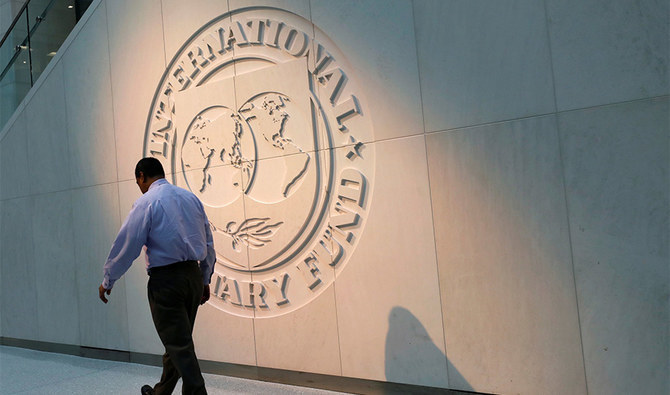
In this file photo, a man walks past the International Monetary Fund (IMF) logo at its headquarters in Washington, U.S., May 10, 2018. (REUTERS/File)
Short Url
Updated 13 May 2024
Follow

Citi expects Pakistan to strike new $8 billion IMF deal by end-July

  • Pakistan last month completed a short-term $3 billion program, which helped stave off a sovereign default 
  • But the government of Prime Minister Shehbaz Sharif has stressed the need for a fresh, longer-term program

LONDON: Wall Street Bank Citi expects Pakistan to reach an agreement with the International Monetary Fund for a new four year of up to $8 billion program by end-July, and recommends going long on the country’s 2027 international bond.

Pakistan last month completed a short-term $3 billion program, which helped stave off sovereign default, but the government of Prime Minister Shehbaz Sharif has stressed the need for a fresh, longer term program.

“While longer-term challenges pertain, we see several positive catalysts supporting the Eurobonds,” Nikola Apostolov at Citi wrote in a note to clients.

“First, a larger and longer IMF EFF (Extended Fund Facility) program could be finalized by July – possibly a $7-8 billion 4-year program and secondly and a possible inflow of Saudi investments,” Apostolov said after a team from Citi visited Pakistan and met policymakers, including Finance Minister Muhammad Aurangzeb.

An IMF mission is expected to visit Pakistan this month to discuss the financial year 2025 budget, policies, and reforms under a potential new program, according to the Fund.

Citi said it expected Pakistan’s international 2027 bond to offer a sweet spot to investors with sufficient liquidity and large upside as risks of default dissipate further.

The 2027 maturity trades at 87.292 cents in the dollar, according to Tradeweb data.

The country’s shorter-dated bonds — maturing 2025 and 2026 — are trading at 91-96 cents following a sharp rally since late last year. Pakistan’s international bonds had sunken to as little as mid-20 cents in the dollar in 2022. 


Pakistan urges UN Security Council to sanction separatist BLA group after recent attacks

Updated 6 sec ago
Follow

Pakistan urges UN Security Council to sanction separatist BLA group after recent attacks

  • Separatist BLA launched attacks in multiple Balochistan cities last week, killing over 50 as per official figures
  • Pakistan envoy says since Taliban assumed control of Afghanistan, BLA, other militant groups have a “new lease of life“

ISLAMABAD: Pakistan’s UN Ambassador Iftikhar Ahmed this week urged the Security Council to impose sanctions against the separatist Baloch Liberation Army (BLA) militant group and designate it as a “terrorist” group, after its recent coordinated attacks in southwestern Balochistan province. 

Pakistan’s military said on Thursday it has concluded security operations in Balochistan against separatists that was launched since Jan. 29, killing 216 militants. The military launched counteroffensive operations in Balochistan after the BLA said it launched coordinated attacks in several parts of the province last Friday and Saturday. 

The attacks killed 36 civilians and 22 law enforcement and security forces personnel, Pakistan’s military said. Pakistan’s government has accused India of being involved in the attacks, charges that New Delhi has dismissed. 

“We hope the Council will act swiftly to designate BLA under the 1267 sanctions regime acceding to the listing request that is currently under consideration,” Iftikhar said on Wednesday during a UNSC briefing on the topic ‘Threats to International Peace and Security caused by Terrorist Acts.’

The 1267 sanctions regime is a UNSC program that seeks to impose sanctions on individuals and entities associated with “terrorism.”

The regime seeks to impose travel bans, freeze assets and impose an arms embargo on individuals and groups primarily associated with Al-Qaeda or the Taliban. 

Ahmad said that after the Taliban takeover of Afghanistan in 2021, “externally sponsored and foreign-funded proxy terrorist groups” such as the Tehreek-e-Taliban Pakistan and the BLA have got a “new lease of life.”

“Operating with virtual impunity from Afghan soil and with the active support of our eastern neighbor, these groups are responsible for heinous terrorist attacks inside Pakistan,” he said. 

The Pakistani envoy said it has become imperative to prevent billions of dollars of sophisticated weapons and equipment, which were left behind by foreign forces in Afghanistan, “from falling into the hands of terrorists.”

“There must be accountability of external destabilizing actors who support, finance and arm these groups, including their proxies in Afghanistan,” Ahmad said in a veiled reference to India. 

Pakistan’s largest and poorest province, mineral-rich Balochistan borders Iran and ‌Afghanistan and is home to China’s investment in the Gwadar deep-water ‍port and other projects.

Balochistan has been the site of a ‍decades-long insurgency led by ethnic Baloch separatists seeking greater autonomy and a larger share of its natural ‍resources. 

They accuse the state of denying locals a fair share of the province’s mineral wealth, charges that are denied by the Pakistani government.
