

GCC prioritizes economic diversification for sustainable growth, says official 

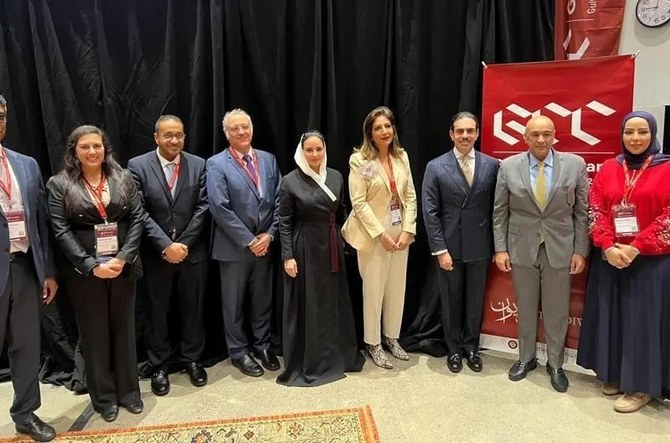
During the Gulf Creatives Conference, organized by the Diwan at Harvard University in Cambridge, Massachusetts, Al-Budaiwi outlined a vision that embraces diverse sectoral reforms. SPA
Short Url
Updated 12 May 2024
Follow

GCC prioritizes economic diversification for sustainable growth, says official 

RIYADH: The Gulf Cooperation Council aims to reduce reliance on oil revenues by implementing a comprehensive vision for economic diversification, as emphasized by its Secretary-General, Jasem Al-Budaiwi. 

During the Gulf Creatives Conference, organized by the Diwan at Harvard University in Cambridge, Massachusetts, Al-Budaiwi outlined a vision that embraces diverse sectoral reforms. These initiatives are aimed at strengthening economic resilience and attracting foreign investments, the Saudi Press Agency reported. 

He noted GCC countries have positioned themselves as competitive digital hubs on the global map, supported by their favorable geographic location and young population. 

“The strategic location, coupled with robust infrastructure, paves the way for the council member states to attract international partnerships that support their long-term development goals,” Al-Budaiwi said. 

He added: “This dynamic approach is vital for sustaining economic growth and ensuring the resilience of Gulf economies in the face of global economic fluctuations and regional challenges.” 

Additionally, Al-Budaiwi emphasized the numbers and data supporting these plans and showcased the advancements made by GCC nations, including the establishment of the Customs Union, the GCC Common Market, and the Unified Economic Agreement. He cited Saudi Arabia’s NEOM project as an example of urban development initiatives within GCC nations. 

He explained that smart cities are designed to reduce waste, enhance energy efficiency, and streamline urban management by leveraging artificial intelligence and the Internet of Things. 

He continued by stating that this further underscores the GCC nations’ commitment to technologically advanced and environmentally friendly urban design, as well as the increased emphasis on cybersecurity to mitigate growing risks and maintain confidence in the digital economy. 

Moreover, Al-Budaiwi emphasized the transition from oil-dependent to diversified economies and expressed satisfaction with the outstanding economic and integration achievements of the GCC countries. 

In February, he held a series of meetings in Riyadh with foreign ambassadors to Saudi Arabia. 

Al-Budaiwi met with the South Korean Ambassador to Saudi Arabia, Choi Byung Hyuk, at the general secretariat headquarters in Riyadh. 

During the meeting, the secretary-general discussed the developments in the free trade agreement between the GCC countries and South Korea, which was signed in December 2023. 

Both sides expressed their desire to enhance cooperation between nations and increase focus on mutual interests such as education, health, investment, and pharmaceuticals. 

The meeting also reviewed relations between the GCC and South Korea, emphasizing the importance of enhancing strategic dialogue through the areas of cooperation outlined in the joint action plan.


Education spending surges 251% as students return from autumn break: SAMA

Updated 12 December 2025
Follow

Education spending surges 251% as students return from autumn break: SAMA

RIYADH: Education spending in Saudi Arabia surged 251.3 percent in the week ending Dec. 6, reflecting the sharp uptick in purchases as students returned from the autumn break.

According to the latest data from the Saudi Central Bank, expenditure in the sector reached SR218.73 million ($58.2 million), with the number of transactions increasing by 61 percent to 233,000.

Despite this surge, overall point-of-sale spending fell 4.3 percent to SR14.45 billion, while the number of transactions dipped 1.7 percent to 236.18 million week on week.

The week saw mixed changes between the sectors. Spending on freight transport, postal and courier services saw the second-biggest uptick at 33.3 percent to SR60.93 million, followed by medical services, which saw an 8.1 percent increase to SR505.35 million.

Expenditure on apparel and clothing saw a decrease of 16.3 percent, followed by a 2 percent reduction in spending on telecommunication.

Jewelry outlays witnessed an 8.1 percent decline to reach SR325.90 million. Data revealed decreases across many other sectors, led by hotels, which saw the largest dip at 24.5 percent to reach SR335.98 million. 

Spending on car rentals in the Kingdom fell by 12.6 percent, while airlines saw a 3.7 percent increase to SR46.28 million.

Expenditure on food and beverages saw a 1.7 percent increase to SR2.35 billion, claiming the largest share of the POS. Restaurants and cafes retained the second position despite a 12.6 percent dip to SR1.66 billion.

Saudi Arabia’s key urban centers mirrored the national decline. Riyadh, which accounted for the largest share of total POS spending, saw a 3.9 percent dip to SR4.89 billion, down from SR5.08 billion the previous week.

The number of transactions in the capital settled at 74.16 million, down 1.4 percent week on week.

In Jeddah, transaction values decreased by 5.9 percent to SR1.91 billion, while Dammam reported a 0.8 percent surge to SR713.71 million.

POS data, tracked weekly by SAMA, provides an indicator of consumer spending trends and the ongoing growth of digital payments in Saudi Arabia. 

The data also highlights the expanding reach of POS infrastructure, extending beyond major retail hubs to smaller cities and service sectors, supporting broader digital inclusion initiatives. 

The growth of digital payment technologies aligns with the Kingdom’s Vision 2030 objectives, promoting electronic transactions and contributing to the nation’s broader digital economy.