



RAFAH: Israel struck targets in the Gaza Strip on Wednesday after seizing the main border crossing with Egypt, where negotiators were working to make good on their “last chance” to cement a ceasefire deal.
After weeks of vowing to launch a ground incursion into the border city of Rafah despite international objections, Israeli tanks moved in Tuesday, capturing the crossing that has served as the main conduit for aid into the besieged Palestinian territory.
The White House condemned the interruption to humanitarian deliveries, with a senior US official later revealing Washington had paused a shipment of bombs last week after Israel failed to address US concerns over its Rafah plans.
The push into the southern city, which is packed with displaced civilians, came as negotiators and mediators met in Cairo to try and hammer out a hostage release deal and truce in the seven-month war between Israel and the militant group Hamas.
A senior Hamas official, requesting anonymity, warned this would be Israel’s “last chance” to free the scores of hostages still in militants’ hands.
Egypt’s state-linked Al-Qahera News reported Tuesday that mediators from Qatar, the United States and Egypt were meeting with a Hamas delegation.
It later reported that “all parties” including Israel had agreed to resume talks. Israeli Prime Minister Benjamin Netanyahu said earlier that his country’s delegation was already in Cairo.
Israel’s close ally and chief military backer the United States said it was hopeful the two sides could “close the remaining gaps.”
“Everybody’s coming to the table,” US National Security Council spokesman John Kirby told reporters. “That’s not insignificant.”
Rafah bombing
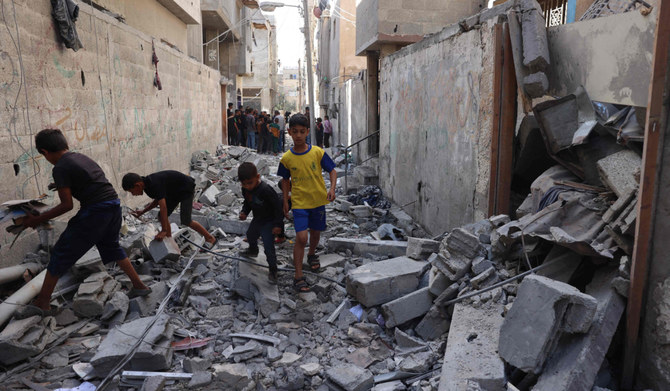
Despite the Cairo talks, witnesses and a local hospital reported Israeli strikes across the Gaza Strip overnight into Wednesday morning, including around Rafah.
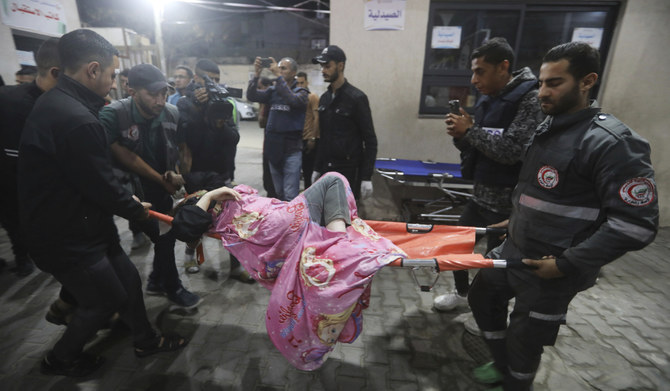
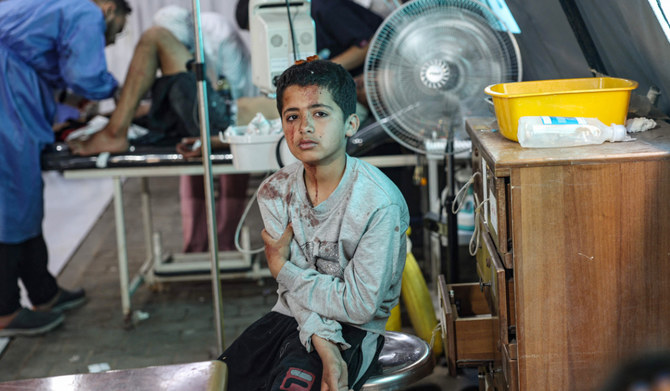
One strike on an apartment in devastated Gaza City killed seven members of the same family and wounded several other people early Wednesday, the Al-Ahli hospital said.
Israel’s Rafah operation began hours after Hamas announced late Monday it had accepted a truce proposal — one Israel said was “far” from what it had previously agreed to.
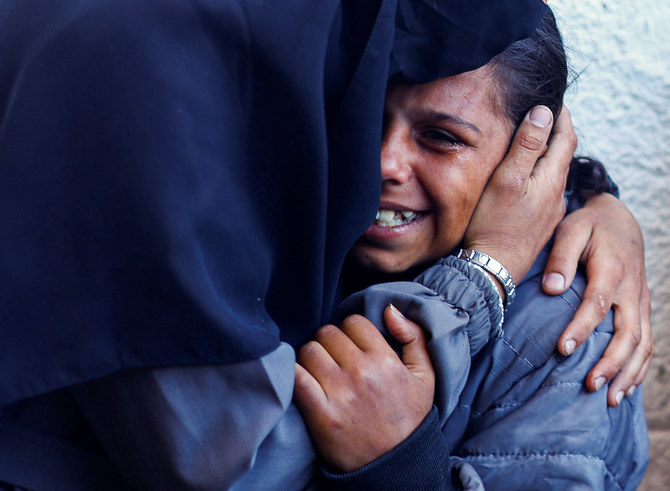
Still, the announcement prompted cheering crowds to take to the streets in Gaza, though Rafah resident Abu Aoun Al-Najjar said the “indescribable joy” was short-lived.
“It turned out to be a bloody night,” he told AFP, as more Israeli bombardments “stole our joy.”
Taking control of Rafah crossing
Israeli army footage showed tanks taking “operational control” of the Palestinian side of the Rafah crossing on Tuesday.
Netanyahu described the operation as “a very important step” in denying Hamas “a passage that was essential for establishing its reign of terror.”
But UN humanitarian office spokesman Jens Laerke said Israel had also denied his organization access to both Rafah and Kerem Shalom — another major aid crossing on the border with Israel.
UN Secretary-General Antonio Guterres urged Israel to “immediately” reopen both crossings, calling the closures “especially damaging to an already dire humanitarian situation.”
White House Press Secretary Karine Jean-Pierre offered a similar view, calling the closures “unacceptable.”
She said the Kerem Shalom crossing was expected to reopen on Wednesday.
Hours later, a senior Biden administration official speaking on condition of anonymity revealed the United States had “paused one shipment of weapons last week” after Israel failed to address its concerns over the Rafah incursion, which Washington has vocally opposed.
The shipment had consisted of more than 3,500 heavy-duty bombs, the official said.
It was the first time that Biden had acted on a warning he gave Netanyahu in April — namely that US policy on Gaza would depend on how Israel treated civilians.
The US official said Washington was “especially focused” on the use of the heaviest 2,000-pound (907 kilogram) bombs “and the impact they could have in dense urban settings.”
However, the official added: “We have not made a final determination on how to proceed with this shipment.”
The Pentagon, meanwhile, said the US military had completed construction of an aid pier off Gaza’s coast, but weather conditions mean it is currently unsafe to move the two-part facility into place.
The US Central Command announced its leader, General Michael Erik Kurilla, had been in Egypt on Monday and Tuesday to “gain a deeper understanding of the perspectives of Egyptian military leaders on regional security and the status of humanitarian aid.”
Rising death toll
The war in Gaza was sparked by Hamas’s unprecedented October 7 attack on Israel, which resulted in the deaths of more than 1,170 people, mostly civilians, according to an AFP tally of Israeli official figures.
Vowing to destroy Hamas, Israel launched a retaliatory offensive that has so far killed at least 34,789 people in Gaza, mostly women and children, the Hamas-run territory’s health ministry said Tuesday.
Militants also took around 250 people hostage on October 7, of whom Israel estimates 128 remain in Gaza, including 36 who are believed to be dead.
Defense Minister Yoav Gallant said Israel might “deepen” its Gaza operation if negotiations failed to bring the hostages home.
“This operation will continue until we eliminate Hamas in the Rafah area and the entire Gaza Strip, or until the first hostage returns,” he said in a statement.
Egypt and Qatar have taken the lead in the truce talks, with Hamas saying Monday it had told officials from both countries of its “approval of their proposal regarding a ceasefire.”
Hamas member Khalil Al-Hayya told the Qatar-based Al Jazeera news channel that the proposal involved a complete Israeli withdrawal from Gaza, the return of Palestinians displaced by the war and a hostage-prisoner exchange, with the goal of a “permanent ceasefire.”
Netanyahu’s office called the proposal “far from Israel’s essential demands,” but said the government would still send negotiators to Cairo.
International alarm has been building about the consequences of an Israeli ground invasion of Rafah, where the United Nations says 1.4 million people are sheltering.
But Netanyahu had repeatedly vowed to send in ground troops regardless of any truce, saying Israel needs to root out remaining Hamas forces.
Aid groups have warned that the coastal “humanitarian area” of Al-Muwasi — where Israel’s military told people to go before it launched its Rafah operation — is unprepared to handle the influx.


