

US opposes ICC probe as Israel fears arrest warrants

1 / 2
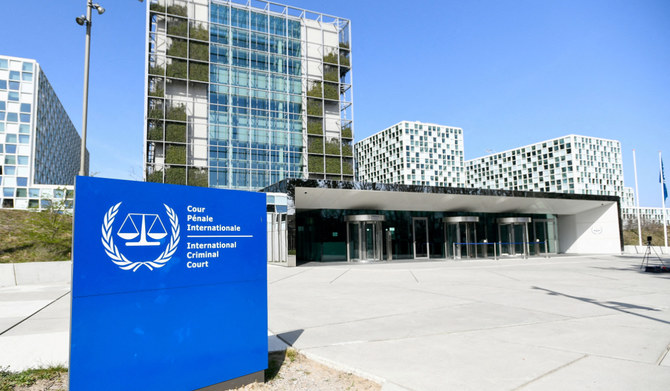
An exterior view of the International Criminal Court in The Hague, Netherlands, March 31, 2021. (REUTERS)
2 / 2
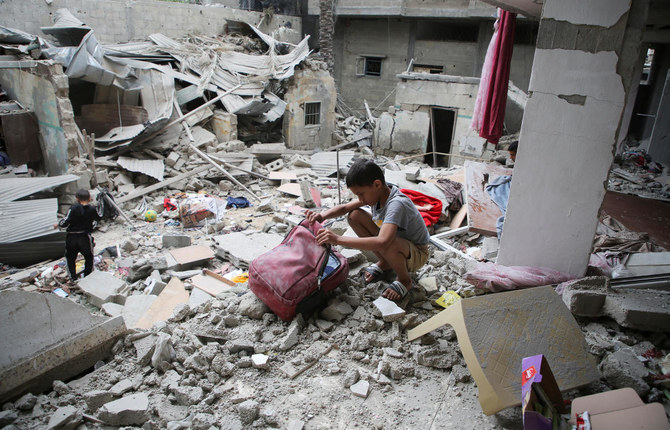
Palestinian children inspect the site of an Israeli strike on a house, amid the ongoing conflict between Israel and the Palestinian Islamist group Hamas, in Rafah, in the southern Gaza Strip. (File/Reuters)
Short Url
Updated 29 April 2024
Follow

US opposes ICC probe as Israel fears arrest warrants

  • Prime Minister Benjamin Netanyahu said on Friday that any ICC decisions would not affect Israel’s actions but would set a dangerous precedent
  • Israeli officials are worried the court could issue arrest warrants against Netanyahu and other top officials for alleged violations in Gaza

WASHINGTON: The United States said Monday it opposed the International Criminal Court’s (ICC) investigation into Israel’s conduct in Gaza, amid reports that Israeli officials fear the Hague-based tribunal could soon issue arrest warrants.
Israeli Prime Minister Benjamin Netanyahu reportedly raised the issue with US President Joe Biden in a call at the weekend.
“We’ve been really clear about the ICC investigation, that we don’t support it, we don’t believe that they have the jurisdiction,” White House Press Secretary Karine Jean-Pierre told a briefing.
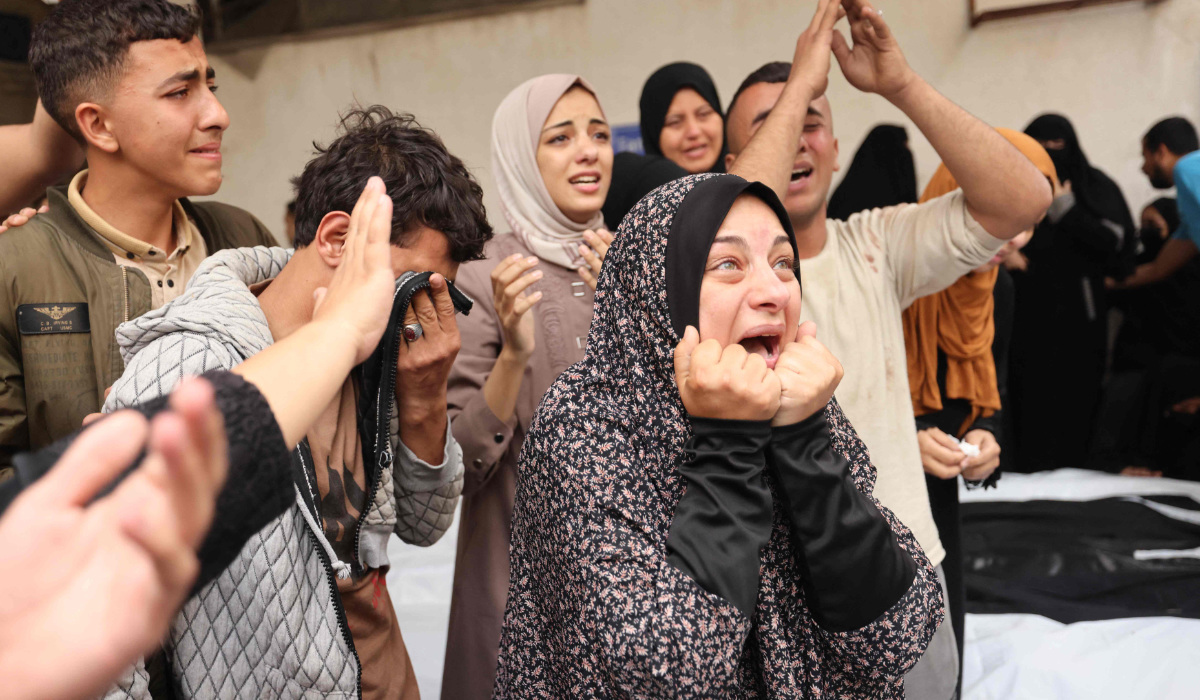


Palestinians mourn relatives killed in Israeli bombardment, at the al-Najjar hospital in Rafah in the southern Gaza Strip, on April 29, 2024 amid the ongoing conflict between Israel and the Palestinian militant group Hamas. (AFP)

The New York Times quoted Israeli officials as saying that Netanyahu himself could be among those charged. The court was also weighing charges against leaders of Hamas, it said.
Jean-Pierre would not confirm a report by news outlet Axios that Netanyahu had asked Biden in their call Sunday to prevent the court from sending out warrants for Israeli officials.
“The primary focus of that call was obviously the hostage deal and getting to a ceasefire, getting humanitarian aid into Gaza,” she added.
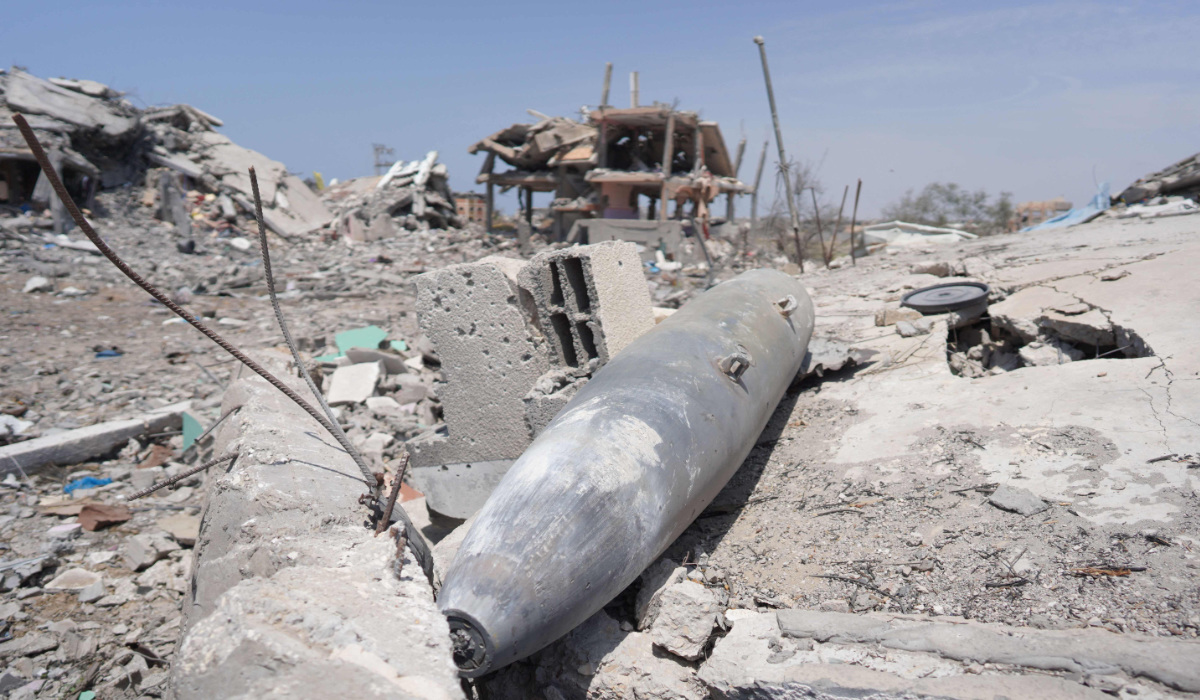


Parts of a missile lie amid debris of buildings destroyed during previous Israeli bombardment, in Nuseirat, in the central Gaza Strip on April 29, 2024, amid the ongoing conflict in the Palestinian territory between Israel and the militant group Hamas. (AFP)

The spokeswoman also declined to comment on reports that Washington had reached out to the ICC to warn that the issuing of any warrants could derail moves to reach the ceasefire and hostage deal between Israel and Hamas.
The ICC has not commented on the reports. But a series of Israeli officials has in recent days said any attempt by the court to take any action against Israel would be “outrageous.”
“Under my leadership, Israel will never accept any attempt by the ICC to undermine its inherent right of self-defense,” Netanyahu said on X on Friday.
“While the ICC will not affect Israel’s actions, it would set a dangerous precedent that threatens the soldiers and officials of all democracies fighting savage terrorism and wanton aggression.”
Foreign minister Israel Katz said his country would “not bow our heads or be deterred” by the legal threat.
“If the warrants are issued, they will harm the commanders and soldiers of the IDF (Israeli army) and provide a morale boost to the terrorist organization Hamas and the axis of radical Islam led by Iran against which we are fighting,” Katz said over the weekend.
Neither the United States nor Israel is a member of the ICC.
But the ICC opened a probe in 2021 into Israel as well as Hamas and other armed Palestinian groups for possible war crimes in the Palestinian territories.
ICC Prosecutor Karim Khan has said the investigation now extends to hostilities since Hamas’s October 7 attacks on Israel.
The ICC is the world’s only independent court set up to probe the gravest offenses by individual suspects, including genocide, war crimes and crimes against humanity.
It has previously issued warrants for national leaders — most recently Russian President Vladimir Putin over the invasion of Ukraine.
Although the prospects of actual arrest remain slim in such cases, warrants can make it difficult for leaders to travel abroad.


Iran envoy: Saudi Arabia a pivotal partner, relations ‘fortified’

Updated 5 sec ago
Follow

Iran envoy: Saudi Arabia a pivotal partner, relations ‘fortified’

  • ‘Our contacts continue at all levels,’ Ambassador Alireza Enayati tells Asharq Al-Awsat
  • Alireza Enayati: Iran and the Kingdom are keen on the security and stability of the region

RIYADH: A senior Iranian official said that relations with Saudi Arabia are “fortified” and cannot be undermined, highlighting both nations’ shared commitment to regional security and stability. 

Alireza Enayati, Iran’s ambassador to Saudi Arabia, said in an exclusive interview with Asharq Al-Awsat that both countries are committed to preventing escalation and avoiding actions that could destabilize the region. 

He added that contacts and coordination between the two countries are taking place at various levels, including visits, meetings and private discussions.

Enayati said: “We must recognize the sensitivity of the current situation amid repeated threats facing the region and the risk of sliding into unprecedented escalation.

“In Iran, we believe that regional stability serves the interests of all countries in the region, and we have repeatedly sensed this affirmation during our meetings and encounters with Saudi officials.”

A senior Saudi official had told Asharq Al-Awsat on Saturday that reports circulated by some media outlets about a change in the Kingdom’s position regarding escalation in the region were inaccurate.

The source said that Saudi Arabia supports efforts aimed at reaching a peaceful solution to all disputed issues between the US and Iran through dialogue and diplomatic means, stressing the Kingdom’s rejection of the use of its airspace or territory for any military actions against Iran.

Enayati pointed to the existence of “ongoing contacts and exchanges between the two countries at various levels, including visits and meetings — some of which are public, while others are held away from the media.”

The Iranian diplomat said that Tehran “considers Saudi Arabia a pivotal and influential state in the region,” adding that cooperation between the two countries on issues of mutual interest “contributes to strengthening the region’s security and stability.”

He said: “Iran and the Kingdom are keen on the security and stability of the region, and emphasize the need to avoid escalation and steer clear of anything that could disturb regional calm.” 

Consultations are taking place between the two sides “stemming from a strategic conviction that has crystallized for both parties and serves their interests as well as those of the region as a whole,” Enayati added.

“The Kingdom views Iran as a reliable partner, while Iran regards Saudi Arabia as an important and effective state in the region, and their cooperation on issues of mutual interest helps consolidate regional security and stability.”

The ambassador said: “These relations are fortified and cannot be undermined, thanks to the leadership of both countries and their understanding of the inevitability of these relations, ensuring their continuity and growth, and the reflection of their positive effects on all.”

Enayati recalled the Saudi position in support of Tehran during its recent war with Israel, saying: “Iran welcomed the Saudi position supporting it during the war imposed on it, as Saudi Arabia strongly condemned the Israeli aggression against Iran, and we received a phone call that morning from the Saudi foreign minister. This stance was not surprising from our Saudi brothers, who stood by us during that phase.”

He added: “Second, any harm to Iran affects the security of the entire region, and this was clearly reflected in constructive positions, including that of the Kingdom. Third, the attack on Iran comes within a series of Israeli attacks that have targeted countries across the region, and no state is immune from these aggressions.”

Regarding talk of a negotiating framework taking shape between Iran and the US, Enayati said that Iran “entered the negotiations in 2015 and 2025 with full seriousness, but the US withdrew from them and dealt with them in a contradictory manner.”

He added: “If the US is serious about an equal dialogue without preconditions, Iran welcomes that, and Iranian officials have repeatedly affirmed this position.

“We recently heard statements indicating that the two sides are working to establish a framework for negotiations; however, negotiations cannot begin with predetermined outcomes. Rather, their results must emerge from the negotiating process itself, not be imposed on it in advance.”

Crown Prince Mohammed bin Salman, during a phone call he received from Iranian President Masoud Pezeshkian last week, highlighted the Kingdom’s support for any efforts aimed at resolving disputes through dialogue in a manner that enhances regional security and stability.

During the call, the Saudi crown prince stressed Riyadh’s position on respecting Iran’s sovereignty and the Kingdom’s refusal to allow the use of its airspace or territory for any military actions against Iran, or for attacks by any party, regardless of their direction.

Pezeshkian expressed his gratitude to Saudi Arabia for its respect of Iran’s sovereignty and territorial integrity, and his appreciation for the crown prince’s efforts and initiatives to achieve regional security and stability.