

Heavy rains kill 32 in northwest Pakistan in six days

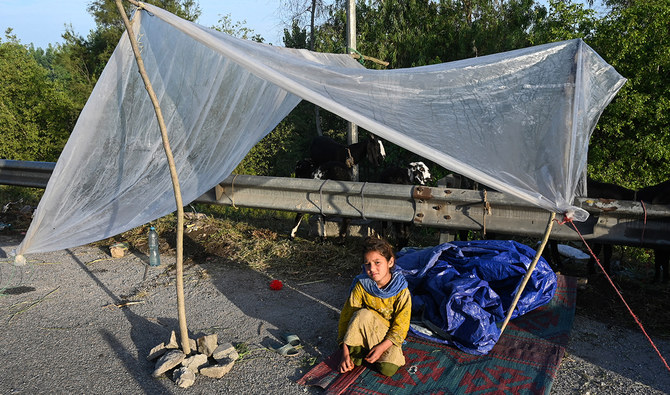
A displaced girl waits for assistance in her tent at a makeshift camp after fleeing from her flood hit home following heavy rains in Charsadda district of Khyber Pakhtunkhwa province on April 17, 2024. (AFP)
Short Url
Updated 17 April 2024
Follow

Heavy rains kill 32 in northwest Pakistan in six days

  • PDMA warns of another spell of heavy downpours from April 17-21
  • Rs160 million released for assistance of families of deceased people

PESHAWAR: At least 32 people were killed and another 42 injured in the last six days as heavy rains and floods have thrashed Pakistan’s northwestern Khyber Pakhtunkhwa (KP) province, the Provincial Disaster Management Authority (PDMA) said in a report on Wednesday. 

The rains started last Friday and have caused large-scale damage in different parts of KP while the PDMA has warned of another spell of heavy downpours in the province from April 17-21. 

The report issued by PDMA on Wednesday morning said the 32 casualties in KP included 15 children, 12 men, and 5 women while the injured comprised 6 women, 28 men, and 7 children. A total of 1370 houses had also been damaged, 160 of them completely.

The country’s national and provincial disaster management authorities said on Tuesday almost 60 people had been killed throughout the country due to the current spell of rains and resultant floods. 
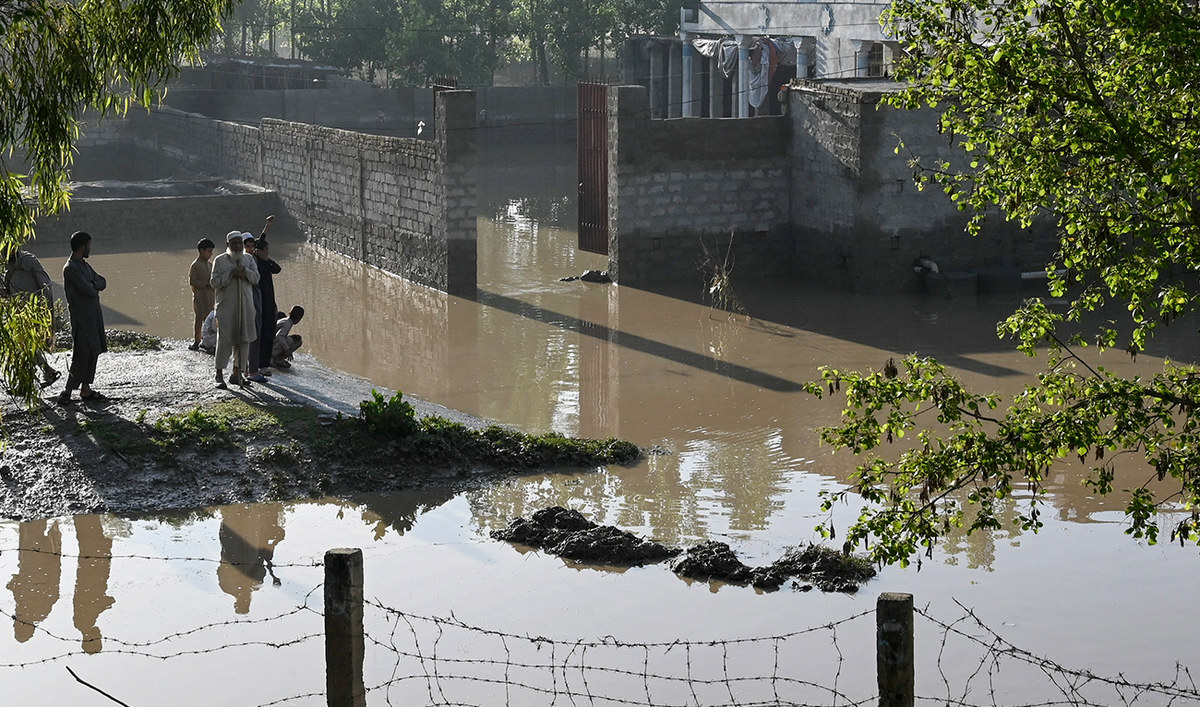


Residents stand near the flooded waters outside their homes following heavy rains in Charsadda district of Khyber Pakhtunkhwa province on April 17, 2024.(AFP)

“Further heavy rains are expected to cause flash floods in low-lying areas [of KP] and have raised concerns about landslides in hilly regions,” PDMA spokesperson Ihsan Dawar told Arab News. 

“The district administrations should take proactive and immediate measures before the second spell of the rains begins … and ensure the availability of small and large machinery.”

Some of the districts where loss of life and property took place are Khyber, Upper and Lower Dir, Chitral Upper and Lower, Swat, Bajaur, Shangla, Mansehra, Mohmand, Malakand, Kurram, Tank, Mardan, Peshawar, Charsadda, Nowshera, Buner, Hangu, Batagram, Bannu, North and South Waziristan, Kohat, Dera Ismail Khan and Kozai.
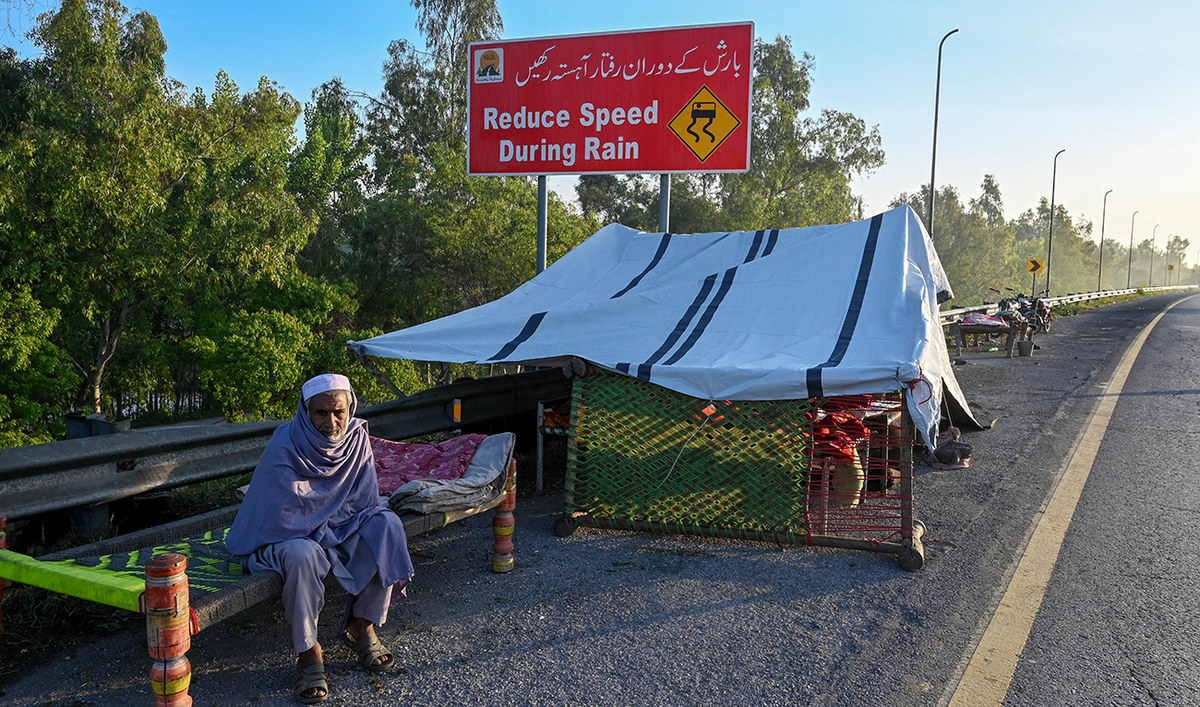


A displaced man waits for assistance outside his tent at a makeshift camp after fleeing from his flood hit home following heavy rains in Charsadda district of Khyber Pakhtunkhwa province on April 17, 2024. (AFP)

Relief activities have been launched in several affected areas and the PDMA has released over Rs160 million for families of those who have died due to rain-related incidents, according to the PDMA spokesperson. 

“The loss of precious human lives in various incidents resulting from the rains is deeply saddening,” the chief minister of KP said in a statement.

The eastern province of Punjab has reported 21 lighting- and collapse-related deaths, while Balochistan, in the country’s southwest, reported 10 dead as authorities declared a state of emergency following flash floods.

On Wednesday, Balochistan was bracing for more rains amid ongoing rescue and relief operations, as flash floods inundated villages near the coastal city of Gwadar.

In 2022, downpours swelled rivers and at one point flooded a third of Pakistan, killing 1,739 people. The floods also caused $30 billion in damages, from which Pakistan is still trying to rebuild. Balochistan saw rainfall at 590 percent above average that year, while Karachi saw 726 percent more rainfall than usual.


EU, Pakistan sign €60 million loan agreement for clean drinking water in Karachi

Updated 17 December 2025
Follow

EU, Pakistan sign €60 million loan agreement for clean drinking water in Karachi

  • Project will finance rehabilitation, construction of water treatment facilities in Karachi city, says European Investment Bank
  • As per a report in 2023, 90 percent of water samples collected from various places in city was deemed unfit for drinking

ISLAMABAD: The European Investment Bank (EIB) and Pakistan’s government on Wednesday signed a €60 million loan agreement, the first between the two sides in a decade, to support the delivery of clean drinking water in Karachi, the EU said in a statement. 

The Karachi Water Infrastructure Framework, approved in August this year by the EIB, will finance the rehabilitation and construction of water treatment facilities in Pakistan’s most populous city of Karachi to increase safe water supply and improve water security. 

The agreement was signed between the two sides at the sidelines of the 15th Pak-EU Joint Commission in Brussels, state broadcaster Radio Pakistan reported. 

“Today, the @EIB signed its first loan agreement with Pakistan in a decade: a €60 million loan supporting the delivery of clean drinking water for #Karachi,” the EU said on social media platform X. 

Radio Pakistan said the agreement reflects Pakistan’s commitment to modernize essential urban services and promote climate-resilient infrastructure.

“The declaration demonstrates the continued momentum in Pakistan-EU cooperation and highlights shared priorities in sustainable development, public service delivery, and climate and environmental resilience,” it said. 

Karachi has a chronic clean drinking water problem. As per a Karachi Water and Sewerage Corporation (KWSC) study conducted in 2023, 90 percent of water from samples collected from various places in the city was deemed unsafe for drinking purposes, contaminated with E. coli, coliform bacteria, and other harmful pathogens. 

The problem has forced most residents of the city to get their water through drilled motor-operated wells (known as ‘bores’), even as groundwater in the coastal city tends to be salty and unfit for human consumption.

Other options for residents include either buying unfiltered water from private water tanker operators, who fill up at a network of legal and illegal water hydrants across the city, or buying it from reverse osmosis plants that they visit to fill up bottles or have delivered to their homes.

The EU provides Pakistan about €100 million annually in grants for development and cooperation. This includes efforts to achieve green inclusive growth, increase education and employment skills, promote good governance, human rights, rule of law and ensure sustainable management of natural resources.