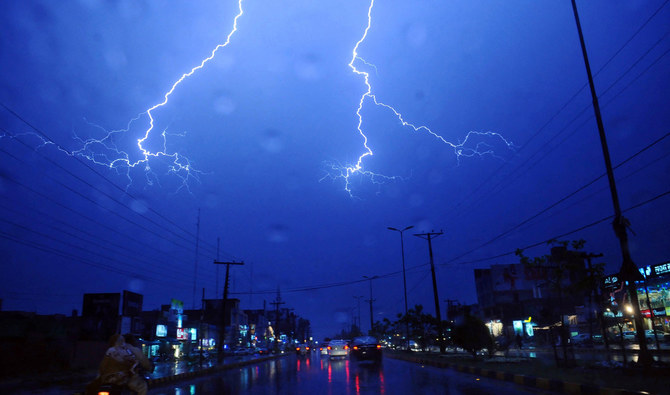
ISLAMABAD: More than 20 people were killed by lightning strikes amid heavy rains and thunderstorms in Pakistan’s Punjab and Balochistan provinces, authorities said on Saturday.
The death toll from lightning strikes in Punjab’s Muzaffargarh, Rahim Yar Khan, Rajanpur, Lodhran, Bahawalpur and Bahawalnagar districts has risen to 17, according to the Punjab Provincial Disaster Management Authority (PDMA).
PDMA Director-General Irfan Ali Kathia has directed deputy commissioners of these districts to provide best medical care to the injured persons.
“I am extremely sorry for the loss of human lives,” DG Kathia was quoted as saying by the PDMA. “Financial assistance will be provided to the families of the deceased.”
He said combating natural calamities was only possible through joint efforts and instructed all civic bodies to stay alert.
“The public is requested to stay in safe places during bad weather,” the official said. “Avoid unnecessary travel.”
In the southwestern Balochistan province, at least eight people were killed in similar incidents in Surab, Dera Bugti, Pishin and other areas, according to local media reports.
Rains, thunderstorms and gusty winds hit Balochistan, Punjab and Khyber Paktunkhwa (KP) provinces on Friday. Intermittent showers continued in these regions on Saturday.
In KP’s Lower Chitral district, a man died after roof of a house collapsed amid heavy rain, according to provincial authorities. The rains triggered landslides in multiple areas in the country’s northwest.
Pakistan has been prone to natural disasters and consistently ranks among one of the most adversely affected countries from the effects of climate change.
Last month, heavy rains in Pakistan’s Balochistan triggered urban floods in Gwadar and Kech districts, destroying nearly 100 homes and killing at least five people.
In 2022, torrential monsoon rains triggered the most devastating floods in Pakistan’s history, killing around 1,700 people. Over 33 million people were affected by the floodwaters — a staggering number close to the population of Canada.
Millions of homes, tens of thousands of schools as well as thousands of kilometers of roads and railways still need to be rebuilt.


![]()

More than 20 killed by lightning strikes in Pakistan’s Punjab, Balochistan
Short Url
https://arab.news/6md7p
More than 20 killed by lightning strikes in Pakistan’s Punjab, Balochistan
- The deaths occurred in Muzaffargarh, Rajanpur, Lodhran, Bahawalpur, Dera Bugti and Pishin
- Authorities advise masses to stay at safe places during bad weather, avoid unnecessary travel
Latest updates




© 2026 SAUDI RESEARCH & PUBLISHING COMPANY, All Rights Reserved And subject to Terms of Use Agreement.