JERUSALEM: Israel’s foreign minister threatened Wednesday that his country’s forces would strike Iran directly if the Islamic Republic launched an attack from its territory against Israel.
His comments came amid heightened tensions between the rival powers following the killings of Iranian generals in a blast at the Iranian consulate in Syria earlier this month.
“If Iran attacks from its territory, Israel will respond and attack in Iran,” Israel Katz said in a post on X in both Farsi and Hebrew.
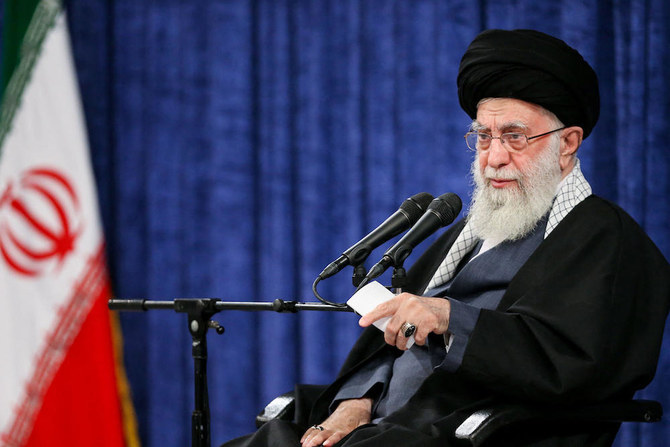
Earlier Wednesday, Iran’s Supreme Leader Ayatollah Ali Khamenei reiterated a promise to retaliate against Israel over the attack on its consulate in Damascus.
Tehran holds Israel responsible for the strike that leveled the building, killing 12 people. Israel has not acknowledged its involvement, though it has been bracing for an Iranian response to the attack, a significant escalation in their long-running shadow war.
The strike killed Gen. Mohammad Reza Zahedi, a senior figure in Iran’s Islamic Revolutionary Guard who led the group’s elite Quds Force in Lebanon and Syria until 2016. The 11 others who died included six Revolutionary Guard members, four Syrians and a Hezbollah militia member.
Israel has attacked scores of Iranian-linked targets in Syria over the years with the apparent intent of disrupting arms transfers and other cooperation with Lebanon’s Hezbollah, which is backed by Iran. The Israeli army rarely comments on these attacks. Since the Israel-Hamas war in Gaza began six months ago, there have been near-daily exchanges of fire between Israeli forces and Hezbollah along the Israel-Lebanon border.
Gaza’s Hamas rulers, who triggered the war by attacking southern Israel on Oct. 7, are also backed by Iran. Tehran also backs an umbrella group of Iraqi militias targeting US military bases and positions in Syria and Iraq, known as The Islamic Resistance of Iraq.
Khamenei made the remarks at a prayer ceremony celebrating the end of the Muslim holy month of Ramadan, saying the strike on its consular was akin to an attack on Iranian territory.
“When they attacked our consulate area, it was like they attacked our territory,” Khamenei said, in remarks broadcast by Iranian state TV. “The evil regime must be punished, and it will be punished.”
Neither Katz nor the Ayatollah elaborated on the way they would retaliate.
Khamenei also criticized the West, particularly the US and Britain, for supporting Israel in its war against Hamas in Gaza.
“It was expected they (would) prevent (Israel) in this disaster. They did not. They did not fulfil their duties, the Western governments,” he said.
Iran does not recognize Israel.


![]()

Israel threatens to strike Iran directly if Iran launches attack from its territory
Short Url
https://arab.news/j7hke
Israel threatens to strike Iran directly if Iran launches attack from its territory
- “If Iran attacks from its territory, Israel will respond and attack in Iran,” Israel Katz said in a post on X
- Earlier Wednesday, Iran’s Supreme Leader Ayatollah Ali Khamenei reiterated a promise to retaliate against Israel over the attack on its consulate in Damascus


Latest updates


© 2026 SAUDI RESEARCH & PUBLISHING COMPANY, All Rights Reserved And subject to Terms of Use Agreement.