

The iftars you still need to try in Riyadh 

Fairmont Riyadh. (Supplied)
Short Url
Updated 05 April 2024
Follow

The iftars you still need to try in Riyadh 

  • As Ramadan nears its end, here are our recommendations for the best iftars in the Saudi capital 

RIYADH: The influx of restaurants opening in Riyadh in recent years has transformed the city’s iftar scene, offering a huge array of options for breaking the fast each evening. And with just a few days left in the holy month, it’s the perfect time to explore some of the Saudi capital’s best food venues. 

Whether you're in the mood for a traditional Saudi feast, a gourmet international spread, or a fusion of contemporary flavours, Riyadh’s vibrant dining landscape has something for everyone. 

Carbone 
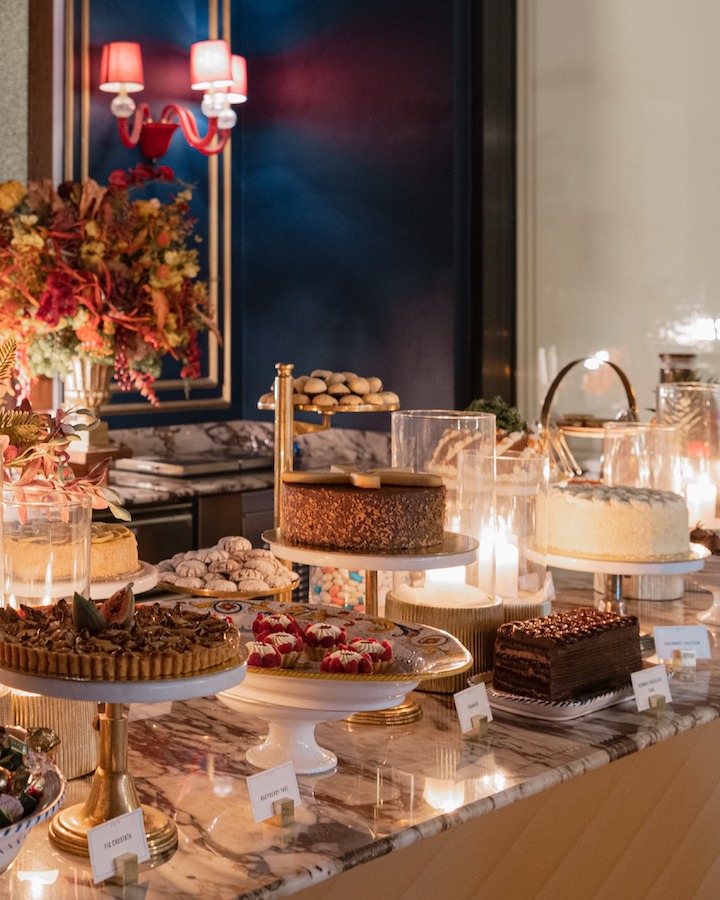
This trendy Italian restaurant brought a slice of New York’s dining scene to Saudi Arabia when it opened in the Mansard Riyadh last October following its rise to fame in the Big Apple. The original US branch of Carbone boasts an impressive celebrity clientele, with stars including Adele, Justin Bieber and Rihanna often spotted enjoying intimate dinners at its secluded tables. For iftar, the Riyadh restaurant’s set menu offers traditional Arabic coffee and desserts alongside contemporary Italian dishes such as chicken Massimo, funghi trifolati, spicy rigatoni and tortellini al ragu. While you might not spot quite as many A-list celebrities as you would in NYC, the top-notch staff are renowned for making you feel like a star yourself. 

PRICE: From SAR400 ($107) 

LOCATION: Prince Mohammed bin Salman bin Abdulaziz Road  

CONTACT: +966 11 829 0919 

Fairmont Riyadh 
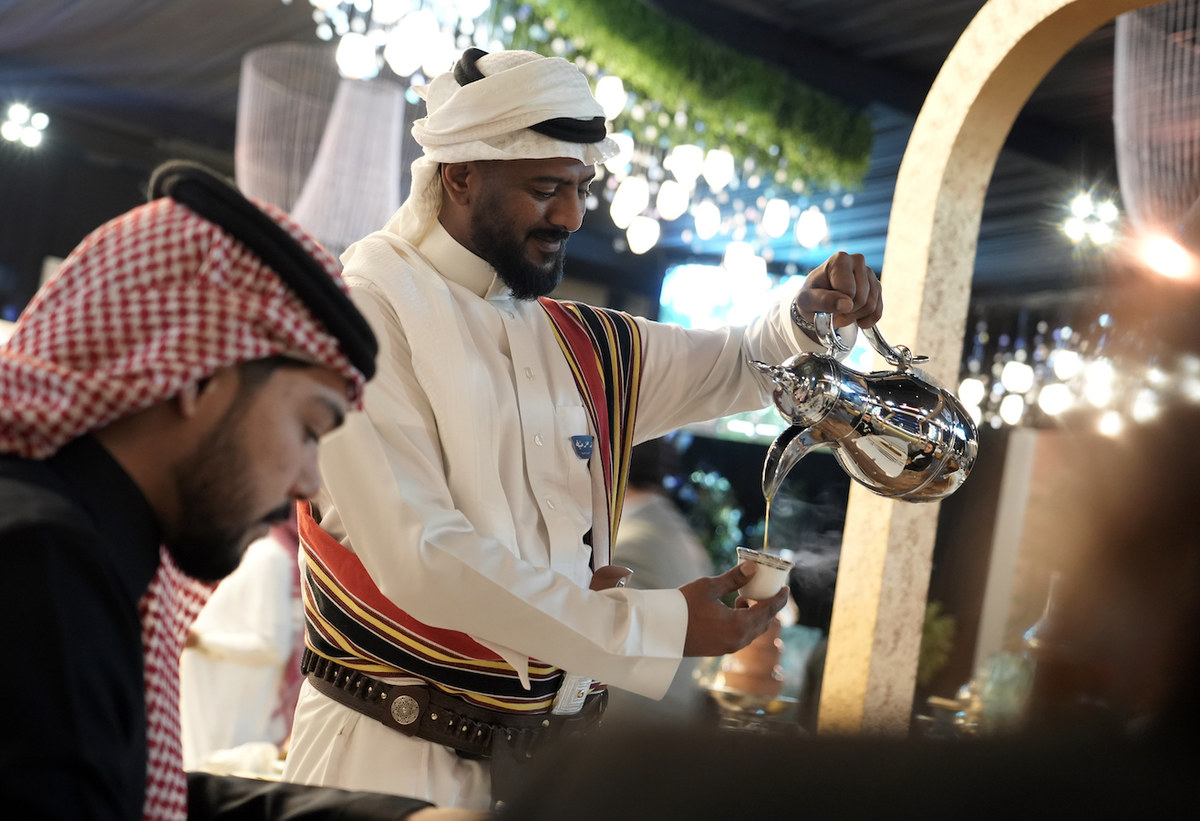
This five-star hotel near King Khalid International Airport is lighting up its Al-Thuraya and Al-Marasem ballrooms for Ramadan as part of the “Luminous Nights” series (inspired by “the desert’s golden tones”) in collaboration with Saudi immersive events expert Dr. Ali Madkhaly. The foyer has been transformed into a Ramadan bazaar featuring local haute couture, signature scents, specialty coffee roasters and traditional weaving. In addition to a buffet across the two ballrooms, and for an extra fee, up to 50 guests per night can enjoy a menu created by the chef Luigi Taglienti who runs the Michelin-starred LUME in Milan. Dishes on Taglienti’s menu include langoustine, white risotto, lobster, sea bass and lamb carpaccio.  

PRICE: From SAR350 

LOCATION: Business Gate, Qurtubah 

CONTACT: +966 11 826 2629 

Four Seasons Hotel  
Step into the newly redesigned Ramadan Tent at the Four Seasons hotel in Riyadh’s iconic Kingdom Center for an iftar inspired by Arabian elegance, in a space featuring gold accents and traditional motifs. The buffet is spread across seven islands and live cooking stations, with signature mixed grills from the Josper charcoal oven served alongside poke sushi cups and artisanal sourdough pizza. For dessert, take your pick from a selection including ever-popular kunafa, creamy gelato, and a chocolate fountain. For an added touch of luxury, book the exclusive Chef's Table experience, complete with dedicated butler service and personalized dishes. The hotel also welcomes families; there is a special area for children, ensuring an enjoyable Ramadan experience for guests of all ages. 

PRICE: From SAR285 

LOCATION: Kingdom Center 

CONTACT: +966 11 211 5000 

Il Baretto 
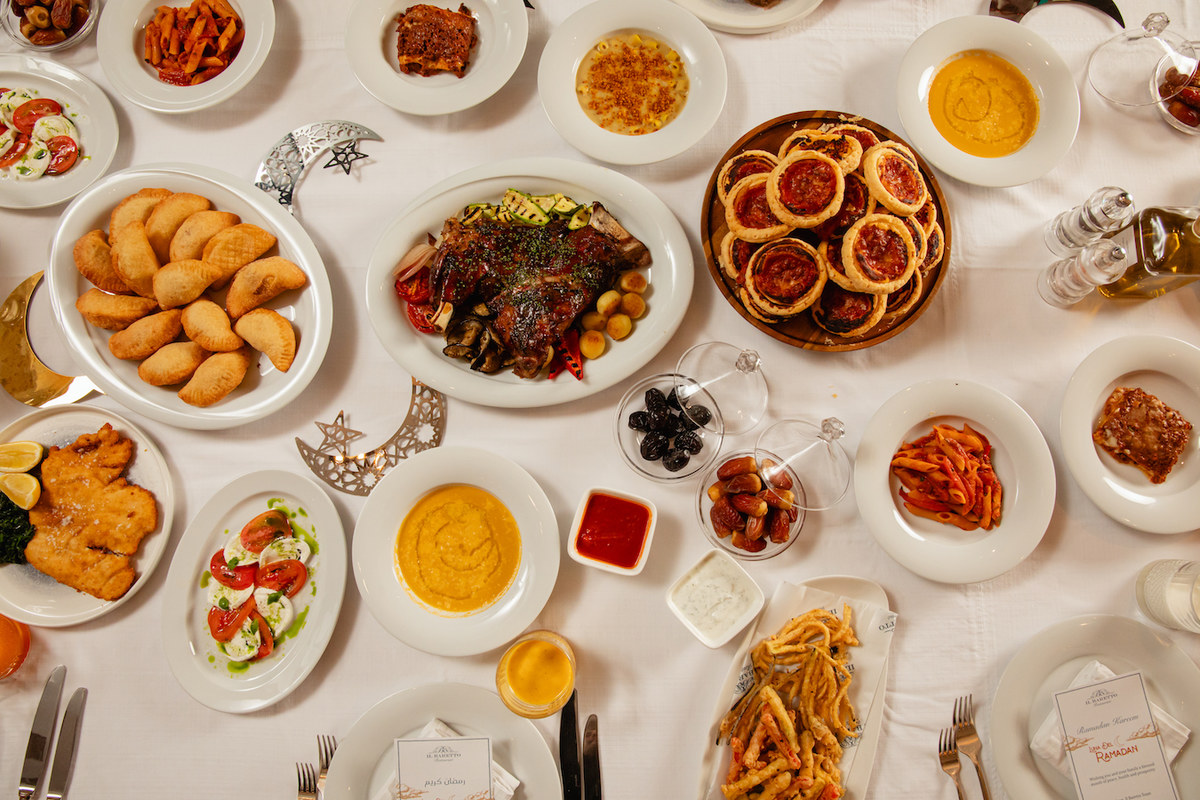
One of the first spots to open in the glitzy King Abdullah Financial District back in 2021, Il Baretto has become a mainstay of Riyadh’s fine-dining scene, with its elegant corniced dining room fully booked most evenings. For iftar, the restaurant is serving a special “Luna del Ramadan” set menu that pairs local favourites like mango laban mocktails with Italian classics including Caprese salad and spicy penne all’arrabbiata. For each of the first four courses, diners can select between an Arabic or Italian option, before a round of mini ice cream cones for dessert. For those looking to bring home their own slice of the Il Baretto experience, takeaway tiramisus are available from 5.30 p.m. each day until the end of Ramadan. 

PRICE: SAR184  

LOCATION: King Abdullah Financial District 

CONTACT: +966 9200 12508 

Mandarin Oriental Al-Faisaliah 
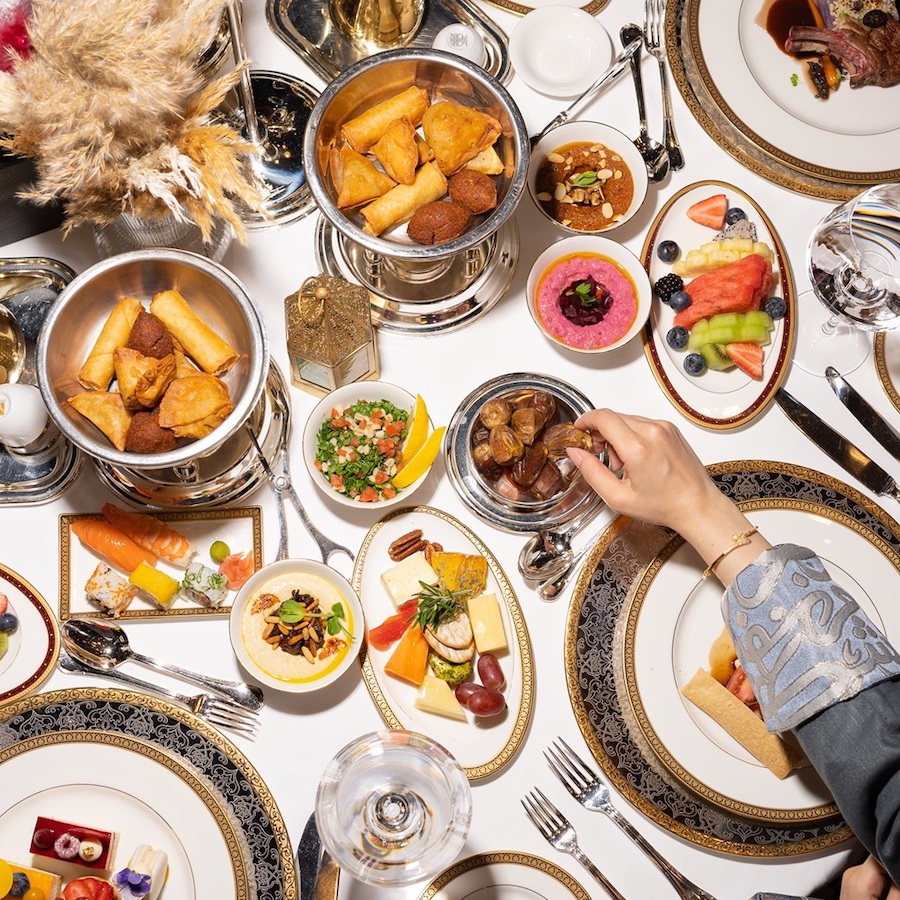
Set in a grand iftar tent that can host up to 1,800 guests, the “Fawanees Experience” serves up a lavish feast of classic Saudi cuisine alongside sweet Ramadan beverages like jellab, kamer el-dine, and tamer hindy. There is also a dedicated play area for children, with those under the age of seven dining for free. For an a la carte iftar with a view, take the elevator to Asir Lounge at The Globe — the golden orb at the top of Al-Faisaliah — which offers panoramic vistas of the city’s twinkling skyscrapers. Groups can book out a private space in the restaurant for up to 25 guests for SAR35,000. 

PRICE: From SAR550  

LOCATION: King Fahd Road, Al-Olaya  

CONTACT: +966 11 273 2000 

The Ritz-Carlton 
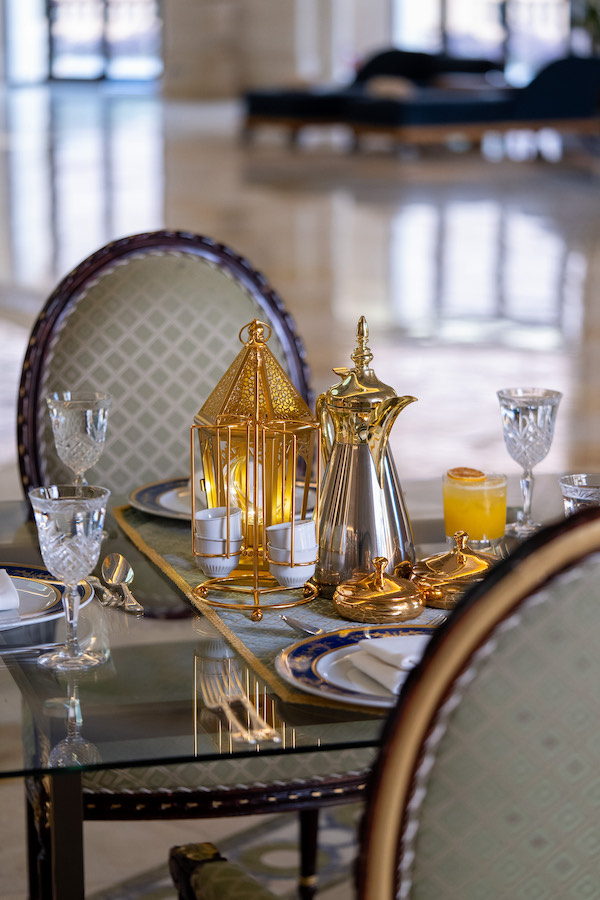
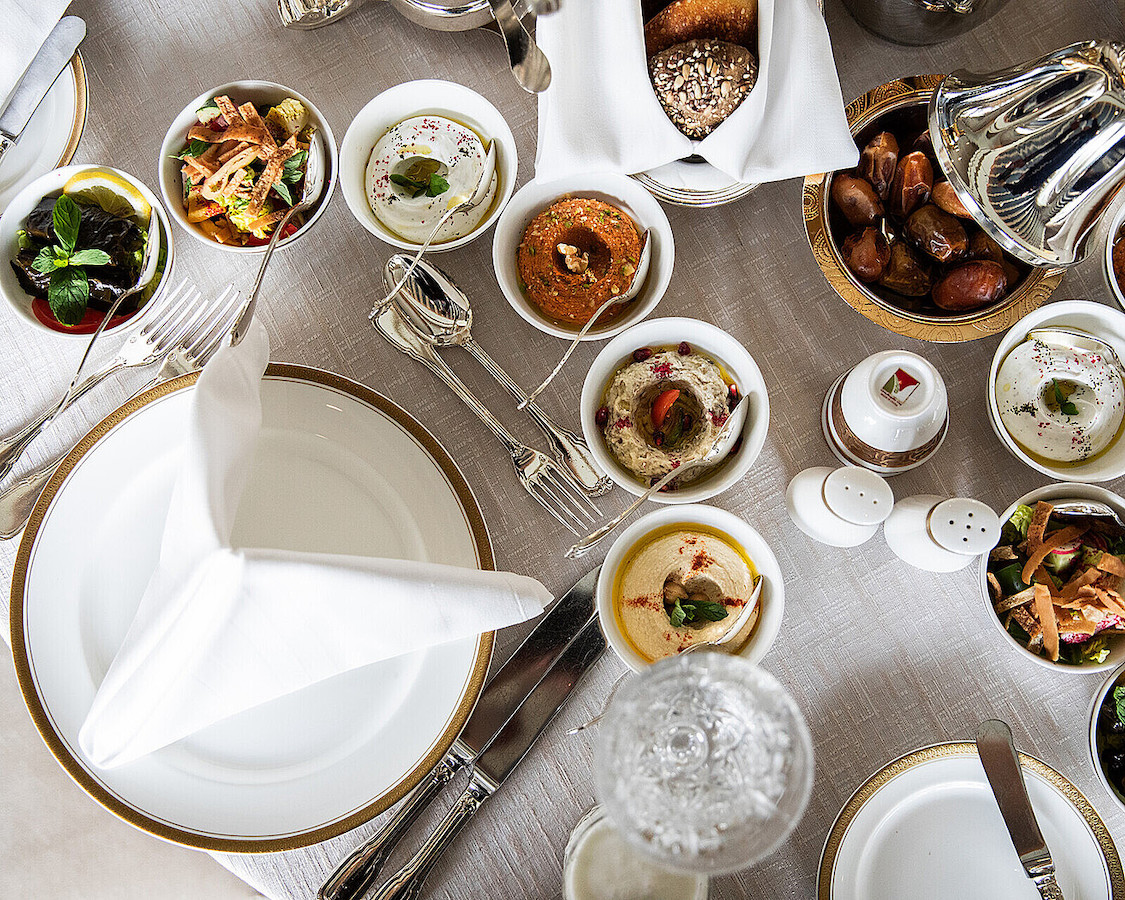
Beneath the dazzling chandeliers and ornate ceilings of one of the city’s most famous hotels, the iftar experience at The Ritz-Carlton, Riyadh never disappoints. Guests can choose from the grand ballroom or a more intimate setting beside the former palace’s indoor pool for a wide-ranging buffet selection drawing inspiration from across the Middle East and Asia. For a final indulgent flourish, finish the evening at the Palais des Délices patisserie, where homemade pastries, oriental sweets, premium coffee, tea selections and signature beverages inspired by local ingredients are served on a terrace that overlooks the hotel’s fountains and gardens. 

PRICE: From SAR630 

LOCATION: Makkah Al-Mukarramah Road, Al Hada 

CONTACT: +966 11 802 8020


Riyadh takes shape at Tuwaiq Sculpture Symposium 2026

Updated 16 January 2026
Follow

Riyadh takes shape at Tuwaiq Sculpture Symposium 2026

RIYADH: This season, one of Riyadh’s busiest streets has taken on an unexpected role.

Under the theme “Traces of What Will Be,”sculptors are carving granite and shaping reclaimed metal at the seventh Tuwaiq Sculpture Symposium, running from Jan. 10 to Feb. 22.

The symposium is unfolding along Prince Mohammed bin Abdulaziz Road, known locally as Al‑Tahlia, a name that translates to desalination. The choice of location is deliberate.

The area is historically linked to Riyadh’s early desalination infrastructure, a turning point that helped to shift the city from water scarcity toward long‑term urban growth.

Twenty‑five artists from 18 countries are participating in this year’s event, producing large‑scale works in an open‑air setting embedded within the city.

The site serves as both workplace and eventual exhibition space, with sculptures remaining in progress throughout the symposium’s duration.

In her opening remarks, Sarah Al-Ruwayti, director of the Tuwaiq Sculpture Symposium, said that this year new materials had been introduced, including recycled iron, reflecting a focus on sustainability and renewal.

She added that the live-sculpting format allowed visitors to witness the transformation of raw stone and metal into finished artworks.

Working primarily with local stone and reclaimed metal, the participating artists are responding to both the material and the place.

For Saudi sculptor Wafaa Al‑Qunaibet, that relationship is central to her work, which draws on the physical and symbolic journey of water.

“My work … presents the connection from the salted water to sweet water,” Al‑Qunaibet told Arab News.

Using five pieces of granite and two bronze elements, she explained that the bronze components represented pipes, structures that carry saline water and allow it to be transformed into something usable.

The sculpture reflected movement through resistance, using stone to convey the difficulty of that transition, and water as a force that enables life to continue.

“I throw the stone through the difficult to show how life is easy with the water,” she said, pointing to water’s role in sustaining trees, environments and daily life.

Formally, the work relies on circular elements, a choice Al‑Qunaibet described as both technically demanding and socially resonant.

“The circle usually engages the people, engages the culture,” she said. Repeated circular forms extend through the work, linking together into a long, pipe‑like structure that reinforces the idea of connection.

Sculpting on site also shaped the scale of the piece. The space and materials provided during the symposium allowed Al‑Qunaibet to expand the work beyond her initial plans.

The openness of the site pushed the sculpture toward a six‑part configuration rather than a smaller arrangement.

Working across stone, steel, bronze and cement, American sculptor Carole Turner brings a public‑art perspective to the symposium, responding to the site’s historical and symbolic ties to desalination.

“My work is actually called New Future,” Turner told Arab News. “As the groundwater comes up, it meets at the top, where the desalination would take place, and fresh water comes down the other side.”

Her sculpture engages directly with the symposium’s theme by addressing systems that often go unseen. “Desalination does not leave a trace,” she said. “But it affects the future.”

Turner has been sculpting for more than two decades, though she describes making objects as something she has done since childhood. Over time, she transitioned into sculpture as a full‑time practice, drawn to its ability to communicate across age and background.

Public interaction remains central to her approach. “Curiosity is always something that makes you curious, and you want to explore it,” she said. Turner added that this sense of discovery is especially important for children encountering art in public spaces.

Saudi sculptor Mohammed Al‑Thagafi’s work for this year’s symposium reflects ideas of coexistence within Riyadh’s evolving urban landscape, focusing on the relationships between long‑standing traditions and a rapidly changing society.

The sculpture is composed of seven elements made from granite and stainless steel.

“Granite is a national material we are proud of. It represents authenticity, the foundation, and the roots of Saudi society,” Al‑Thagafi told Arab News.

“It talks about the openness happening in society, with other communities and other cultures.”

That dialogue between materials mirrors broader social shifts shaping the capital, particularly in how public space is shared and experienced.

Because the sculpture will be installed in parks and public squares, Al‑Thagafi emphasized the importance of creating multi‑part works that invite engagement.

Encountering art in everyday environments, he said, encouraged people to question meaning, placement, simplicity and abstraction, helping to build visual‑arts awareness across society.

For Al‑Thagafi, this year marked his fifth appearance at the symposium. “I have produced more than 2,600 sculptures, and here in Riyadh alone, I have more than 30 field works.”

Because the works are still underway, visitors can also view a small on‑site gallery displaying scaled models of the final sculptures.

These miniature models offer insight into each artist’s planning process, revealing how monumental forms are conceived before being executed at full scale.

As the symposium moves toward its conclusion, the completed sculptures will remain on site, allowing the public to encounter them in the environment that shaped their creation.