

Pakistan monthly inflation rises to 20.68 percent year on year — statistics bureau

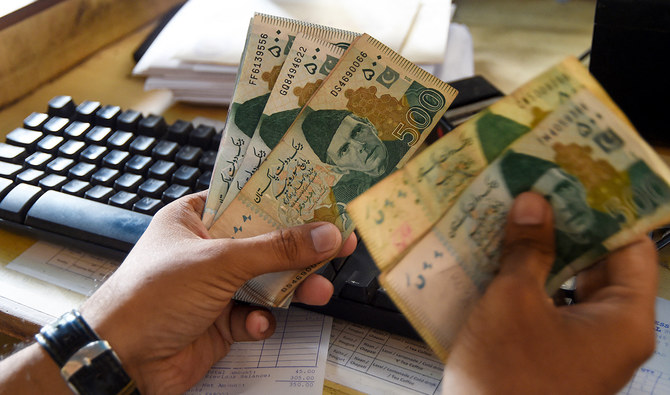
A Pakistani man counts Pakistan's rupees at his shop in Karachi on May 16, 2019. (AFP/File)
Short Url
Updated 01 April 2024
Follow

Pakistan monthly inflation rises to 20.68 percent year on year — statistics bureau

  • Commodities that recorded an increase included tomatoes, onions, spices, sugar, wheat flour and meat
  • Monthly inflation for March registered a 1.71 percent increase when compared to the month of February

ISLAMABAD: Pakistan’s Consumer Price Index (CPI) increased to 20.68 percent in March on a year-on-year basis, the Pakistan Bureau of Statistics (PBS) data showed on Monday.

Top commodities that varied from corresponding month of the previous year included tomatoes (188.44 percent), onions (84.06 percent), fresh vegetables (55.31 percent), condiments and spices (49.08 percent), sugar (37.29 percent), wheat flour (32.68 percent), beverages (27.69 percent) and meat (22.42 percent).

The commodities that recorded a decrease in prices were cooking oil (22.59 percent), vegetable ghee (20.13 percent), mustard oil (15.78 percent), fresh fruits (4.15 percent) and gram flour (0.68 percent).

“CPI National for the month of March, 2024 increased to 20.68 percent over March, 2023,” the PBS said in its monthly survey.

Monthly inflation for March registered a 1.71 percent increase from the previous month.

The non-food commodities that recorded an increase in prices over the past month included electricity (5.11 percent), tailoring (3.13 percent), liquified hydrocarbons (2.90 percent), readymade garments (2.22 percent), motor fuel (1.70 percent), and drugs and medicines (1.19 percent).

Last month, Pakistan’s central bank held its key interest rate at 22 percent for the sixth straight policy meeting as inflation risks continued to loom. The decision was in line with expectations of a majority of analysts, although most were also expecting rate cuts from the second quarter of this year.

The bank said that although the inflation rate had eased in February, it remained high and was subject to risks.

Pakistan’s key rate was last raised in June to fight persistent inflationary pressures and to meet one of the conditions set by the International Monetary Fund for a critical $3 billion bailout program that expires this month.


Pakistan says $50 million meat export deal with Tajikistan nearing finalization

Updated 09 December 2025
Follow

Pakistan says $50 million meat export deal with Tajikistan nearing finalization

  • Islamabad expects to finalize agreement soon after Dushanbe signals demand for 100,000 tons
  • Pakistan is seeking to expand agricultural trade beyond rice, citrus and mango exports

ISLAMABAD: Tajikistan has expressed interest in importing 100,000 tons of Pakistani meat worth more than $50 million, with both governments expected to finalize a supply agreement soon, Pakistan’s food security ministry said on Tuesday.

Pakistan is trying to grow agriculture-based exports as it seeks regional markets for livestock and food commodities, while Tajikistan, a landlocked Central Asian state, has been expanding food imports to support domestic demand. Pakistan currently exports rice, citrus and mangoes to Dushanbe, though volumes remain small compared to national production, according to official figures.

The development came during a meeting in Islamabad between Pakistan’s Federal Minister for National Food Security and Research Rana Tanveer Hussain and Ambassador of Tajikistan Yusuf Sharifzoda, where agricultural trade, livestock supply and food-security cooperation were discussed.

“Tajikistan intends to purchase 100,000 tons of meat from Pakistan, an import valued at over USD 50 million,” the ambassador said, according to the ministry’s statement, assuring full facilitation and that Islamabad was prepared to meet the demand.

The statement said the two sides agreed to expand cooperation in meat and livestock, fresh fruit, vegetables, staple crops, agricultural research, pest management and standards compliance. Pakistan also proposed strengthening coordination on phytosanitary rules and establishing pest-free production zones to support long-term exports.

Pakistan and Tajikistan have long maintained political ties but bilateral food trade remains below potential: Pakistan produces 1.8 million tons of mangoes annually but exported just 0.7 metric tons to Tajikistan in 2024, while rice exports amounted to only 240 metric tons in 2022 out of national output of 9.3 million tons. Pakistan imports mainly ginned cotton from Tajikistan.