

Mideast sets record in renewable energy capacity, Saudi Arabia reaches 2.6 GW: IRENA

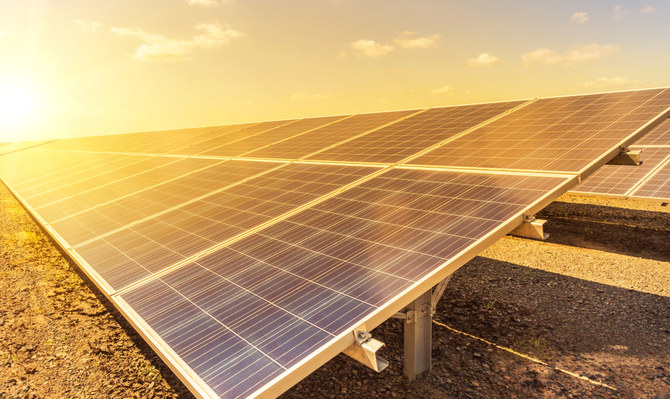
Solar power alone contributed nearly three-quarters of renewable additions, totaling a record 346 GW, the report revealed. Shutterstock
Short Url
Updated 28 March 2024
Follow

Mideast sets record in renewable energy capacity, Saudi Arabia reaches 2.6 GW: IRENA

RIYADH: Renewable energy capacity in the Middle East soared to a record high in 2023, with the addition of 5.1 gigawatts, marking a 16.6 percent increase from the previous year.

According to the latest data released by the International Renewable Energy Agency, this new addition brought the region’s total renewable energy capacity to 35.54 GW, with Saudi Arabia accounting for 2.68 GW.

The data showed that global green power capacity reached 3,870 GW in 2023, marking a 13.9 percent increase over the previous year. This represents the largest surge in sustainable energy capacity to date, with the addition of 473 GW. 

Green sources constituted a record-breaking 86 percent of global power additions, primarily driven by substantial expansions in solar and wind energy.  

Solar power alone contributed nearly three-quarters of renewable additions, totaling a record 346 GW, while an additional 116 GW of wind energy was incorporated, the report added. 

Francesco La Camera, director general of IRENA, said: “Despite these unprecedented renewable additions in 2023, the world is still falling short of what is required to achieve the goal adopted at COP28 to triple installed renewable power capacity by 2030 to reach 11 TW.” 

With one less year to meet the goal, he emphasized that the world now requires additions of approximately 1,050 GW each year for the remainder of this decade to align with the World Energy Transitions Outlook scenario and maintain a trajectory toward limiting global warming to 1.5 degrees Celsius. 

The growth of sustainable energy is unevenly distributed globally, with Asia leading the expansion with a 473 GW increase, primarily propelled by China’s 63 percent surge to 297.6 GW. This highlights a notable discrepancy with other regions, particularly developing countries. While Africa saw some growth, it was modest at 4.6 percent, reaching 62 GW. 

By the end of 2023, Camera said, renewable energy sources comprised 43 percent of the global installed power capacity. 

“Yet, as we draw closer to a world in which renewable energy accounts for half of total capacity, many energy planning questions still need to be addressed to establish renewables as the most significant source of electricity generation - including in the context of grid flexibility and adaptation to variable renewable power,” he added. 


Qatar, Uruguay sign investment protection and tax treaties to deepen economic ties 

Updated 4 sec ago
Follow

Qatar, Uruguay sign investment protection and tax treaties to deepen economic ties 

RIYADH: Qatar and Uruguay signed two economic agreements aimed at strengthening investment flows and eliminating double taxation as Doha moves to expand its network of international trade partners. 

The deals were concluded on the sidelines of the Doha Forum 2025, the Qatar News Agency reported.  

The first pact, an agreement on the promotion and mutual protection of investments, was signed by Qatar’s Minister of Commerce and Industry, Sheikh Faisal bin Thani bin Faisal Al-Thani, and Uruguay’s Minister of Foreign Affairs, Mario Lubetkin. 

The agreements come as part of efforts to establish a modern legal framework that eases two-way investments and strengthens investor confidence. They ensure fair treatment for investors, protect them from non-commercial risks, allow free movement of funds, and adopt global best practices for dispute resolution. 

“This agreement is an important step toward expanding the horizons of economic and commercial cooperation between the two countries and opening new avenues for mutual investments, especially in vital sectors and services,” QNA reported. 

In a parallel move, the two countries also signed an agreement to eliminate double taxation on income and prevent tax evasion and avoidance. Qatar’s Minister of Finance, Ali bin Ahmed Al-Kuwari, and Lubetkin signed the document. 

Speaking at the signing ceremony, Al-Kuwari emphasized the importance of the tax agreement, stating: “It will contribute to supporting international transparency standards through the exchange of documented financial information, alongside strengthening bilateral economic relations between the two countries.” 

The tax treaty aims to remove all forms of double taxation, prevent tax evasion, and ensure fairness and equality in the treatment of individuals. It is also expected to bolster commercial cooperation and increase investment opportunities for both governments and private entities. 

The agreement is expected to support broader economic and trade cooperation between the two countries and create additional opportunities for mutual investment, particularly in key sectors and services. Qatar said it hopes the deal will further strengthen bilateral ties and serve the shared interests of both nations.

Following their signing, both agreements will enter into force after the completion of ratification procedures according to the domestic laws of each country. 

The signings were preceded by a meeting between Al-Thani and Lubetkin, where they reviewed cooperation in commercial, investment, and industrial fields and discussed ways to enhance and develop these relations further.