In ongoing talks in Kabul, Pakistan, Afghan officials pledge to tackle ‘trade hurdles’

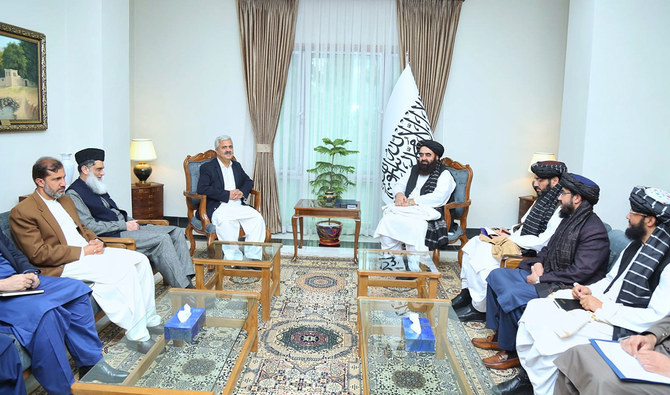
Pakistani delegation led by Commerce Secretary Khurram Agha (center, left) meets Afghan Foreign Minister Maulvi Amir Khan Muttaqi (center, right) on March 26, 2024 in Kabul. (Photo courtesy: Afghan Embassy Islamabad)
Short Url
Updated 27 March 2024
Follow

In ongoing talks in Kabul, Pakistan, Afghan officials pledge to tackle ‘trade hurdles’

  • The two countries have traded blame in recent months over a spate of militant attacks in Pakistan
  • Pakistani delegation visiting Kabul amid heightened tensions over cross-border airstrikes by Pakistan

PESHAWAR: Pakistani and Afghan officials have pledged to resolve issues relating to bilateral trade and travel, the Afghan foreign ministry said as talks between the two sides in Kabul entered a third day today, Wednesday, amid heightened tensions over Islamabad carrying out cross-border airstrikes against suspected militants.
The neighboring countries have traded blame in recent months over who is responsible for a recent spate of militant attacks in Pakistan. Islamabad says the attacks are launched mostly by members of the Tehrik-e Taliban Pakistan (TTP) who operate from safe havens in Afghanistan. Kabul’s ruling Taliban deny this and blame Islamabad for not being able to handle its own security challenges.
Tensions have also worsened as Islamabad began expelling more than a million undocumented foreigners, mostly Afghans, from Nov. 1 last year, amid the row over accusations that Kabul harbored Pakistani militants.
The diplomatic tensions over the last few months have also led to economic losses, as key border crossing for trade and travel have been intermittently closed, hitting trade-dependent communities and industries.
On Monday, a Pakistani delegation led by Commerce Secretary Khurram Agha arrived in Kabul to discuss matters relating to bilateral trade. The team met acting Afghan Foreign Minister Maulvi Amir Khan Muttaqi on Tuesday.
“The purpose of the visit was to strengthen commercial, transit and economic relations between the two countries. The two sides highlighted main obstacles and ways to tackle those hurdles,” the Afghan foreign ministry said in a statement.
“Both sides pledged to tackle the existing hurdles in the transit areas with joint and concerted measures.”
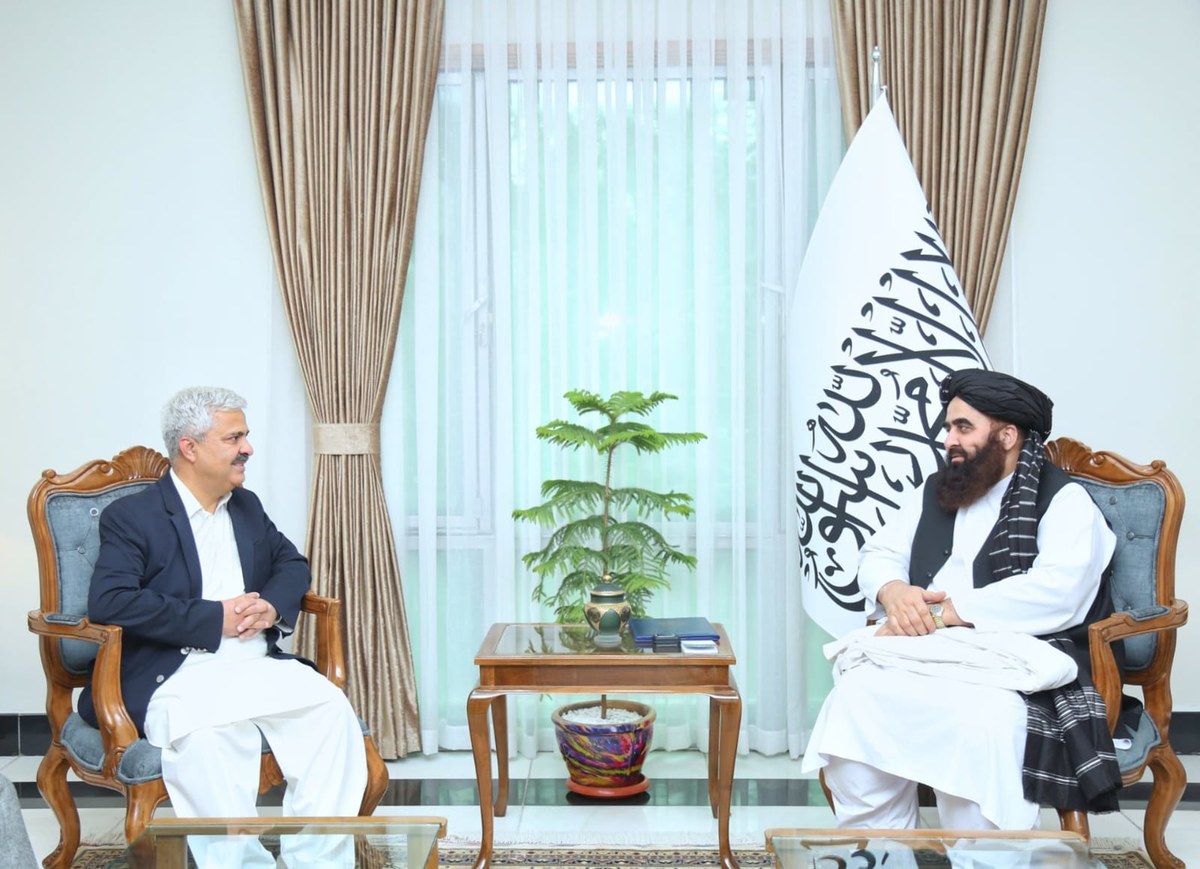


Commerce Secretary Khurram Agha (left) meets Afghan Foreign Minister Maulvi Amir Khan Muttaqi (right) on March 26, 2024, in Kabul. (Photo courtesy: Afghan Embassy Islamabad)

Agha thanked the Afghan government for inviting the delegation to Afghanistan and said Pakistan wanted to find solutions to “all problems in trade and commerce areas at the earliest,” according to the Afghan foreign ministry statement.
Along with strengthening trade relations between the two sides, issues surrounding the travel of passengers, patients, and businessmen is also being discussed during the ongoing meetings.
On Saturday, ahead of the talks, Hajji Usman, a member of the Nangarhar Chamber of Commerce and Industry, said security issues between the two countries were impeding the smooth flow of trade.
“I don’t think bilateral trade can move forward in the current state of affairs,” he told Arab News. “First, both countries need to restore confidence and pave ground for boosting trade.”
Akhundzada Abdul Salam Jawad, an Afghan commerce ministry spokesperson, accused Islamabad of complicating bilateral trade issues.
“Talks will focus on unnecessary delay in movement of goods’ trucks, red tapism in preparing documents for transit of heavy containers and Islamabad’s latest tightening of rules for Afghan truckers to get Pakistani visas,” Jawad said ahead of talks.
A year ago, Jawad said, almost 1,500 to 2,000 trucks from Pakistan entered Afghanistan on a daily basis, but “undue restrictions by Pakistan’s border and trade authorities have made business nearly impossible by introducing new rules,” bringing down the number of Pakistani trucks to about 700.
Meanwhile, Afghanistan’s business with Iran through the Chabahar Port had witnessed a boost due to the trade complications with Pakistan, Jawad added.
“We will discuss with Pakistani side either bureaucratic or infrastructural hurdles for trade and businesses at the border points with impediments and massive congestion, often closure and reopening of crossing points for trade, low scanning capacity, hurdles in trade movement such as transportation of perishable goods, which often result in massive financial losses to our businessmen,” he said.


Pakistan to launch AI screening in January to target fake visas, agent networks

Updated 5 sec ago
Follow

Pakistan to launch AI screening in January to target fake visas, agent networks

  • New system to flag forged-document travelers before boarding and pre-verify eligibility
  • Move comes amid increasing concern over fake visas, fraudulent agents, forged papers

ISLAMABAD: Pakistan will roll out an AI-based immigration screening system in Islamabad from January to detect forged documents and prevent illegal overseas travel, the government said on Thursday. 

The move comes amid increasing concern over fake visas, fraudulent agents and forged papers, with officials warning that such activity has contributed to deportations, human smuggling and reputational damage abroad. Pakistan has also faced scrutiny over irregular migration flows and labor-market vulnerability, particularly in the Gulf region, prompting calls for more reliable pre-departure checks and digital verification.

The reforms include plans to make the protector-stamp system — the clearance required for Pakistani citizens seeking overseas employment — “foolproof”, tighten labor-visa documentation, and cancel the passports of deportees to prevent them from securing visas again. The government has sought final recommendations within seven days, signalling a rapid enforcement timeline.

“To stop illegal immigration, an AI-based app pilot project is being launched in Islamabad from January,” Interior Minister Mohsin Naqvi said following a high-level meeting chaired by him and Minister for Overseas Pakistanis Chaudhry Salik Hussain.

Naqvi said the new screening technology is intended to determine travelers’ eligibility in advance, reducing airport off-loads and closing loopholes exploited by traffickers and unregistered agents.

The interior minister added that Pakistan remains in contact with foreign governments to improve the global perception and ranking of the green passport, while a uniform international driving license will be issued through the National Police Bureau.

The meeting also approved zero-tolerance measures against fraudulent visa brokers, while the Overseas Pakistanis Ministry pledged full cooperation to streamline the emigration workflow. Minister Hussain said transparency in the protector process has become a “basic requirement,” particularly for labor-migration cases.

Pakistan’s current immigration system has long struggled with document fraud, with repeated cases of passengers grounded at airports due to forged papers or agent-facilitated travel. The launch of an AI screening layer, if implemented effectively, could shift the burden from manual counters to pre-flight verification, allowing authorities to identify risk profiles before departure rather than after arrival abroad.

The reforms also come at a moment when labor mobility is tightening globally. Gulf states have begun demanding greater documentation assurance for imported labor, while European and Asian destinations have increased scrutiny following trafficking arrests and irregular-entry routes from South Asia. For Pakistan, preventing fraudulent departures is increasingly linked to protecting genuine workers, reducing deportation cycles and stabilizing the country’s overseas employment footprint.