

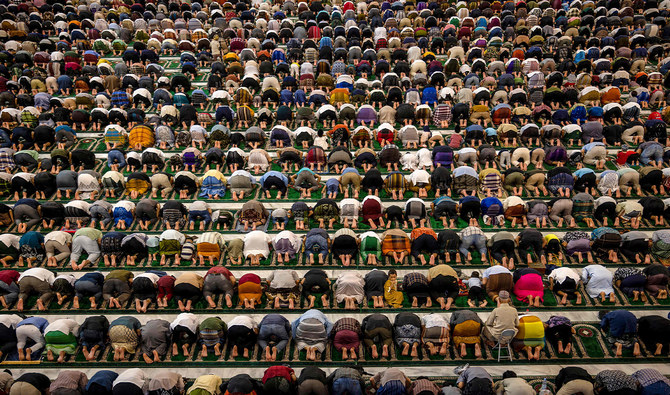

JAKARTA, Indonesia: The Muslim holy month of Ramadan, when the faithful fast from dawn to dusk, began at sunrise Tuesday in much of Asia, a day after many Muslims in the Middle East began their fasts.
In the Muslim lunar calendar, months begin only when the new moon is sighted, which can lead to variations of a day or two.
Middle Eastern nations including Saudi Arabia, Egypt, Syria, Sudan and the United Arab Emirates declared the month would begin early Monday, but in the Asia-Pacific countries including Australia, Brunei, Indonesia, Malaysia and Singapore began Ramadan on Tuesday after failing to see the crescent moon the previous night. India, Pakistan and Bangladesh also began Ramadan on Tuesday, as did Iran and Jordan.
During Ramadan, Muslims refrain from eating, drinking, smoking and sexual intercourse from sunrise until sunset. Even a tiny sip of water or a puff of smoke is enough to invalidate the fast. At night, family and friends gather and feast in a festive atmosphere.
The fasting is aimed at bringing the faithful closer to God and reminding them of the suffering of the poor. Muslims are expected to strictly observe daily prayers and engage in heightened religious contemplation. They are also urged to refrain from gossip, fighting or cursing during the holy month.
IN INDONESIA, RAMADAN MEANS JOY — AND PROFIT
In Indonesia, where 90 percent of the population of 277 million practice Islam, celebrations ranged from colorful torchlight parades, to cleaning family graves, to preparing food for pre-dawn breakfasts and elaborate post-sundown meals known as “iftars.” Each region in the archipelago nation has its own way to mark the start of Ramadan.
The government set the start of the holiday for Tuesday after teams from more than 100 regions failed to sight the new moon Sunday. Religious Affairs Minister Yaqut Cholil Qoumas announced the timing late Sunday evening.
Mosques flooded with devotees offering the evening prayers known as “tarawih” on Monday night. In Jakarta’s Istiqlal Grand Mosque, the largest in Southeast Asia, tens of thousands of worshippers crammed together shoulder-to-shoulder.
It’s also an exciting time for business. Hotels, restaurants and cafes all prepare special Ramadan promotions, shoppers to flock shopping centers for new clothes and home decorations for the holiday of Eid Al-Fitr, which marks the end of Ramadan.
IN MALAYSIA, RAMADAN CALLS TO CURB FOOD WASTE
In Malaysia, mosques began preparing bubur lambuk, a hearty traditional porridge dish made with meat and spices that is distributed for free to the public during Ramadan. But at the same time, critics urged people to keep their iftars to a reasonable size.
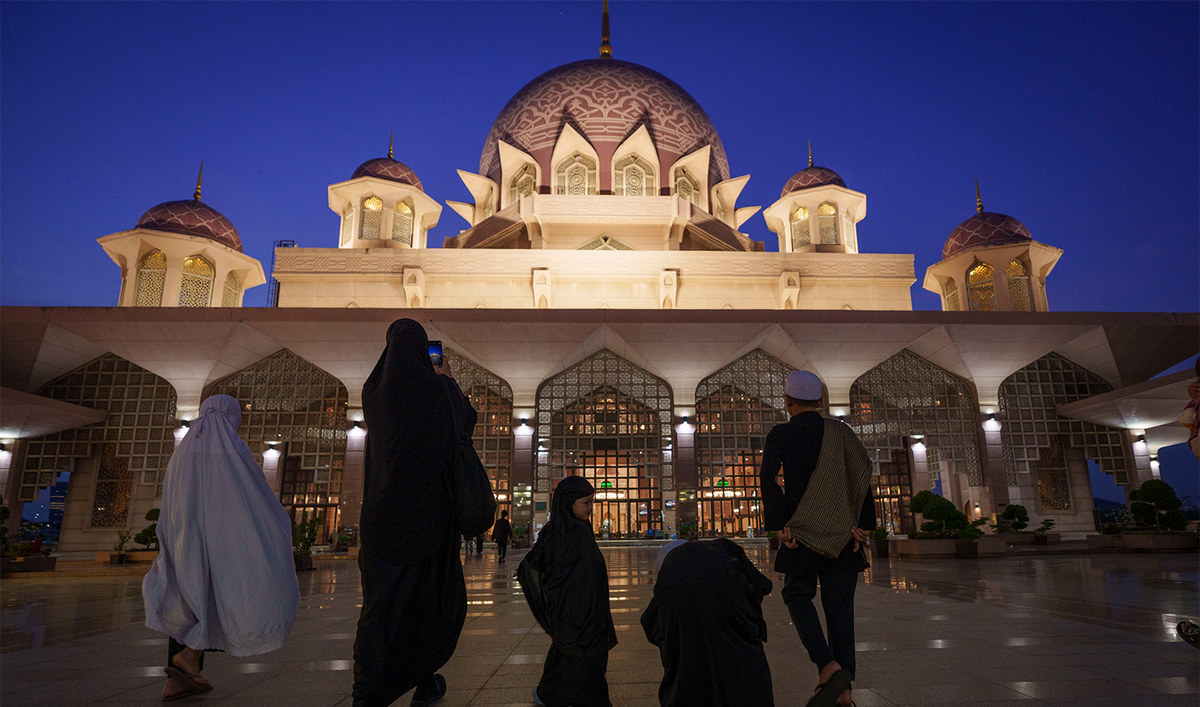
Muslims walk in Putra Mosque for prayer during sunset ahead of the holy fasting month of Ramadan in Putrajaya, Malaysia, on March 11, 2024. (AP)
The Consumers’ Association of Penang said that food waste increases by up to 20 percent during Ramadan. Some 90,000 tons of food were reportedly thrown out across the country during Ramadan last year, it said.
“Ramadan is supposed to be a month of intense devotion for Muslims but for some, it has become a month of feasting and wasteful spending,” the association’s president Mohideen Abdul Kader said in a statement Tuesday.
“Now, more than 2 million Palestinians are facing starvation so we should not be throwing away huge quantities of food in the holy month,” he added.
Rozman Abdul Rahman, a security guard, said his wife will cook just enough for to break the fast each day so that no food will go to the landfills. He said rising cost of living also means that essential food items have become more expensive.
Rozman said he enjoys the fasting season as it allows him to build his resilience. He’s removed all food and water containers from the security hut where he works to avoid temptation.
“I have been waiting for Ramadan. This is a tough period, but I enjoy it as it tests my faith and helps me to control myself. We cannot even scold people during this period,” said Rozman, 50.


