

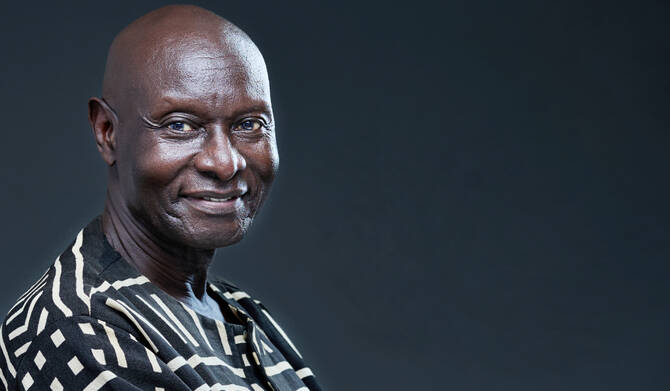

KAMPALA: A Ugandan statesman is in the race to become the next secretary-general of the UN, the latest entrant in a contest that includes six others who want to succeed Antonio Guterres at the end of this year.
Backed by Uganda, Olara Otunnu is traveling in New York “to meet delegations and engage in interactive dialogue” with the UN General Assembly and the UN Security Council, said Adonia Ayebare, Uganda’s permanent representative to the UN.
HIGHLIGHTS
• Olara Otunnu, 75, is a veteran of the UN system who has been in retirement since unsuccessfully contesting the Ugandan presidency in 2011.
• He was once seen as a favorite to replace the Egyptian Boutros-Ghali as UN secretary-general in 1997, but was blocked by the Ugandan authorities.
Otunnu had to get visa assistance, with Ugandans currently barred from entering the US as part of measures to prevent the spread of Ebola, Ayebare said.
Otunnu, 75, is a veteran of the UN system who has been in retirement since unsuccessfully contesting the Ugandan presidency in 2011.
He was once seen as a favorite to replace the Egyptian Boutros Boutros-Ghali as UN secretary-general in 1997, but was blocked by the Ugandan authorities now nominating him. Then the president of the International Peace Institute in New York, Otunnu was not on good terms with the government of President Yoweri Museveni. Ghana’s Kofi Annan won the job.
Annan named Otunnu a UN under-secretary-general and his special representative for children and armed conflict. Otunnu served in that role between 1997 and 2005, the year he won the Sydney Peace Prize for “his ceaseless efforts to protect children in time of war and his promotion of measures for the healing and social reintegration of children in the aftermath of conflict.”
Educated at Oxford and Harvard Law School, he was Uganda’s representative to the UN between 1980 and 1985, serving for a year as president of the Security Council. He also briefly served as Uganda’s foreign minister in the 1980s. He is widely respected in Uganda as an elder statesman.
“Even though the UN is now occupied with a number of issues across the board, the most important single mandate for the UN remains the issue of peace and security,” Otunnu told reporters last week.
He pointed out that as president of the Security Council, he designed the system of straw balloting, which is still in use as the so-called Otunnu Formula, first deployed with the selection in 1981 of Peru’s Javier Perez de Cuellar as UN secretary-general.
Still, it remains unclear why Uganda nominated Otunnu several weeks after other candidates began their auditions for the role.
An additional obstacle for Otunnu is that the job of secretary-general tends to rotate by region as a tradition, and this year it is Latin America’s turn. But there is no formal obstacle to candidates from other regions and there is no clear front-runner.
“Otunnu is the dark horse candidate,” said Angelo Izama, a Ugandan analyst with the Fanaka Kwawote think tank. “He is a safe candidate. If the top Latin American candidate is vetoed, he is going to be the fall-back candidate.”


