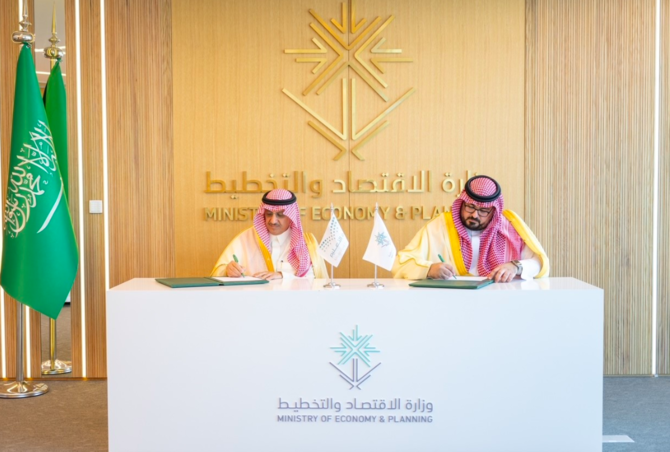

RIYADH: Economics is set to be added to the Saudi school curriculum, thanks to an agreement by two ministries designed to align education with workforce needs.
The memorandum of understanding, signed by Minister of Economy and Planning Faisal Al-Ibrahim and Minister of Education Yousef Al-Benyan, aims to introduce students to the importance of economics and public policy specializations to meet the labor market requirements.
The MoU also aims to attract scholarship students and graduates according to the needs and directions of the Ministry of Economy and Planning and develop educational content to align with the Kingdom’s goals.
The two ministries collaborated on scholarship programs encompassing public policy, public administration, economics, and various other disciplines. Additionally, they worked on enhancing cooperation in other areas.
On a technological note, during the Human Capability Initiative in February, Al-Benyan stated that global estimates suggest technology adoptions and expansion are poised to transform 70 percent of business practices worldwide.
“As economists continue to navigate this dynamic labor market landscape, it is more critical than ever to work inclusively to promote positive human capability outcomes,” the minister said.
He emphasized the importance of harnessing human potential in a world that is constantly changing. Furthermore, he highlighted the need to address evolving labor market dynamics both locally and globally.
Al-Benyan mentioned that Saudi Arabia’s Human Capability Development Program, which encompasses strategies across all stages of learning, from early childhood to lifelong learning, aims to unleash individuals’ full potential.
Furthermore, he underscored the importance of collaboration between the government, private sector, and non-profit organizations to ensure success and prosperity for all.
“To make these efforts a reality, Saudi Arabia will come working with all partners to explore opportunities and promote innovative policy design and solutions advancing human capability,” Al-Benyan added.
During the conference, Saudi Arabia officially joined the Global Partnership for Education fund, making a $38 million contribution.
This is the largest fund exclusively dedicated to enhancing the performance of the education sector in low-income and middle-income countries.
The focus on aligning education with employability comes after Saudi Minister of Human Resources and Social Development Ahmed Al-Rajhi issued a ministerial order in Janauary obliging private sector businesses with 50 or more employees to provide cooperative training for students.
The decision was based on an academic plan approved by educational institutions and the demands of the labor market, officials said.
The aim is to improve the quality and efficiency of training programs in the private sector, create more opportunities for development and growth, and ensure students receive relevant training that helps them secure jobs after graduation by improving their performance and practical skills.