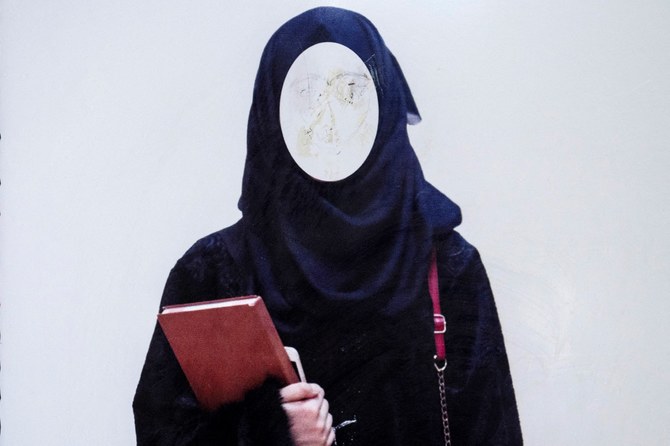
KABUL: Over the past two-and-a-half years, Afghan women have been facing increasing limitations on their participation in society, including on movement, personal attire, as well as access to work and education.
Since the Taliban regained control of the country in August 2021, after 20 years of fighting US-led forces and Afghanistan’s Western-backed administration, they have introduced numerous restrictions widely regarded as the world’s most serious violations of women’s rights.
With the situation largely absent from the news, the UN Assistance Mission in Afghanistan warned on Friday, as the world observed International Women’s Day, that the crackdown by the Taliban was “pushing women into even greater isolation.”
For Bibi Hasina, a 38-year-old mother from Kabul, there has been a constant fear of arbitrary arrest.
“The Propagation of Virtue and the Prevention of Vice officials are regularly roaming in the city and they often stop women that don’t have a male companion for questioning. A few girls were reportedly detained in Kabul for not wearing proper hijab recently,” she told Arab News.
“Sometimes, we are also questioned in security check posts for our relations with the driver or with other passengers.”
Women are not allowed to travel long distances without a male guardian and have been barred from attending secondary school and university, leaving religious schools the only option and making Afghanistan the only country with such bans in place.
They have also been excluded from employment in most public and private companies. Their presence in the workforce is limited to only “essential” positions in education and health care, as well as some other positions where women’s work is deemed appropriate.
Afghanistan was in last position on the 2023 Women, Peace and Security Index, with its society being increasingly gender-segregated. But despite international pressure, Taliban authorities say the situation has improved, even as the livelihood of Afghan women has been increasingly constrained.
“Women’s access to justice has increased and become easier,” Hamdullah Fitrat, the Taliban government’s deputy spokesperson, told Arab News.
“More than 120,000 women are working in the business sector while 150,000 others are employed in the health sector in the country. Many women also got work through the Women’s Chamber of Commerce and Industries.”
The improved security since the Taliban takeover has been observed and some women see it as bringing hope.
“The security has improved as the war has finally ended in the country. There’s no fear of explosions and bombings anymore. The level of street harassment by random men and boys has lowered notably. Islamic rules are enforced by the current government, which is a positive step,” said Samira Rahimi, a teacher at a religious school in Kabul.
“If the Taliban allow girls to continue their education and make some necessary arrangements for women’s work according to Islamic rules, things will get even better. The overall situation of women compared to the 20 years of the US occupation has seen major positive changes.”
However, those who had dreamed of studying and becoming professionals, disagree.
“Nothing in the country will be complete without girls being able to get an education,” said Parisa, a grade 12 student from Herat, who is hoping to become a journalist.
“More than two years have passed and there is no major pressure on the current government in Afghanistan to reopen girls’ schools. In the beginning, there were some efforts but with no results,” she said.
“We feel like the world has abandoned us in the most stressful times.”


![]()

‘World has abandoned us’: Afghan women’s rights plunge in global silence
Short Url
https://arab.news/mr5bn
‘World has abandoned us’: Afghan women’s rights plunge in global silence
- UN warns restrictions are pushing Afghan women into increasing isolation
- Taliban say security and women’s access to justice, jobs have improved


Latest updates


© 2026 SAUDI RESEARCH & PUBLISHING COMPANY, All Rights Reserved And subject to Terms of Use Agreement.