

Saudi Arabia sets conditions for 30-year tax exemption for MNCs with regional HQs in Riyadh

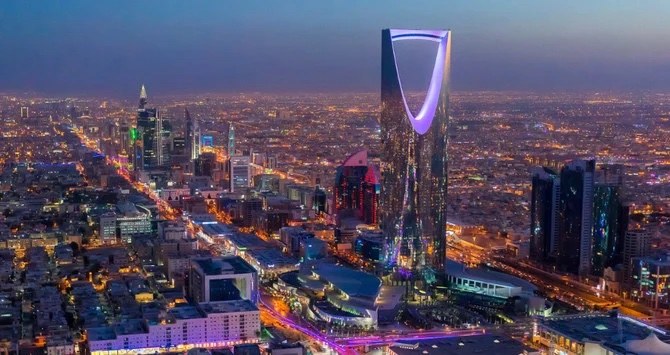
In December 2023, Saudi Arabia introduced a tax incentive initiative to attract foreign companies and encourage them to establish their regional hubs in the Kingdom, Umm Al-Qura reported. Shutterstock
Short Url
Updated 18 February 2024
Follow

Saudi Arabia sets conditions for 30-year tax exemption for MNCs with regional HQs in Riyadh

RIYADH: Saudi Arabia has officially gazetted the terms and conditions of a law enabling multinational companies to qualify for a 30-year income tax exemption upon relocating their regional headquarters to the Kingdom. 

Umm Al-Qura published the guidelines as the law came into effect on Feb. 16, following official publication in the gazette. This aligns with existing tax and zakat regulations within Saudi Arabia, as indicated in the national classification of economic activities. 

This follows Saudi Arabia’s introduction of the tax incentive initiative in December 2023 to attract foreign companies and encourage them to establish their regional hubs in the Kingdom. 

With the law in effect, eligible firms can benefit from a 0 percent income tax rate for corporate entities and withholding taxes for a period of 30 years under this initiative, provided they meet the laid-down terms and conditions. 

The Kingdom had previously announced that it would not award any deals to any foreign company or commercial entity with a Middle Eastern base outside Saudi Arabia starting from Jan.1, 2024.  

Over 200 international firms became eligible to procure government contracts in Saudi Arabia as they opened regional headquarters in Riyadh by the end of 2023.   

This benefit becomes immediately accessible upon obtaining their regional headquarters license.  

Furthermore, these companies will experience relaxed Saudization requirements and streamlined work permit provisions for the spouses of executives stationed at these regional headquarters.  

Article 3 of the regulations outlines the tax incentives granted to regional headquarters that meet the qualification criteria set forth by the Ministry of Investment, as per the official gazette.  

These incentives include a 0 percent income tax rate on qualified income and a 0 percent withholding tax on various payments, provided the companies meet specific conditions, according to the Kingdom’s first Arabic-language daily newspaper. 

However, exemptions from withholding tax are not applicable under certain circumstances, such as non-approved activities or instances of tax avoidance outlined in the rules. 

According to Article 4, these tax incentives are granted for a period of 30 years to regional headquarters engaging in qualified activities, subject to renewal. The countdown for these incentives begins upon obtaining the regional headquarters license and ceases upon the expiration of the 30-year term or the cessation of regional headquarters operations. 

To ensure compliance, Article 5 stipulates several actual economic requirements for regional headquarters. These include possessing a valid license issued by the Ministry of Investment, maintaining appropriate assets and operational expenses in Saudi Arabia, and generating revenue from approved activities within the country. 

The regulations also mandate adherence to specific record-keeping and reporting procedures, with the Zakat, Tax, and Customs Authority responsible for monitoring and verifying compliance with these requirements. 

Failure to meet the economic requirements may result in penalties, fines, or even the suspension or cancellation of tax incentives, as outlined in Articles 11 and 12. 

Furthermore, the regulations affirm that regional headquarters are considered residents of Saudi Arabia for international treaty purposes, provided they meet residency criteria outlined in the Income Tax Law. 

These measures reflect Saudi Arabia’s concerted efforts to attract foreign investment and bolster its position as a regional business hub. 

Several international firms from various sectors, including energy, technology, health care and hospitality, have now established their headquarters in Riyadh.  

Some of the noted firms that relocated their headquarters to the Kingdom are Northern Trust, Bechtel and Pepsico from the US, and IHG Hotels and Resorts, PwC, and Deloitte from the UK. 


First EU–Saudi roundtable on critical raw materials reflects shared policy commitment

Updated 16 January 2026
Follow

First EU–Saudi roundtable on critical raw materials reflects shared policy commitment

RIYADH: The EU–Saudi Arabia Business and Investment Dialogue on Advancing Critical Raw Materials Value Chains, held in Riyadh as part of the Future Minerals Forum, brought together senior policymakers, industry leaders, and investors to advance strategic cooperation across critical raw materials value chains.

Organized under a Team Europe approach by the EU–GCC Cooperation on Green Transition Project, in coordination with the EU Delegation to Saudi Arabia, the European Chamber of Commerce in the Kingdom and in close cooperation with FMF, the dialogue provided a high-level platform to explore European actions under the EU Critical Raw Materials Act and ResourceEU alongside the Kingdom’s aspirations for minerals, industrial, and investment priorities.

This is in line with Saudi Vision 2030 and broader regional ambitions across the GCC, MENA, and Africa.

ResourceEU is the EU’s new strategic action plan, launched in late 2025, to secure a reliable supply of critical raw materials like lithium, rare earths, and cobalt, reducing dependency on single suppliers, such as China, by boosting domestic extraction, processing, recycling, stockpiling, and strategic partnerships with resource-rich nations.

The first ever EU–Saudi roundtable on critical raw materials was opened by the bloc’s Ambassador to the Kingdom, Christophe Farnaud, together with Saudi Deputy Minister for Mining Development Turki Al-Babtain, turning policy alignment into concrete cooperation.

Farnaud underlined the central role of international cooperation in the implementation of the EU’s critical raw materials policy framework.

“As the European Union advances the implementation of its Critical Raw Materials policy, international cooperation is indispensable to building secure, diversified, and sustainable value chains. Saudi Arabia is a key partner in this effort. This dialogue reflects our shared commitment to translate policy alignment into concrete business and investment cooperation that supports the green and digital transitions,” said the ambassador.

Discussions focused on strengthening resilient, diversified, and responsible CRM supply chains that are essential to the green and digital transitions.

Participants explored concrete opportunities for EU–Saudi cooperation across the full value chain, including exploration, mining, and processing and refining, as well as recycling, downstream manufacturing, and the mobilization of private investment and sustainable finance, underpinned by high environmental, social, and governance standards.

From the Saudi side, the dialogue was framed as a key contribution to the Kingdom’s industrial transformation and long-term economic diversification agenda under Vision 2030, with a strong focus on responsible resource development and global market integration.

“Developing globally competitive mineral hubs and sustainable value chains is a central pillar of Saudi Vision 2030 and the Kingdom’s industrial transformation. Our engagement with the European Union through this dialogue to strengthen upstream and downstream integration, attract high-quality investment, and advance responsible mining and processing. Enhanced cooperation with the EU, capitalizing on the demand dynamics of the EU Critical Raw Materials Act, will be key to delivering long-term value for both sides,” said Al-Babtain.

Valere Moutarlier, deputy director-general for European industry decarbonization, and directorate-general for the internal market, industry, entrepreneurship and SMEs at European Commission, said the EU Critical Raw Materials Act and ResourceEU provided a clear framework to strengthen Europe’s resilience while deepening its cooperation with international partners.

“Cooperation with Saudi Arabia is essential to advancing secure, sustainable, and diversified critical raw materials value chains. Dialogues such as this play a key role in translating policy ambitions into concrete industrial and investment cooperation,” she added.