‘Stop genocide’ plea by performer at Sanremo Music Festival sparks diplomatic row

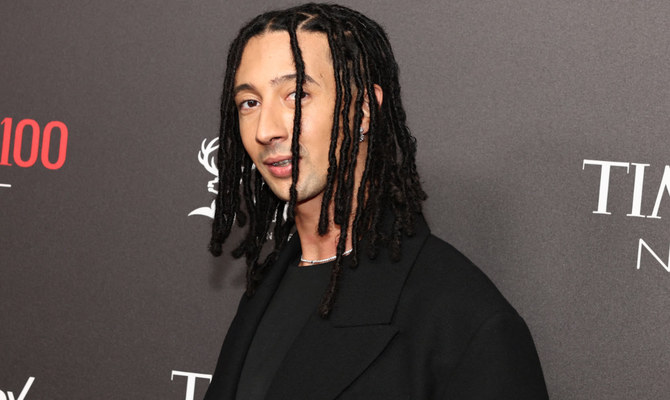
Ghali Amdouni attends 2023 Time100 Next at Second on October 24, 2023 in New York City. (AFP)
Short Url
Updated 12 February 2024
Follow

‘Stop genocide’ plea by performer at Sanremo Music Festival sparks diplomatic row

  • Israeli ambassador accuses artist of spreading hate in “superficial, irresponsible way”; broadcaster accused of censorship after editing performance
  • Italian Tunisian rapper Ghali made his on-stage appeal for peace in Gaza during the final of the 5-day event on Saturday night

LONDON: The Sanremo Music Festival sparked controversy at the weekend as a result of an on-stage plea by one of the performers, Italian-Tunisian rapper Ghali, to “stop the genocide” in Gaza.

Israel’s ambassador to Italy, Alon Bar, said the festival, which is officially known as the 74th Italian Song Festival and is a major TV event during which Italy’s Eurovision contestant is chosen, was being exploited to “spread hatred and provocation in a superficial, irresponsible way.”

Expressing his disappointment, Bar said in a message posted on social media that festival organizers had missed an opportunity to show solidarity with the victims of the Oct. 7 attacks by Hamas, many of whom were young festivalgoers.

Ignazio La Russa, president of the Italian Senate and an MP for Prime Minister Giorgia Meloni’s Brothers of Italy party, criticized the festival for allowing discussion of the Israeli-Palestinian issue in what he described as a one-sided manner, stating: “You cannot entrust the issue to a singer who expresses a one-sided statement.”

Noemi Di Segni, president of the Italian Jewish Community, also condemned Ghali for his statement, describing it as offensive to “the history of our country and the whole of Europe.”

Ghali’s comment came on Saturday during the final of the five-day festival. Asked on Sunday for his thoughts about Bar’s response, the rapper, whose parents came from Tunisia, said he had been discussing the issue since childhood.

He criticized the ambassador for his stance and said people are hesitant to speak out in support of peace in the current climate, out of fear about the possible reaction.

Mohammed Hannoun, president of the Palestinian Association of Italy, thanked Ghali for “his clear words against the extermination” in Gaza.

Roberto Sergio, the CEO of Rai, the state broadcaster that airs the festival, expressed “heartfelt solidarity with the Israeli people” and said that “every day” the network remembers “the tragedy of the hostages at the hands of Hamas” and “the massacre of children, women and men on Oct. 7.”

Ghali was not the only performer to make an anti-war statement during the festival or voice support for a ceasefire in Gaza. Renowned Italian singer Eros Ramazzotti said: “Nearly 500,000 children live in conflict zones. No more blood, no more wars.”

Fellow Italian performer Dargen D’Amico said: “There are children under the bombs, without water and without food. Our silence is co-responsibility.”

D’Amico faced criticism during a follow-up event when he expressed pro-immigration views at odds with those of the Italian government.

Ghali’s “stop the genocide” call was edited out of Rai’s coverage of the Sanremo event, and a post-performance interview with D’Amico was shortened. The broadcaster faced a backlash on social media and accusations of censorship.

The winner of contest was Angelina Mango, with the song “La Noia (The Boredom).” She will represent Italy at the Eurovision Song Contest in May.


UAE outlines approach to AI governance amid regulation debate at World Economic Forum

Updated 22 January 2026
Follow

UAE outlines approach to AI governance amid regulation debate at World Economic Forum

  • Minister of State Maryam Al-Hammadi highlights importance of a robust regulatory framework to complement implementation of AI technology
  • Other experts in panel discussion say regulators should address problems as they arise, rather than trying to solve problems that do not yet exist

DUBAI: The UAE has made changes to 90 percent of its laws in the past four years, Maryam Al-Hammadi, minister of state and the secretary-general of the Emirati Cabinet, told the World Economic Forum in Davos on Wednesday.

Speaking during a panel discussion titled “Regulating at the Speed of Code,” she highlighted the importance of having a robust regulatory framework in place to complement the implementation of artificial intelligence technology in the public and private sectors.

The process of this updating and repealing of laws has driven the UAE’s efforts to develop an AI model that can assist in the drafting of legislation, along with collecting feedback from stakeholders on proposed laws and suggesting improvements, she said.

Although AI might be more agile at shaping regulation, “there are some principles that we put in the model that we are developing that we cannot compromise,” Al-Hammadi added. These include rules for human accountability, transparency, privacy and data protection, along with constitutional safeguards and a thorough understanding of the law.

At this stage, “we believe AI can advise but still (the) human is in command,” she said.

Authorities in the UAE are aiming to develop, within a two-year timeline, a shareable model to help other nations learn and benefit from its experiences, Al-Hammadi added.

Argentina’s minister of deregulation and state transformation, Federico Sturzenegger, warned against overregulation at the cost of innovation.

Politicians often react to a “salient event” by overreacting, he said, describing most regulators as “very imaginative of all the terrible things that will happen to people if they’re free.”

He said that “we have to take more risk,” and regulators should wait to address problems as they arise rather than trying to create solutions for problems that do not yet exist.

This sentiment was echoed by Joel Kaplan, Meta’s chief global affairs officer, who said “imaginative policymakers” often focus more on risks and potential harms than on the economic and growth benefits of innovation.

He pointed to Europe as an example of this, arguing that an excessive focus on “all the possible harms” of new technologies has, over time, reduced competitiveness and risks leaving the region behind in what he described as a “new technological revolution.”