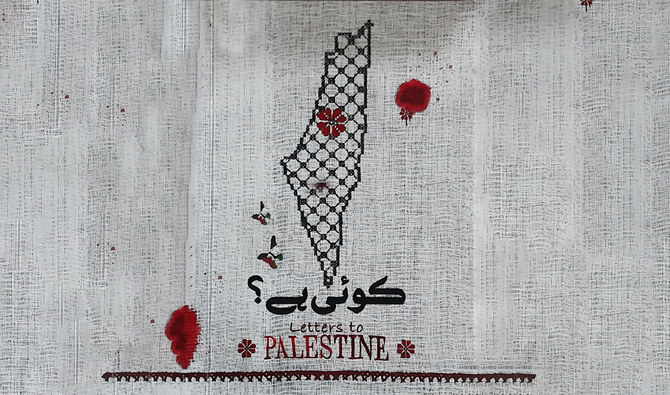
ISLAMABAD: Pakistani journalist and publisher Mehr Husain said on Monday a recently released literary anthology, “Koi Hai – Letters to Palestine” that she put together aimed to “speak out” against Israel’s months-long violence in Gaza. Koi Hai – Letters to Palestine, an anthology comprising notes, letters, poetry, translations and illustrations, was published this month to express solidarity with the people of Palestine who have endured months of bombing and ground assaults by the Israeli military in Gaza. As per official figures, over 26,000 Palestinians have been killed since Oct. 7, which marked the beginning of Israel’s war in the territory. The e-book features submissions from authors in Pakistan, the UAE and India, while it also contains poetic works from Palestine which have been translated into Urdu, Persian and Seraiki languages. The project is a collaboration between an independent publishing house headed by Husain, Zuka Books, and global media platform Ananke, which published its electronic version of the literary project. A press release shared by Zuka Books said contributors to the e-book include globally respected names from the Pakistani literary community such as Taha Kehar, Hammad H Rind, Safinah Danish Elahi, Aisha Sarwari as well as aspiring writers, and students. “This anthology came about as a means to communicate to the Palestinian people that we bear witness to your suffering, we will speak out against the violence being inflicted upon on you and hopefully, you will live to tell your stories, by yourselves, for yourselves to the world to ensure an end to your suffering,” Husain told Arab News. She said the most “touching” aspect of the exercise was to witness how the contributors and people in general engaged with the war. “There is a sense of united understanding that hatred leads to nowhere and empathy is the way forward,” Husain noted. “I’m still receiving more submissions which shows people are keen on connecting with the Palestinians to show their support in a humane, civil manner without engaging in anger or hatred for the other.” Speaking at the digital launch of the project this month, Ananke founder and executive editor Sabin Muzaffar described the e-book as a “medicine that can begin with healing all around the world.” “Perhaps efforts like Koi Hai can bring us closer together for it is through discourse, dialogue that we may be able to reimagine communication— a conversation,” Muzaffar said. “This collaboration gives me hope.”


![]()

Pakistani publisher releases ‘Letters to Palestine’ anthology to ‘speak out’ against Gaza war
Short Url
https://arab.news/wd8ut
Pakistani publisher releases ‘Letters to Palestine’ anthology to ‘speak out’ against Gaza war
- “Koi Hai— Letters to Palestine” features notes, letters, poetry, translations and illustrations capturing Israel’s war on Gaza
- Pakistani authors Taha Kehar, Hammad H. Rind, Aisha Sarwari, aspiring writers and students contributed for the project
Latest updates


© 2026 SAUDI RESEARCH & PUBLISHING COMPANY, All Rights Reserved And subject to Terms of Use Agreement.