

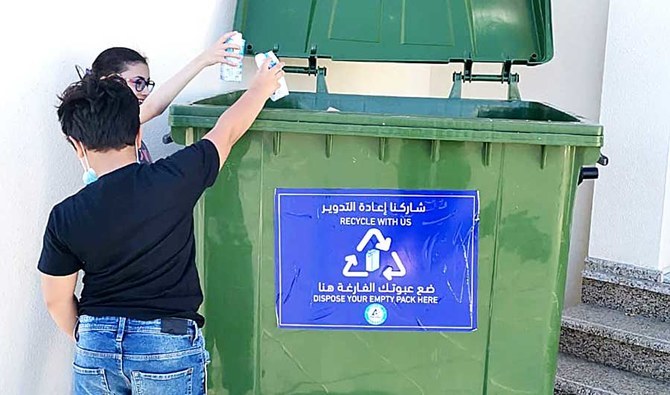

RIYADH: Saudi Arabia’s Ministry of Environment, Water and Agriculture has unveiled a plan to recycle up to 95 percent of the country’s waste, a move it claims which contribute SR120 billion ($31.99 billion) to the gross domestic product, the Saudi Press Agency reported.
The initiative will help create over 100,000 jobs in the sector for Saudi nationals and seeks to recycle up to 100 million tons of waste annually in a push toward its sustainability efforts.
This was revealed in the ministry’s year-end report detailing its past performance and plans for 2024. The scheme aligns with the Kingdom’s endeavors to achieve sustainable development goals through well-designed plans and processes in all its sectors, including the National Environment Strategy.
The plan includes a clear institutional framework that contains more than 65 initiatives entailing an investment exceeding SR55 billion.
The report highlighted that the ministry was able to preserve more than 90,000 hectares and plant more than 50 million trees across the Kingdom.
This was accompanied by an increase in the level of community awareness while monitoring efforts in environmental commitment contributed to raising the quality of life.
Earlier in January, King Abdullah Financial District Development and Management Co. signed a memorandum of understanding with Saudi Investment Recycling Co. to promote waste management solutions.
The agreement was signed at an event titled “Meeting National Targets for Waste Management and Recycling,” held in Riyadh.
The MoU was endorsed by Ziyad Al-Shiha, CEO of SIRC, and Gautam Sashittal, CEO of KAFD DMC.
Speaking to Arab News on the sidelines of the event, Al-Shiha said: “SIRC has developed a robust recycling infrastructure that includes collection centers and material recovery facilities. These facilities are equipped with advanced technologies to sort, process, and recycle different types of waste materials.”
He added that his company believed in waste sorting and segregation at the source.
“We encourage individuals, businesses, and communities to separate recyclable materials from general waste to maximize recycling rates and minimize landfill disposal,” he said.


