

Saudi Arabia unveils plan to recycle up to 95% of waste in 2024

The plan includes a clear institutional framework that contains more than 65 initiatives entailing an investment exceeding SR55 billion.
Short Url
Updated 15 January 2024
Follow

Saudi Arabia unveils plan to recycle up to 95% of waste in 2024

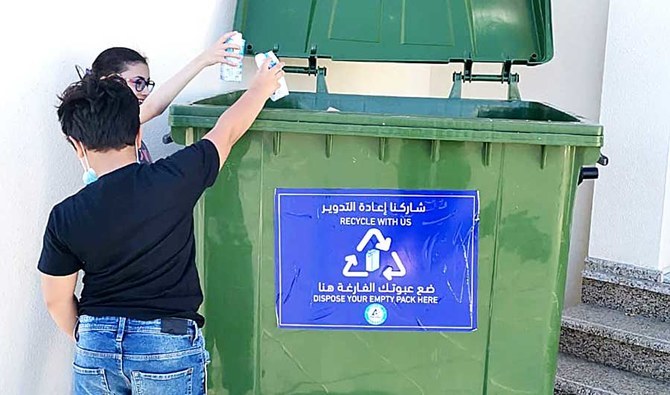
RIYADH: Saudi Arabia’s Ministry of Environment, Water and Agriculture has unveiled a plan to recycle up to 95 percent of the country’s waste, a move it claims which contribute SR120 billion ($31.99 billion) to the gross domestic product, the Saudi Press Agency reported.

The initiative will help create over 100,000 jobs in the sector for Saudi nationals and seeks to recycle up to 100 million tons of waste annually in a push toward its sustainability efforts.

This was revealed in the ministry’s year-end report detailing its past performance and plans for 2024. The scheme aligns with the Kingdom’s endeavors to achieve sustainable development goals through well-designed plans and processes in all its sectors, including the National Environment Strategy.

The plan includes a clear institutional framework that contains more than 65 initiatives entailing an investment exceeding SR55 billion.

The report highlighted that the ministry was able to preserve more than 90,000 hectares and plant more than 50 million trees across the Kingdom.

This was accompanied by an increase in the level of community awareness while monitoring efforts in environmental commitment contributed to raising the quality of life.

Earlier in January, King Abdullah Financial District Development and Management Co. signed a memorandum of understanding with Saudi Investment Recycling ‎Co.‎ to promote waste management solutions.

The agreement was signed at an event titled “Meeting National Targets for Waste Management and Recycling,” held in Riyadh.

The MoU was endorsed by Ziyad Al-Shiha, CEO of SIRC, and Gautam Sashittal, CEO of KAFD DMC.

Speaking to Arab News on the sidelines of the event, Al-Shiha said: “SIRC has developed a robust recycling infrastructure that includes collection centers and material recovery facilities. These facilities are equipped with advanced technologies to sort, process, and recycle different types of waste materials.”

He added that his company believed in waste sorting and segregation at the source.

“We encourage individuals, businesses, and communities to separate recyclable materials from general waste to maximize recycling rates and minimize landfill disposal,” he said.


Saudi Arabia’s cultural sector is a new economic engine between Riyadh and Paris, says ambassador

Updated 25 January 2026
Follow

Saudi Arabia’s cultural sector is a new economic engine between Riyadh and Paris, says ambassador

RIYADH: Culture has become a fundamental pillar in bilateral relations between France and Saudi Arabia, according to the French Ambassador to the Kingdom, Patrick Maisonnave.

Maisonnave noted its connection to the entertainment and tourism sectors, which makes it a new engine for economic cooperation between Riyadh and Paris.

He told Al-Eqtisadiah during the opening ceremony of La Fabrique in the Jax district of Diriyah that cultural cooperation with Saudi Arabia is an important element for its attractiveness in the coming decades.

La Fabrique is a space dedicated to artistic creativity and cultural exchange, launched as part of a partnership between the Riyadh Art program and the French Institute in Riyadh. 

Running from Jan. 22 until Feb 14, the initiative will provide an open workspace that allows artists to develop and work on their ideas within a collaborative framework.

Launching La Fabrique as a space dedicated to artistic creativity

The ambassador highlighted that the transformation journey in the Kingdom under Vision 2030 has contributed to the emergence of a new generation of young artists and creators, alongside a growing desire in Saudi society to connect with culture and to embrace what is happening globally. 

He affirmed that the relationship between the two countries is “profound, even cultural par excellence,” with interest from the Saudi side in French culture, matched by increasing interest from the French public and cultural institutions unfolding in the Kingdom.

Latest estimates indicate that the culture-based economy represents about 2.3 percent of France’s gross domestic product, equivalent to more than 90 billion euros ($106.4 billion) in annual revenues, according to government data. The sector directly employs more than 600,000 people, making it one of the largest job-creating sectors in the fields of creativity, publishing, cinema, and visual arts.

Saudi Arabia benefiting from French experience in the cultural field

Maisonnave explained that France possesses established cultural institutions, while Saudi Arabia is building a strong cultural sector, which opens the door for cooperation opportunities.

This comes as an extension of the signing of 10 major cultural agreements a year ago between French and Saudi institutions, aiming to enhance cooperation and transfer French expertise and knowledge to contribute to the development of the cultural system in the Kingdom.

He added that experiences like La Fabrique provide an opportunity to meet the new generation of Saudi creators, who have expressed interest in connecting with French institutions and artists in Paris and France.

La Fabrique encompasses a space for multiple contemporary artistic practices, including performance arts, digital and interactive arts, photography, music, and cinema, while providing the public with an opportunity to witness the stages of producing artistic works and interact with the creative process.