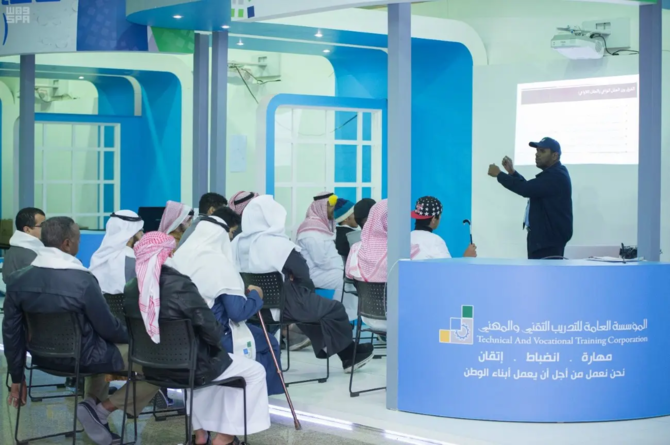



RIYADH: Saudi Minister of Human Resources and Social Development Ahmed Al-Rajhi recently issued a ministerial order obliging private sector businesses with 50 or more employees to provide cooperative training for students.
The decision was based on an academic plan approved by educational institutions and the demands of the labor market, officials said. The aim is to improve the quality and efficiency of training programs in the private sector, create more opportunities for development and growth, and ensure students receive relevant training that helps them secure jobs after graduation by improving their performance and practical skills.
Trainees and the organizations providing the training will sign a fixed-term contract that provides full details, and the organization will present the student with a certificate at the end of the training period.
The ministry has published a procedural guide explaining the full details of the decision, which can be downloaded from its website. It said private sector organizations that fail to comply with the order could face legal consequences, including penalties.
The decision was made in cooperation with the Ministry of Education, the Technical and Vocational Training Corp., and the Human Resources Development Fund. Meetings and workshops will be organized to help prepare private sector organizations as part of the ministry’s efforts to improve knowledge, skills and quality of training among the workforce.
Ahmed Al-Zahrani, deputy minister for skills and training at the Ministry of Human Resources and Social Development, told Arab News that “cooperative training is an important journey within the university or educational process, and it contributes to acquiring on-the-job skills.

Ahmed Al-Zahrani, deputy minister for skills and training at the Ministry of Human Resources and Social Development. (Supplied)
“Cooperative training adds practical skills to the student, raises the quality of the student’s educational process, and gives them better opportunities for future employment in the labor market by acquiring the necessary practical experience and skills,” he added.
Mohammed Bajunaid, former general director of the Institute of Public Administration in the Eastern Province, said: “Training is an essential and important tool for development that is indispensable in all countries of the world.
“Interest in it has been increasing in our country, due to the increasing levels of awareness of its effects among institutions and individuals in society, but it needs more attention to all its components, including qualifying trainers and updating tools and methods, as well as training curricula, in line with developments.”

Mohammed Bajunaid, former general director of the Institute of Public Administration in the Eastern Province. (Supplied)
Bajunaid said that institutions need to be aware of the elements of the training process. It has to begin with identifying needs and end with measuring the impact, so that the employee receives the training they need, he added.
“Cooperative training provides the opportunity for the student to gain practical experience through pre-graduation training, to consolidate an understanding of their specialty and accustom them to a set of job requirements: Discipline, punctuality and respect for regulations,” he said.
This involves “adapting and interacting with the future work environment and dealing with community members from outside the educational institution as well as preparing the student to take responsibility and enhance their self-confidence,” he added.
Bajunaid said that cooperative training can be used effectively if it is linked to contracting and employment in accordance with the professional competence requirements determined by employers.
“Here they show their seriousness in contributing to the localization of jobs, creating real competition among graduates to occupy the best available jobs and urging students to persevere,” Bajunaid said.