

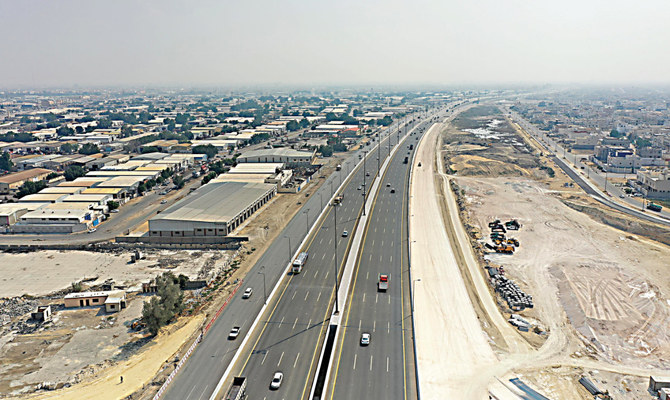

RIYADH: Saudi Arabia is looking to adopt pioneering manufacturing techniques as it seeks to turn its industrial sector into a key driver of growth, according to a top analyst.
Karim Shariff, Middle East head of advanced manufacturing services practice at Bain & Co., told Arab News the Kingdom’s objectives include enhancing productivity, resilience, and environmental stewardship.
With a vision to increase the number of factories to 36,000 by 2035, including 4,000 which will be fully automated, Saudi Arabia is poised to create a dynamic and innovative production landscape.
The adoption of advanced technologies, including artificial intelligence, 3D printing, and robotics, positions Saudi industries as global leaders of this revolution.
Shariff said: “Saudi has active programs under the leadership of the Ministry of Industry and Mineral Resources, the National Industrial Development and Logistics Program, and other entities to encourage the adoption of the highest standards of advanced and clean manufacturing principles and support the private sector to build and operate facilities that can be competitive at regional and global levels.”
He added: “To fully reach the highest standards of excellence, this transformation should not just focus on top mind improvements such as greater use of robots and more autonomous factories but a real systems-based approach that combines automation, digitization, circularity, and talent.”
The Kingdom’s industrial sector is experiencing sustained growth, with investments in manufacturing reaching $132 billion since the launch of the economic diversification strategy Vision 2030 in 2016.
A significant highlight of this resurgence is the adoption of Industry 4.0 principles, which involves the integration of advanced technologies such as the Internet of Things, artificial intelligence, and robotics to create more efficient, flexible, and interconnected systems.
This technological leap aims to enhance efficiency and productivity, steering the nation away from oil-centric economic models.
The move is already paying off, with Saudi Arabia’s manufacturing activity surging by 18.5 percent in December 2022, signaling a robust embrace of these transformative technologies.
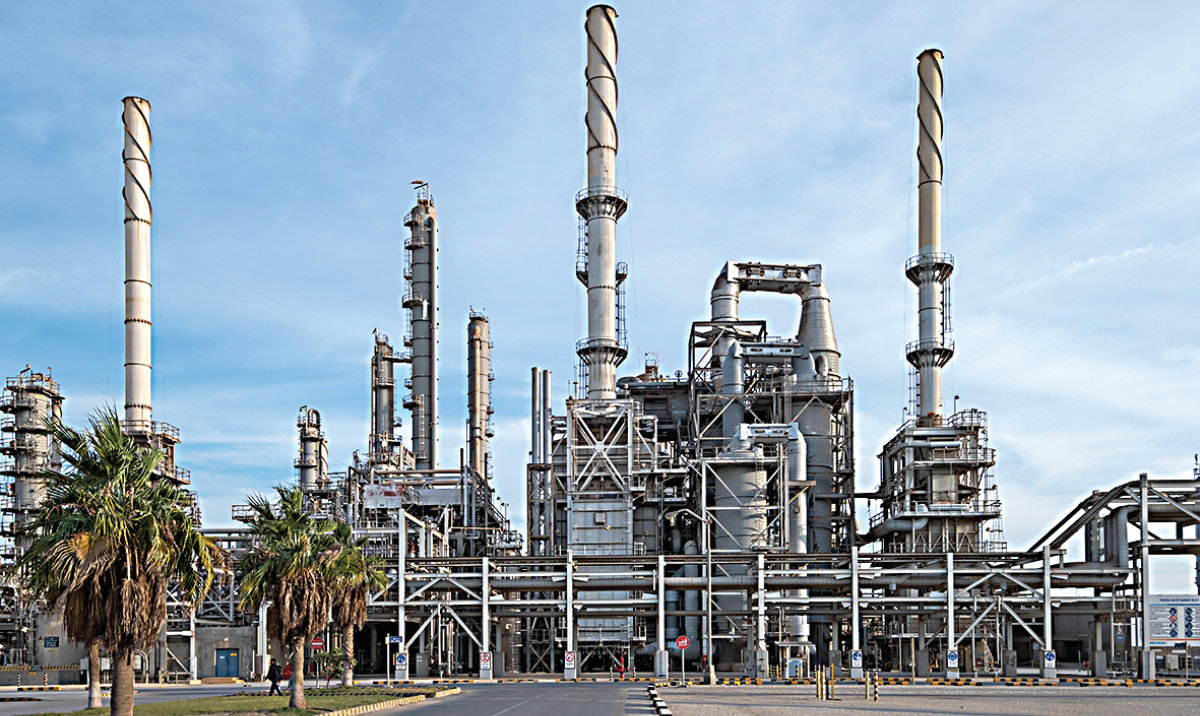
The Kingdom’s industrial sector is experiencing sustained growth, with investments in manufacturing reaching $132 billion since the launch of the economic diversification strategy Vision 2030 in 2016.
(SPA)
In order for the Kingdom to continue on this trajectory, Shariff said there needs to be a “fundamental shift” in the manufacturing landscape across Saudi Arabia, with the adoption of Industry 4.0 principles being a “clear path to building a thriving manufacturing ecosystem.”
He added: “Government would need to sharpen policies on workforce talent development, energy efficiency, and many others to ensure the right stick and carrot approach to enable the right pace of transition.”
The expert noted that a differentiated approach would be necessary to ensure new factories at onset are established with the right standards.
Furthermore, universities and education institutes need to have a view of the talent gap that needs to be filled to ensure the right curriculum and training for upcoming graduates.
Saudi Arabia is not relying purely on domestic innovations to boost the sector as the Kingdom is using international collaborations, particularly with Türkiye, to signify a forward-looking approach to diversifying industrial expertise.

The Minister of Industry and Mineral Resources, Bandar Alkhorayef, has previously highlighted potential international partnerships in food security, health, military, and the aircraft industry, emphasizing the importance of technological advancements in these fields.
The National Industry Strategy, a key component of Vision 2030, aims to make the industrial sector globally competitive and sustainable.
By fostering innovation, optimizing domestic products, and promoting global partnerships, Saudi Arabia aims to elevate the industrial sector’s contribution to gross domestic product by SR900 billion ($230 billion) by 2030.
Local content development is a pivotal aspect of this strategy, with a target to raise the share of locally manufactured products and services to 60 percent by 2025.
Shariff said: “The gap to aspiration for the Saudi manufacturing sector and lessons learned from benchmarks suggest this transition will require significant coordinated efforts.”
In a bid to encourage local consumption, the Saudi Export Development Authority initiated the “Made in Saudi” program in 2020.

To fully reach the highest standards of excellence, this transformation should not just focus on top mind improvements such as greater use of robots and more autonomous factories but a real systems-based approach that combines automation, digitization, circularity, and talent.
Karim Shariff, Middle East head of advanced manufacturing services practice at Bain & Co.
This move has already yielded positive results, creating a surge in the domestic manufacturing landscape.
Over 2,000 new licenses have been issued for various projects, contributing to the establishment of 193,000 new jobs within the industrial sector.
The Saudi mining industry, a robust contributor to this transformation, has granted over 1,300 new licenses and attracted investments exceeding $32.4 billion.
The Kingdom’s commitment to upgrading mining laws and issuing new licenses reflects its ambition to position the mining sector as the third pillar of national industry, with estimated mineral wealth reaching $1.35 trillion.
Future Outlook
The Saudi government’s commitment to attracting foreign investment through incentives and localized production requirements underscores its dedication to economic resilience and growth.
Investment initiatives, such as the Industrial Development Fund and the development of specialized economic cities, further amplify the trajectory of industrial growth.
The collaboration between the public and private sectors, exemplified by initiatives like Operation 300bn in the UAE, ensures a cohesive approach toward digital transformation, ultimately contributing to the growth of the manufacturing sector.
The future of Saudi Arabia’s industrial sector holds immense promise, driven by strategic planning, international collaborations, and a steadfast commitment to technological advancement.


