

Where We Are Going Today: Flamingo Room by Tashas restaurant

1 / 4
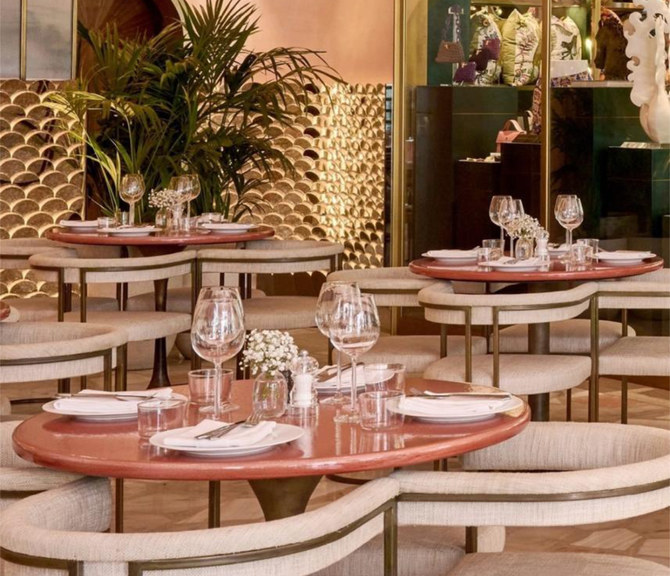
Take in the beauty of African inspired interiors at Flamingo Room by Tasha. (Instagram @flamingoroomksa)
2 / 4
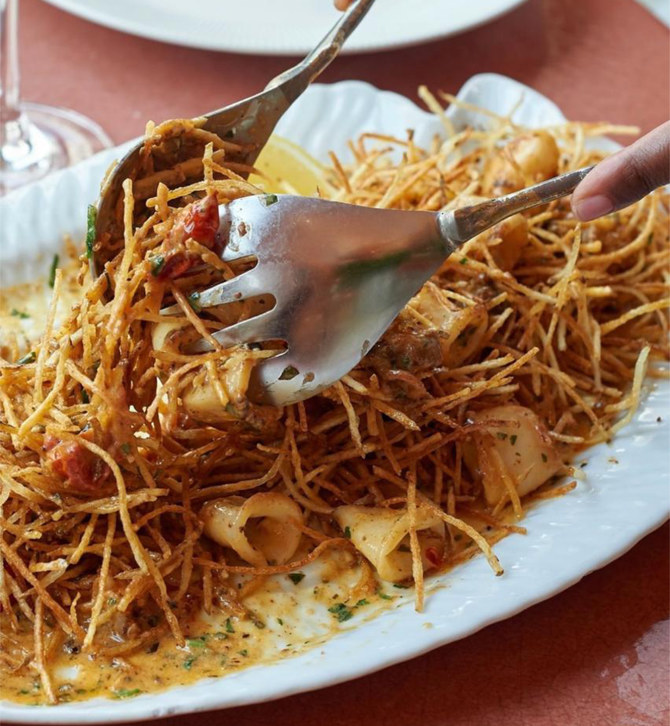
Calamari Mozambique, a signature dish at Flamingo Room. (Instagram @flamingoroomksa)
3 / 4
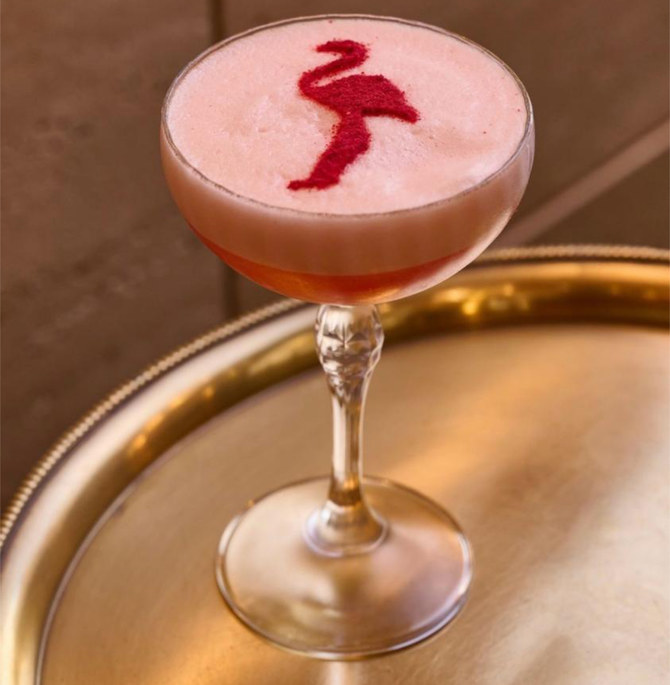
The mocktails menus offers a selection of inventive and refreshing drinks. (Instagram @flamingoroomksa)
4 / 4
Baked Alaska, a chocolate ganache cake, semi-freddo, with caramel and meringue. (Instagram @flamingoroomksa)
Short Url
Updated 07 December 2023
Follow

Where We Are Going Today: Flamingo Room by Tashas restaurant

  • Favorite mocktails include sorbetto al limone, a clean twist on the classic Italian drink sgroppino, and paloma verde, a refreshing and unique interpretation of the timeless Mexican paloma with a citrusy tang and a traditional salt rim

Flamingo Room by Tashas is a fine dining experience at the heart of the Kingdom’s old capital, Diriyah. It offers time-honored recipes with an emphasis on seafood and homemade pasta, and includes the venue’s special mushroom open lasagna, and lobster linguine.

The venue opened in Bujairi Terrace in August and follows in the wake of the success of Flamingo Room by Tashas in Dubai.

The restaurant elevates iconic dishes and invigorates them with a contemporary twist, offering a variety of options to suit all tastes.

Favorites are beef carpaccio, prawn arancini, caesar salad, and bouillabaisse with red snapper, king crab, and lobster, with bread and a special saffron sauce on the side.

Recommended is Mozambique-style calamari which boasts contemporary flair and peri-peri sauce, a signature dish that is perfect for sharing.

The interior of the restaurant is 1970s glam and South African chic with a bright pink and teal color palette, zebra accents, velvet chairs, and hand-embroidered cushions.

For drinks, the Flamingo Room has an exquisite mocktail menu, with a variety of creative and unique recipes.

Favorite mocktails include sorbetto al limone, a clean twist on the classic Italian drink sgroppino, and paloma verde, a refreshing and unique interpretation of the timeless Mexican paloma with a citrusy tang and a traditional salt rim.

For dessert, it is recommended that one ends their dining experience with baked Alaska, which is a dark chocolate ganache with choco-sponge, vanilla semifreddo, caramel, chocolate crisp, and meringue.

The dessert menu offers a range of other options too, including panna cotta, cream puffs, and lemon meringue tart.

The restaurant is on the expensive side, a goat’s cheese salad is priced at SR84 ($22.40) and scallop pasta SR280, but it is worth it, especially if you are booking for a special occasion.

The venue opens from 6 p.m. to midnight from Sunday to Wednesday, and from 1 p.m. to 1 a.m. from Thursday to Saturday.

For more information, visit @flamingoroomksa on Instagram.


Chef serves up a taste of Spain at Ithra Cultural Days in Saudi Arabia 

Updated 20 January 2026
Follow

Chef serves up a taste of Spain at Ithra Cultural Days in Saudi Arabia 

DHAHRAN: Among the attractions of the Ithra Cultural Days: Spain at the King Abdulaziz Center for World Culture (Ithra), visitors can try a tantalizing selection of Spanish foods — none more renowned than its famous paella. 

Arab News spoke with chef Jose Zafra at the event, which runs until Jan. 31, who flew in from Spain to offer a taste of his homeland to the people of Saudi Arabia. 

A “master rice cook, paella researcher and promoter,” according to his business card, his logo is even designed around the recognizable cooking pan and the phrase “Pasion por la paella,” or “Passion for paella.”

“That's why the pan is round because people get around and eat all together — to share culture and passion and life,” Zafra told Arab News as foodies lined up behind him, eager to try a plateful.

Arab News spoke with chef Jose Zafra at the event, which runs until Jan. 31. (Supplied)

“It’s not just a food. It’s a link, a connection. Paella is the symbol of unity and sharing. And people now are going to try it — authentic Spanish paella in Saudi Arabia.”

The word “paella” comes from the Latin “patella,” meaning pan.

In Spanish, it refers both to the rice dish itself and the pan in which it is cooked.

Paella was introduced to Spain during Moorish rule. It originated in Valencia, on the country’s eastern coast, as a rural peasant dish that was cooked by farm workers over open fires using local ingredients. Over time, the dish’s popularity spread and other versions evolved, for example featuring seafood and meat.

It is different to Saudi Arabia’s kabsa, a communal dish which similarly uses rice and meat. Kabsa is cooked in a deep pot to ensure the rice stays soft and aromatic from the meaty broth, whereas paella uses a wide, shallow pan to fully absorb flavors evenly, often creating a prized crispy layer at the bottom. 

Visitors to Ithra’s Culture Days can enjoy the flavors of Spain made with a sprinkling of local love — true to the origins of the dish.

Find the scoops of Spanish joy near the food truck area and try chicken paella, seafood paella —or both! You will see the signs offering a plate, at SR35 ($9) for chicken and SR40 for seafood, or let your nose lead you there.

Zafra concluded: “The chicken is from here, the seafood is from here — and the passion, well, that is from Spain.”