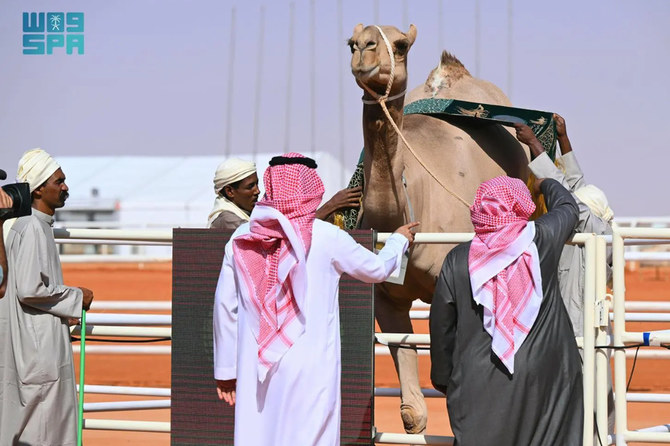
RIYADH: The eighth King Abdulaziz Camel Festival, organized by the Saudi Camel Club, kicked off today, taking “Glory to its People” as its slogan.
The 45-day festival is held in Al-Sayahid, 120 km northeast of Riyadh.
The festival brought back life to the Dahna desert, once an area connecting trade routes from the east to the west of the Arabian Peninsula. It has now become a revived tourist destination, with accommodation and shops scattered all over.
The site was chosen for its historical depth and national significance. As well as hosting merchants and pilgrims, it was once a gathering point for the armies of the founding King Abdulaziz Al-Saud in the process of unifying the country.
The festival aims to boost the camel’s heritage in Saudi, Arab and Islamic culture, provide an integrated economic system in terms of auctions, supplies and industries related to camels, and develop the traditions of the community.
The management of the festival set up the Saudi Camel Village in Mazayen Al-Ibl, to hold activities and events related to camels and their culture. They aim to make it the first and most important site in the world for camels.
The first section of the village includes Al-Mazayen Square, which is 264,000 square meters and includes 85 barns, the main area, which accommodates 450 people, and the VIP stands, accommodating 312 people.
The section also includes 5,760 square meters for visitor stands, which can hold up to 6,000 chairs, and over 1 million square meters for the auction area, which includes 145 barns, a sorting area, registration offices, locations for suppliers and brokers, and a 5 km camel track linking the inspection and sorting areas to Al-Mazayen Square.
The second section is for accommodation, with a total area estimated at 1.1 million square meters, divided into three categories. The third section is Al-Dahna Market located to the east of the festival, 6 km away from its center, and 2 km long.
The village center and the desert park are located in the fourth section. They hold areas for recreational and cultural activities and events, and an area for selling folk products, foods, and crafts.
The festival also holds cultural and traditional activities for all ages. This year’s festival includes more than 20 activities across 18 locations in Al-Sayahid area, featuring competitions, exhibitions, and performances suitable for all age groups.
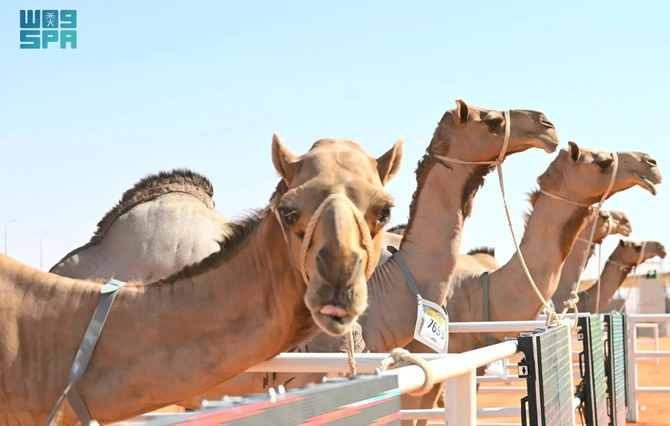
It also features more than 320 competitive rounds, including camel beauty pageant competitions (Mazayna), purebred camels, camel racing without jockeys (Hajjij), and traditional racing.
Punters can ride camels and experience getting to know, milk, feed, nurture and cuddle the animals, in addition to taking souvenir pictures with them.
The festival also includes Al-Oqailat Museum, the dialogue poetry event, the falcon area, and the folk market, which includes antique and traditional collectibles and goods, such as crafts, camping tools, camel supplies, traditional seats, spices, supplies for coffee producing families, and traditional food.


![]()
![]()

The 8th King Abdulaziz Camel Festival set to bring ‘glory’ to Al-Sayahid
Short Url
https://arab.news/wamgd
The 8th King Abdulaziz Camel Festival set to bring ‘glory’ to Al-Sayahid
- The festival brought back life to the Dahna desert
- The site was chosen for its historical depth and national significance


Latest updates


© 2026 SAUDI RESEARCH & PUBLISHING COMPANY, All Rights Reserved And subject to Terms of Use Agreement.