

EU report raises concerns over state of human rights, democracy in Pakistan

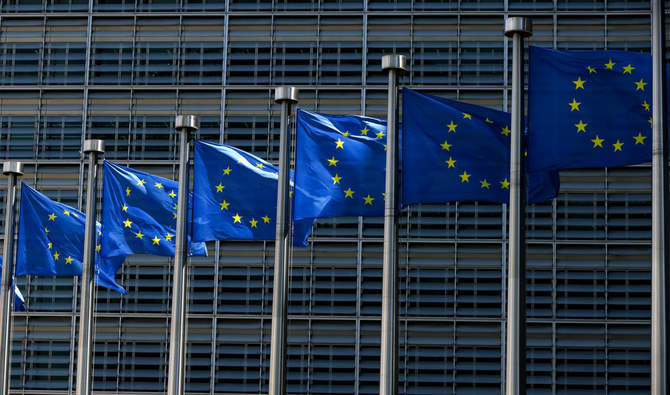
European Union flags fly outside the European Commission building in Brussels, Belgium on June 16, 2022. (AFP/File)
Short Url
Updated 22 November 2023
Follow

EU report raises concerns over state of human rights, democracy in Pakistan

  • The report was compiled under the GSP+ scheme which requires Pakistan to enforce 27 international conventions
  • EU expresses concerns over enforced disappearances, press freedom and politicization of anti-corruption rhetoric

ISLAMABAD: The European Union highlighted several human rights challenges facing Pakistan in an evaluation report released on Tuesday, acknowledging the country had strengthen its legal framework to deal with issues like torture and labor rights while noting their proper implementation was still a problem. 

The report, which was compiled under the Generalized System of Preferences Plus (GSP+) preferential trade scheme, covers the period between 2020 and 2022. The scheme allows developing countries to bring their exports to the European markets without paying much tariff after agreeing to implement 27 international human rights conventions related to environment and good governance. 

The EU is Pakistan’s second most important trading partner, accounting for 14.3 percent of the country’s total trade in 2022 and absorbing 29.8 percent of its total exports. In 2022, Pakistan’s exports to the EU were 58.9 percent higher than in 2019, while imports from the EU witnessed an increase by 9 percent over the same period. 

“Since 2020, Pakistan has adopted important laws in the field of human rights, namely regarding preventing and punishing torture, the protection of journalists, gender-based violence, preventing domestic violence, and, at provincial level, promoting women’s rights,” the report said. 

“While legislative reforms are significant, important concerns remain, notably on enforced disappearances, on allegations of torture as well as on restrictions of freedom of expression, and media freedom,” it added. 

The EU report also noted that political and economic corruption was perceived to be rampant in Pakistan, though it noted that anti-corruption rhetoric and legal cases were “heavily politicised.” 

It also expressed concern over military’s involvement in politics and the national economy, saying this was “despite continuous civilian rule since 2008.” 

As the largest exporter to the EU under the GSP+ scheme, Pakistan needs the preferential trade mechanism for continued access to the lucrative European market. However, EU states have frequently expressed concerns over the state of human rights issues and democracy in the country while even calling for European authorities to review Pakistan’s GSP+ status. 

However, the EU Parliament in October voted to extend the current GSP+ rules, rolling over the special incentive arrangement for another four years for developing countries, including Pakistan. 


Pakistan joins 22 Muslim states, OIC to condemn Israeli FM’s visit to Somaliland

Updated 08 January 2026
Follow

Pakistan joins 22 Muslim states, OIC to condemn Israeli FM’s visit to Somaliland

  • Israeli Foreign Minister Gideon Saar visited breakaway African region of Somaliland on January 6
  • Muslim states urge Israel to withdraw Somaliland recognition, respect Somalia’s sovereignty

ISLAMABAD: A joint statement by Pakistan, 22 other Muslim states and the Organization of Islamic Cooperation (OIC) on Thursday condemned Israeli Foreign Minister Gideon Saar’s recent visit to Somaliland as a violation of the African nation’s territorial integrity and sovereignty.

Saar’s visit to Somaliland capital Hargeisa on Jan. 6 followed Israel’s move last month to recognize Somaliland, a breakaway region from Somalia, as an independent country. The move drew a sharp reaction from Muslim states, including Pakistan, who said it was in contravention of the UN Charter and international norms. 

Several international news outlets months earlier reported that Israel had contacted Somaliland over the potential resettlement of Palestinians forcibly removed from Gaza. Muslim countries fear Israel’s recognition of the breakaway region could be part of its plan to forcibly relocate Palestinians from Gaza to the region. 

“The said visit constitutes a clear violation of the sovereignty and territorial integrity of the Federal Republic of Somalia, and undermines established international norms and the United Nations Charter,” the joint statement shared by Pakistan’s foreign office, read. 

The joint statement was issued on behalf of 23 Muslim states, including Saudi Arabia, Bangladesh, Pakistan, Egypt, Iraq, Iran, Palestine, Jordan, Kuwait, Türkiye, Oman and others. 

It reaffirmed support for Somalia’s territorial integrity and sovereignty, pointing out that respect for international law and non-interference in the internal affairs of sovereign states was necessary for regional stability. 

“Encouraging secessionist agendas are unacceptable and risk exacerbating tensions in an already fragile region,” the statement said. 

The joint statement urged Israel to revoke its recognition of the breakaway region. 

“Israel should fully respect Somalia’s sovereignty, national unity and territorial integrity and honor its obligations in compliance with international law, and demand immediate revocation of the recognition issued by Israel,” the statement read.

Somaliland broke away from Somalia unilaterally in 1991 as a civil war raged in the country. Somaliland has its own constitution, parliament and currency, a move that has infuriated Somalia over the years as it insists the region is part of its territory.