

Saudi Arabia’s NDMC closes November sukuk issuance at $710m

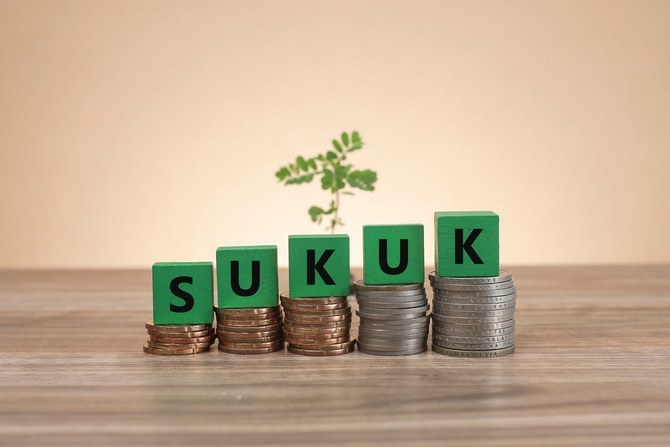
The November issuance was divided into two tranches, with the first tranche valued at SR1.99 billion set to mature in 2031 and the second worth SR668 million maturing in 2035. File
Short Url
Updated 21 November 2023
Follow

Saudi Arabia’s NDMC closes November sukuk issuance at $710m

RIYADH: Saudi Arabia’s National Debt Management Center has closed the November issuance of its riyal-denominated sukuk program, with a bid amount totaling SR2.66 billion ($710 million), representing a decline of 33.16 percent compared to October.

The November issuance was divided into two tranches, with the first tranche valued at SR1.99 billion set to mature in 2031 and the second worth SR668 million maturing in 2035.

In October, sukuk issuance amounted to SR3.98 billion, while in September, it amounted to SR2.45 billion.

“This issuance confirms the NDMC’s statement in the mid of February 2023 that NDMC will continue, in accordance with the approved Annual Borrowing Plan, to consider additional funding activities subject to market conditions and through available funding channels locally or internationally,” the center said in a statement.

It added: “This is to ensure the Kingdom’s continuous presence in debt markets and manage the debt repayments for the coming years while taking into account market movements and the government debt portfolio risk management.”

Sukuk, which is also called an Islamic bond, is a debt product issued in accordance with Shariah or Islamic laws.

In August, NDMC took a strategic step of restructuring SR35.7 billion of debt instruments into four new sukuk tranches featuring longer-term maturities in 2024, 2025 and 2026.

As outlined in a press statement, the initiative aimed to strengthen the domestic money market and stay up-to-date with its developments.

Even though global sukuk issuances are expected to decline in 2023, particularly in light of ongoing economic transformation programs, Saudi Arabia’s sukuk issuance showcases its determination to manage its financial needs effectively.

In August, a report released by Moody’s Investors Service revealed that global sukuk issuances are expected to decline in 2023, ranging between $150 billion and $160 billion, from $178 billion in 2022.

In the same month, Ayman Al-Sayari, governor of Saudi Central Bank, revealed that the Kingdom holds the largest Islamic finance market in the world, with total assets exceeding SR3.1 trillion.

He added that Saudi Arabia is also the world’s most prominent sovereign sukuk issuer.

According to Al-Sayari, the total value of the Islamic finance sector currently stands at SR11.2 trillion, displaying an average growth of 9.6 percent over the last 3 years.

Education spending surges 251% as students return from autumn break: SAMA

Updated 12 December 2025
Follow

Education spending surges 251% as students return from autumn break: SAMA

RIYADH: Education spending in Saudi Arabia surged 251.3 percent in the week ending Dec. 6, reflecting the sharp uptick in purchases as students returned from the autumn break.

According to the latest data from the Saudi Central Bank, expenditure in the sector reached SR218.73 million ($58.2 million), with the number of transactions increasing by 61 percent to 233,000.

Despite this surge, overall point-of-sale spending fell 4.3 percent to SR14.45 billion, while the number of transactions dipped 1.7 percent to 236.18 million week on week.

The week saw mixed changes between the sectors. Spending on freight transport, postal and courier services saw the second-biggest uptick at 33.3 percent to SR60.93 million, followed by medical services, which saw an 8.1 percent increase to SR505.35 million.

Expenditure on apparel and clothing saw a decrease of 16.3 percent, followed by a 2 percent reduction in spending on telecommunication.

Jewelry outlays witnessed an 8.1 percent decline to reach SR325.90 million. Data revealed decreases across many other sectors, led by hotels, which saw the largest dip at 24.5 percent to reach SR335.98 million. 

Spending on car rentals in the Kingdom fell by 12.6 percent, while airlines saw a 3.7 percent increase to SR46.28 million.

Expenditure on food and beverages saw a 1.7 percent increase to SR2.35 billion, claiming the largest share of the POS. Restaurants and cafes retained the second position despite a 12.6 percent dip to SR1.66 billion.

Saudi Arabia’s key urban centers mirrored the national decline. Riyadh, which accounted for the largest share of total POS spending, saw a 3.9 percent dip to SR4.89 billion, down from SR5.08 billion the previous week.

The number of transactions in the capital settled at 74.16 million, down 1.4 percent week on week.

In Jeddah, transaction values decreased by 5.9 percent to SR1.91 billion, while Dammam reported a 0.8 percent surge to SR713.71 million.

POS data, tracked weekly by SAMA, provides an indicator of consumer spending trends and the ongoing growth of digital payments in Saudi Arabia. 

The data also highlights the expanding reach of POS infrastructure, extending beyond major retail hubs to smaller cities and service sectors, supporting broader digital inclusion initiatives. 

The growth of digital payment technologies aligns with the Kingdom’s Vision 2030 objectives, promoting electronic transactions and contributing to the nation’s broader digital economy.