Saudi fisherman recalls lifetime in sector, love for working beyond shore

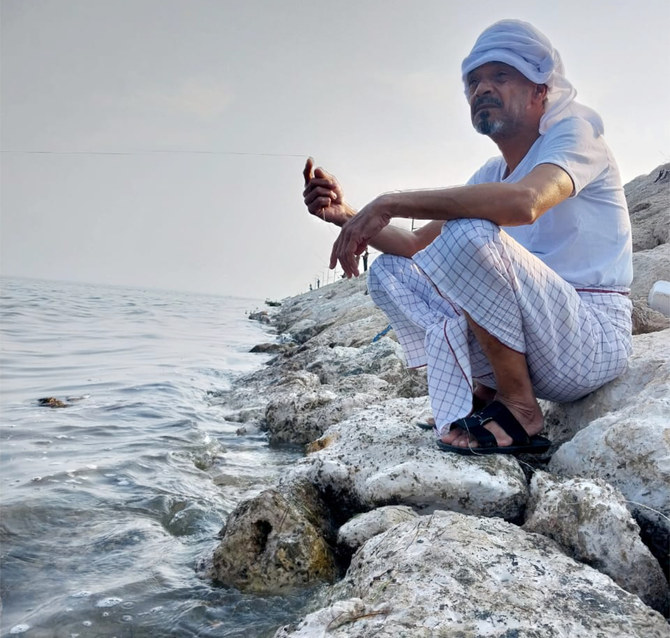
Mehdi Khalil began fishing and pearling under his uncle’s tutelage. Now, he focuses on big game fishing. (Supplied)
Short Url
Updated 21 November 2023
Follow

Saudi fisherman recalls lifetime in sector, love for working beyond shore

  • Mehdi Khalil went fishing for the first time in 1981

RIYADH: Mehdi Khalil is something of a legend in Qatif fish market, the biggest in the region and second-largest in Asia.

He has devoted his life to fishing in the Arabian Gulf and, to mark World Fisheries Day, he spoke to Arab News about his life at sea.

It began when he went fishing for the first time in 1981, when he was a secondary school student.


Saudi Arabia initiated the National Fisheries Development Program in 2015 with the aim of enhancing the growth of the fisheries industry. (Supplied)

“My life was from school to the sea. I was enlightened by sea more than school. My life began when I bought my first boat,” he said.

After his father’s death, it fell to Khalil as the eldest child to fulfil his dad’s wishes and support the family by becoming a fisherman.

“I’m the oldest of my siblings. I did not want anyone to hold a single riyal over their head,” he added.

HIGHLIGHTS

• World Fisheries Day is observed on Nov. 21 and was designated by the UN to raise awareness of sustainable fishing practices and the need to end overfishing.

• Saudi Arabia initiated the National Fisheries Development Program in 2015 with the aim of enhancing the growth of the fisheries industry.

Khalil began fishing and pearling under his uncle’s tutelage. Now, he focuses on big game fishing.

His expeditions start with him, “first fueling my boat with gasoline and preparing the fridge with ice. Then I bring all the tools necessary, and I go to the sea. In 30 minutes, the fridge is full.”

His goal is always to fill 10 fridges that each hold around 16 kg of fish, giving him 160 kg to sell each time.
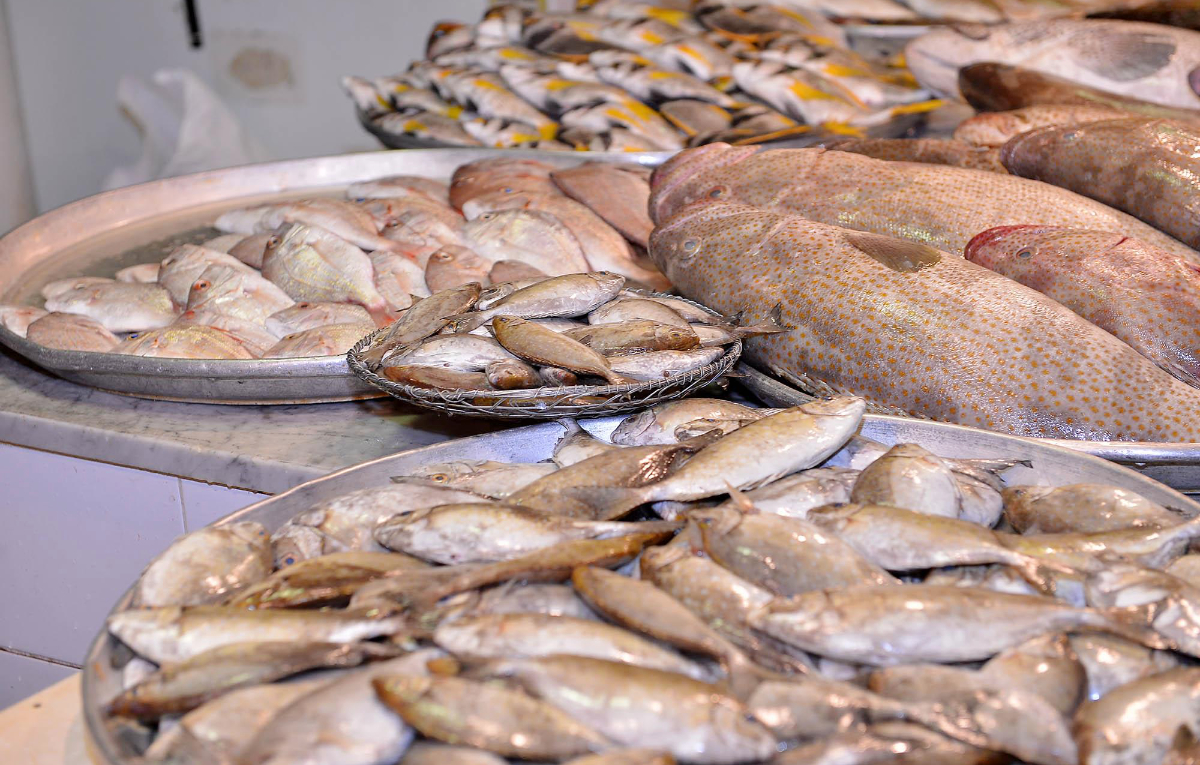


Saudi Arabia initiated the National Fisheries Development Program in 2015 with the aim of enhancing the growth of the fisheries industry. (SPA)

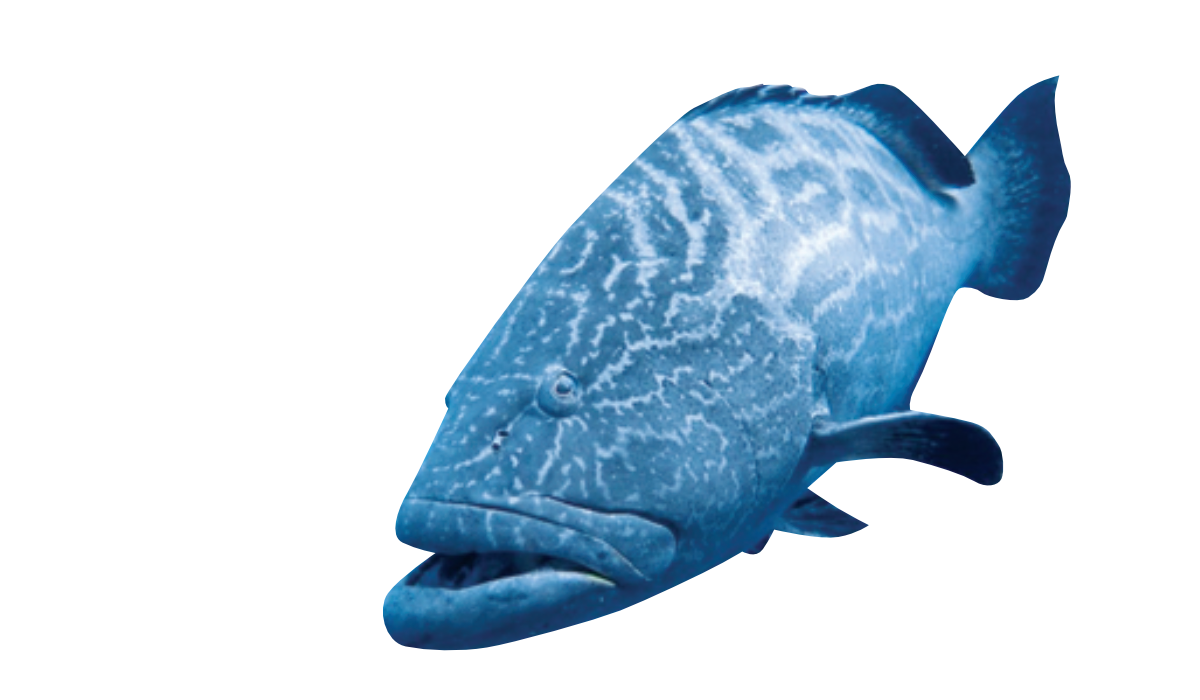
Khalil catches local favorites such as hamour (grouper), kanad (kingfish), safi (rabbitfish) and many types of shrimp. He noted that the best time to fish for kanad was at the end of the year, which coincided with the shrimp season. During that period, fishermen are only allowed to catch a single species.

When he was younger, Khalil’s daily routine was simply to go fishing to make a living. However, advances in technology have made the process far more efficient.

He said: “In the past, during hamour season, we used to catch the fish with a rod and a string. The hamour fish used to be SR40 ($10) to SR45, but today there is a shortage. The price is higher, and it has switched to dollars.”

Similar to many fishermen, Khalil operates in shallow waters using a qarqoor (fish trap), a device consisting of metal rods, wires, and net. He places many of these in an area and, on returning the next day, will find them teeming with his catch.

He pointed out that bread was ideal fish bait and should be used instead of more traditional lures such as dried fish, liquid bait, and smaller fish.

“For years, we used to use ooma (dried fish). With time the methods have changed. We use bread because it attracts the fish much better than dried fish,” he added.

But life as a fisherman can be dangerous. Khalil said: “I almost lost my life three times. I encountered danger when I was pearling. It was during a time when we would dive with just goggles and no other safety gear. I remember that day my uncle had warned me. He had said, ‘my intuition says don’t go today.’

“When I went down that day, I saw a baby shark. Luckily, he just passed by, and nothing happened. This happened to me three different times.”

World Fisheries Day is observed on Nov. 21 and was designated by the UN to raise awareness of sustainable fishing practices and the need to end overfishing.

Saudi Arabia initiated the National Fisheries Development Program in 2015 with the aim of enhancing the growth of the fisheries industry.

Mansour Al-Mushaiti, Saudi deputy minister of environment, water and agriculture, said the nation’s aquaculture output surpassed 120,000 tons in 2022. The Kingdom aims to raise its fish aquaculture output to about 500,000 tons in the future.

At the MedFish4Ever conference in Malta last month, Saudi Arabia announced its commitment to protecting sustainable fish stocks and the livelihoods of fishermen, as well as investing in aquaculture projects. The Kingdom also vowed to establish regulatory frameworks and management plans for its fishing industry.

Al-Mushaiti noted that Saudi Arabia had launched several initiatives to promote sustainable fishing practices. He added that the Kingdom was responsible for coordinating efforts to manage natural resources in the Red Sea as it had the largest coastal area among its neighbors.


Swedish king awards American Saudi scientist, Omar Yaghi, Nobel Prize in Chemistry 2025

Nobel Prize in Chemistry 2025 laureate US-Saudi chemist Omar M. Yaghi poses with award during the award ceremony in Stockholm.
Updated 10 December 2025
Follow

Swedish king awards American Saudi scientist, Omar Yaghi, Nobel Prize in Chemistry 2025

  • Yaghi will share $1.2m prize with British Australian and Japanese scientists Richard Robson and Susumu Kitagawa
  • He is the 1st Saudi national to be awarded the Nobel Prize and 2nd Arab-born to win in the chemistry category since 1999

STOCKHOLM: King Carl XVI Gustaf of Sweden on Wednesday awarded American Saudi scientist Omar Yaghi the Nobel Prize in Chemistry for his breakthrough development of metal-organic frameworks, a sponge-like structure that could store CO2 or harvest water from the air, alongside the British Australian and Japanese scientists Richard Robson and Susumu Kitagawa.

Yaghi, Robson and Kitagawa have each contributed over the past 50 years to developing scalable, reliable MOF models that can be deployed in industry to address climate-related issues and deliver clean air and water. They will share the $1.2 million prize.

Yaghi, 60, who grew up in a refugee camp in Jordan to a Palestinian family expelled from their property by Zionist militias in 1948, is the second Arab-born laureate to be awarded the Nobel Prize in Chemistry by the Royal Swedish Academy of Sciences.

The Nobel Foundation said that MOFs, which are structures with large internal spaces, “can be used to harvest water from desert air, capture carbon dioxide, store toxic gases or catalyze chemical reactions.”

In 2015, Yaghi received the King Faisal International Prize for Chemistry, and in 2021, King Salman granted him Saudi citizenship for his scientific achievements. He holds the James and Neeltje Tretter Chair in Chemistry at UC Berkeley and is the founding director of the Berkeley Global Science Institute. In addition, Yaghi has branched into entrepreneurial activity since 2018, founding Atoco, which works on water harvesting and carbon capture, and co-founding H2MOF for hydrogen storage and WaHa Inc. for water harvesting with projects in the Middle East.

His focus on harvesting water from the air in arid conditions stems from his upbringing in Jordan, where water reached homes every 14 days. He began field tests in the Arizona desert in the 1990s to capture water from the air using the MOF-303 model he had developed.

Yaghi is the first Saudi national to be awarded the Nobel Prize and the second Arab-born to win in the chemistry category since the Egyptian American chemist and scientist Ahmed Zewail was honored in 1999.

Zewail’s model of the “femtochemistry apparatus” is on display at the Nobel Prize Museum. He used the apparatus to demonstrate the principle behind his method of studying chemical reactions using laser technology, capturing it in a femtosecond, which is to a second what a second is to 32 million years.

He is one of dozens of laureates who donated objects to the museum since its foundation in 2001 to mark the 100th anniversary of the Nobel Prize, which began in 1901, five years after the death of the Swedish chemist Alfred Nobel. Since 2001, it has become tradition that each December the winners of that year bring an item to be displayed that reflects their work, personal life or inspiration, Karl Johan, a curator at the museum, told Arab News.

“Zewail wanted to donate an object that could visualize his work and his experiment. He constructed (the interactive apparatus) specifically for the museum. As one of the first objects to be displayed after 2001, it got lots of attention,” Johan said.

The award ceremony in the Swedish capital is the latest event to wrap up Nobel Week, which, since Friday, has featured Nobel laureates in the fields of literature, chemistry, physics, medicine and economic sciences engaging in public events. The Nobel Peace Prize was awarded in the Norwegian capital of Oslo on Wednesday, where the daughter of the Venezuelan opposition leader, Maria Corina Machado, accepted it in her mother’s name after authorities prevented her from leaving early to attend the ceremony.