

A Pakistani fisherwoman and her companion: the sea

This picture taken on November 15, 2023, shows Pakistani fisherwoman Hakima Omar, 63, displaying a catch in the waters off Rehri Goth coastal village in Karachi. (AN Photo)
Short Url
Updated 18 November 2023
Follow

A Pakistani fisherwoman and her companion: the sea

  • Hakima Omar, 63, has been fishing for over three decades to fend for her six children and ailing husband
  • Untreated waste, oil spills from Karachi’s two ports have endangered marine life and livelihoods of fisherfolk

KARACHI: Balancing a lightweight fiber boat on her head, 63-year-old Hakima Omar walked to a weathered jetty this week, then set her boat on the water and paddled into the deep sea where, with practiced hands, she threw her net into the water.

This has been a four-decade-long morning routine for Omar, one of a handful of fisherwomen working on Karachi’s coast by the Arabian Sea.

The mother of six became the family’s sole breadwinner when her husband fell seriously ill about three decades ago. Today, in the twilight of her life, it is sheer determination and a love for the sea that propels her to pedal her boat into the sea day in and out and bring back catch to sustain her family.

“I have a love for the river and the sea and my love for it doesn’t end,” Omar told Arab News as she anchored her boat several miles from the Karachi shore.

“They [my kids] tell me to stay home because I’m an old woman, but I’ve been doing this since childhood, so I can’t just stay still, I enjoy it a lot. I catch fish and crabs, and I look forward to it.”
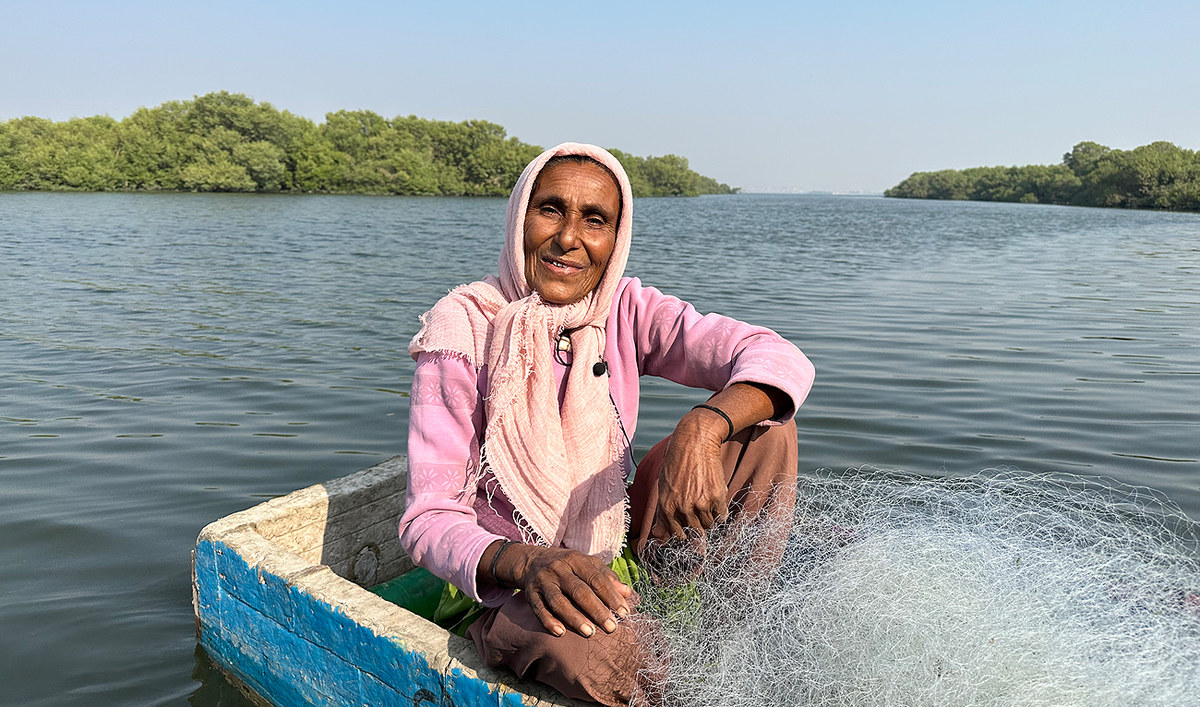


In this picture taken on November 15, 2023, a Pakistani fisherwoman, Hakima Omar, 63, gestures during an interview with Arab News near Rehri Goth coastal village in Karachi. (AN Photo)

Even rain, storms and high tides in the river can’t deter Omar from fishing: “I’d be fishing sitting on the branch of a tree.”

Omar said she sold some of the fish she caught, making profits of up to Rs2,500 ($9) a day, and took the leftover home to her family:

“If I don’t come to the sea and fish, then we only eat plain bread at home … When fish gets expensive, we can’t buy it for eating and selling. If I go and fish myself then I can both eat and sell. I am also in some debt, so I can only pay it off through fishing.”

But fishing used to be much easier in the past, Omar said. Untreated waste and oil spills from Karachi’s two ports have endangered marine life and the livelihoods of Pakistan’s fisherfolk in recent years.

“You’d just be able to catch fish right outside your home in shallow waters [in the past], but now you have to cover miles to fish in deeper waters and work harder because of the pollution and muddy waters,” Omar said.

Passing ships also make the job hard for fisherfolk like Omar who use light boats.


In this picture taken on November 15, 2023, a Pakistani fisherwoman, Hakima Omar, paddles her boat in the waters off Rehri Goth coastal village in Karachi. (AN Photo)

“Whenever a ship passes by, the waves and flow get higher and I have to move to the shore,” she said.

“Whenever I see a ship, I come back to the shore and then go back to deep waters when the ship has passed by, and the waves calm down.”

There were many times when she had fallen off her boat and had to swim back to it, Omar recalled, saying no one had come to her help.
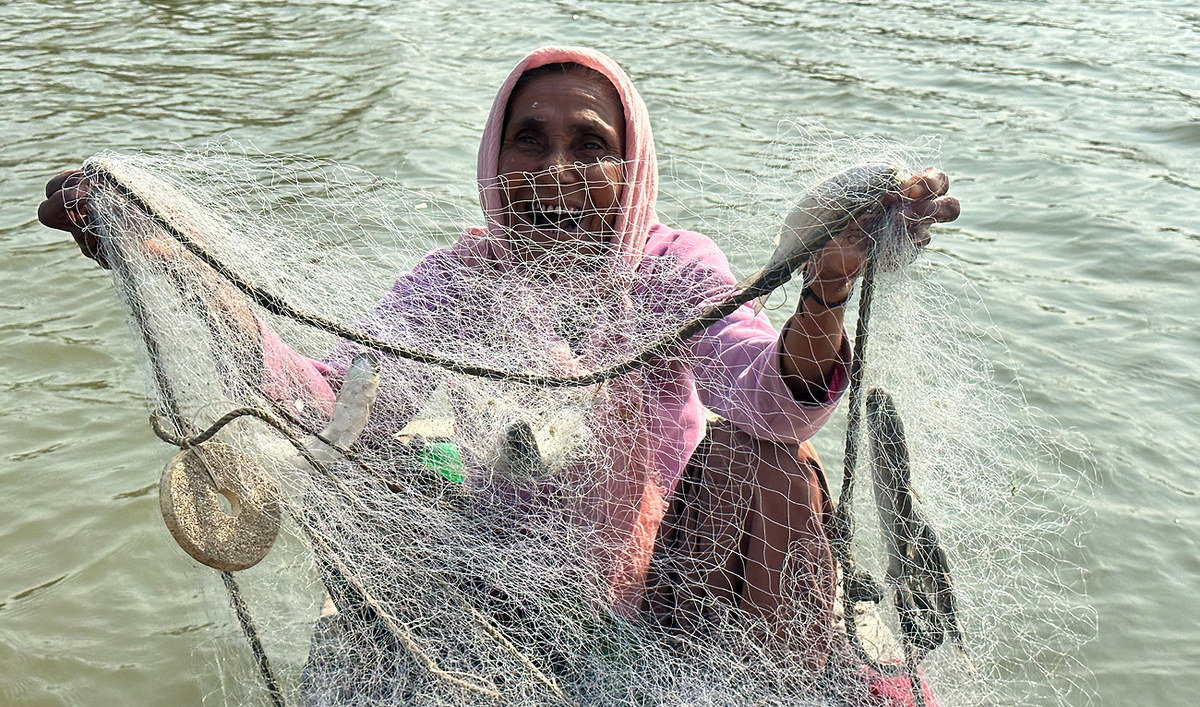


This picture taken on November 15, 2023, shows Pakistani fisherwoman Hakima Omar, 63, displaying a catch in the waters off Rehri Goth coastal village in Karachi. (AN Photo)

“It’s not because of any man that I’ve become capable of doing this … Allah helps and wills. That’s why I’m able to work hard,” she said.

Her husband, Omar Haroon, who has acute kidney disease and stays at home, said he admired his wife’s courage and dedication to family.

“Previously I was the breadwinner and she was the housewife,” Haroon said with a smile. “Now, I am the housewife and she is the breadwinner.”
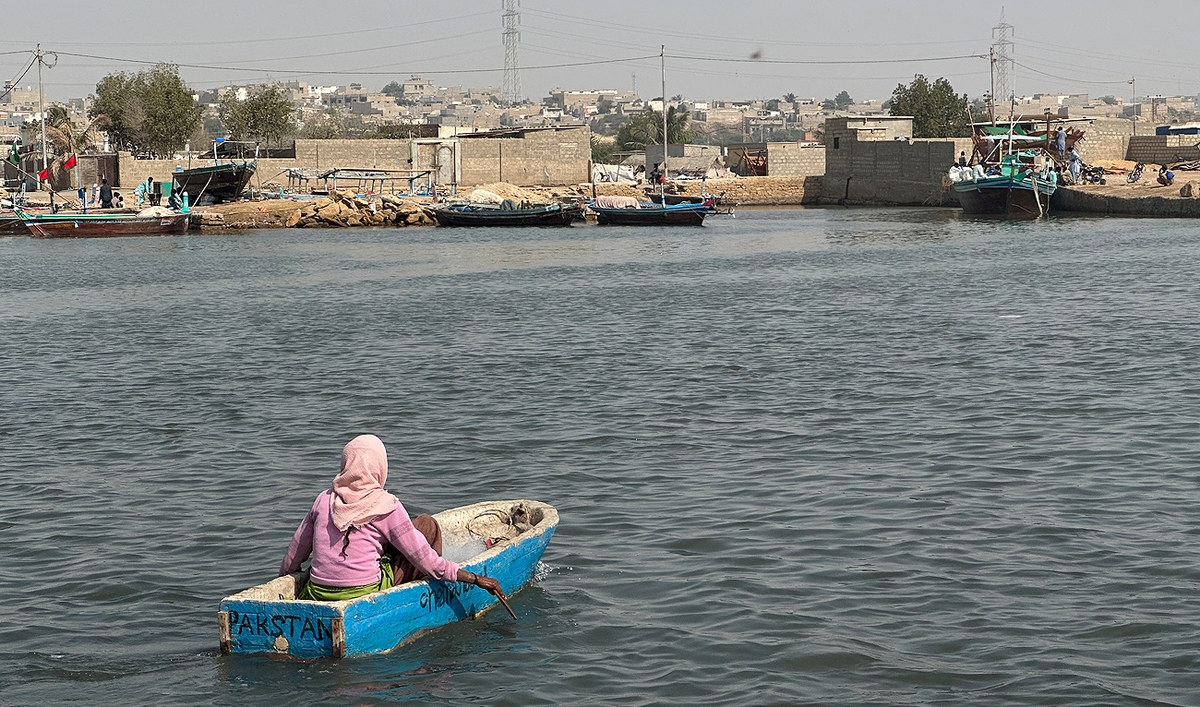


In this picture taken on November 15, 2023, a Pakistani fisherwoman, Hakima Omar, paddles her boat in the waters off Rehri Goth coastal village in Karachi. (AN Photo)


Pakistan presses UN to prevent Afghan soil from being used against neighboring countries

Updated 5 sec ago
Follow

Pakistan presses UN to prevent Afghan soil from being used against neighboring countries

  • Pakistan, which faces a renewed surge in militancy, has frequently accused Afghanistan of allowing militant groups on its soil, an allegation Kabul denies
  • Islamabad’s UN envoy says the UN Security Council has spoken with a unanimous voice and ‘it is for the Taliban to decide what path they wish to choose’

ISLAMABAD: Pakistan on Thursday urged the United Nations (UN) to prevent the use of Afghan soil by militant groups to threaten neighboring countries, saying “efforts must be made to prevent external spoilers from exploiting the situation.”

Pakistan, which has been witnessing a renewed surge in militant violence, has frequently accused Afghanistan of allowing militant groups, including the Tehreek-e-Taliban Pakistan (TTP) and the Baloch Liberation Army (BLA), to operate on its soil and India of backing them in attacks against Pakistan. Kabul and New Delhi deny the allegations.

The surge in militant violence in Pakistan triggered one of the worst skirmishes between Pakistan and Afghanistan in Oct. last year, after Islamabad hit what it called TTP targets inside Afghanistan. Pakistan has since suspended all trade with Afghanistan, despite a ceasefire reached between the neighbors in Doha that same month.

On Thursday, Pakistan voted in favor of a UN Security Council resolution that extended for 12 months the mandate of the team tasked with monitoring sanctions against the Taliban and their associated groups and individuals, welcoming the unanimous adoption of the resolution that is both “timely and necessary.”

“Pakistan remains seriously concerned by the active presence of terrorist groups on Afghan soil,” Islamabad’s permanent representative to UN Asim Iftikhar Ahmad said, while addressing the Council.

“We reiterate our call that Afghan territory must not be used for terrorism against neighboring countries and efforts must be made to prevent external spoilers from exploiting the situation.”

There was no immediate comment from the Afghan side to the statement, which came days after a suicide attack on a mosque in the Pakistani capital of Islamabad killed at least 32 people and injured dozens more. Officials said while the suicide attacker was a Pakistani national, he was trained in Afghanistan ahead of the bombing claimed by Daesh.

Unanimously adopting resolution 2816, the 15-member UNSC decided that all states will continue to implement the sanctions measures imposed both on the Taliban and related “individuals, groups, undertakings and entities” that threaten Afghanistan’s peace, stability and security.

It further renewed the mandate of the monitoring team charged with assisting the Afghanistan Sanctions Committee, which was first established in resolution 2011, for a period of 12 months from the date of its expiration this month. Among other tasks, the Council directed the monitoring team to gather information on instances of non-compliance with sanctions, keep the Committee informed of such instances and to provide recommendations on actions to respond to non-compliance.

“The Council has spoken with a unanimous voice today by highlighting these problems and remains committed to reviewing these sanctions as and when appropriate while taking into account the ground realities in Afghanistan,” Ahmad said.

“It is for the Taliban to decide what path they wish to choose for Afghanistan; whether it is the path to isolation or the path to peace and prosperity as a responsible member of the international community.”