

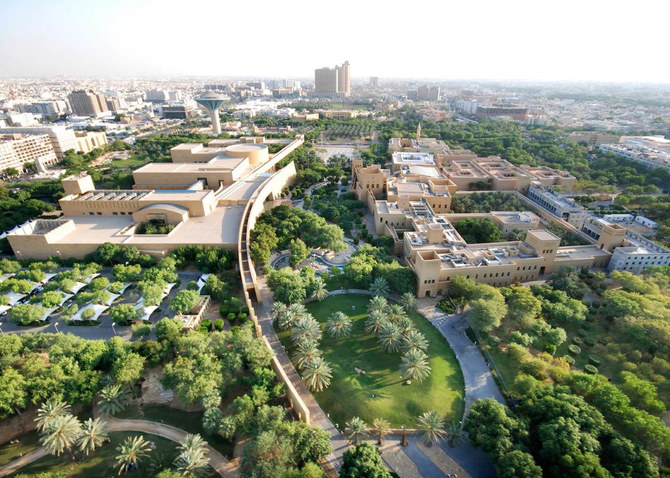
Saudi Arabia at forefront of sustainability initiatives in GCC: report

The report reiterates that green investment is expensive. High and middle-income countries, namely, Qatar, UAE, Morocco, and Saudi Arabia, invest the most. File
Short Url
Updated 16 November 2023
Follow

Saudi Arabia at forefront of sustainability initiatives in GCC: report

RIYADH: Saudi Arabia, the UAE and Qatar are at the forefront of leading sustainability initiatives in the Gulf Cooperation Council region as they actively address climate challenges despite a dependency on fossil fuels, a new report has revealed.

Commissioned by logistics firm Agility, the report compares government and business sustainability policies, investments, and actions across 17 countries in the Middle East and Africa.

The report aims to provide a detailed examination of the country’s performance in environmental sustainability outcomes, government policies, and corporate practices in the two regions.

“As a supply chain operator and investor in the Middle East and Africa, we want to know what governments and businesses are prioritizing and where they’re putting resources in the climate change battle,” said Tarek Sultan, vice chairman of Agility.

“We want to know who we can partner with in green infrastructure and transport, alternative fuels, and supply chain services that reduce environmental impact without sacrificing performance,” Sultan added.

The report highlighted that 82 percent of African and 49 percent of Middle Eastern businesses are unaware of the UN-led COP process that nations are using to push and measure efforts to tackle climate change.

It also explained how the environmental crisis is negatively affecting businesses. This comes as 97 percent of firms say their company has been affected by climate change, and 49 percent say the issue has caused “severe damage” or has a “significant and growing” impact on them.

Additionally, the report reiterates that green investment is expensive. High and middle-income countries, namely, Qatar, UAE, Morocco, and Saudi Arabia, invest the most.

According to the summary, governments are outpacing the private sector regarding climate action in both the Middle East and Africa.

It also noted that various countries have unique sustainability priorities based on income, economic strengths, energy dependency, and other various factors.


Post-break return of students drives surge in education spending, SAMA data shows

Updated 10 sec ago
Follow

Post-break return of students drives surge in education spending, SAMA data shows

RIYADH: Spending on education in Saudi Arabia increased by 141.1 percent for the week ending Jan. 24, as students returned to the classroom after the mid-year break.

This was accompanied by a 7 percent increase in spending on books and stationery, which reached SR146.17 million ($38.9 million).

According to the latest data from the Saudi Central Bank, the over POS value dropped 10.6 percent to SR12.52 billion, with transactions representing a 9.7 percent week-on-week decrease to 213.62 million.

This week saw negative changes across all the remaining sectors. Spending on bakeries and pastries saw an 18.4 percent decline to SR229.71 million, while gas stations saw an 11 percent drop. Professional and business services decreased by 11.6 percent.

Expenditure on apparel and clothing fell by 19.7 percent to SR985.94 million, followed by a 2.8 percent drop in spending on jewelry.

Spending on car rentals in the Kingdom fell by 14.7 percent, while airlines saw a 9.3 percent decrease to SR38.16 million.

Expenditure on food and beverages saw a 7.9 percent decline to SR1.88 billion, claiming the largest share of the POS. Restaurants and cafes retained the second position despite an 18.5 percent decrease to SR1.50 billion.

Geographically, Riyadh accounted for the largest share of total POS spending, but still saw a 6 percent dip to SR4.46 billion, down from SR4.74 billion the previous week. The number of transactions in the capital settled at 69.07 million, down 6.8 percent week on week.

In Jeddah, transaction values decreased by 13.6 percent to SR1.75 billion, while Dammam reported a 4.8 percent decrease to SR640.59 million.

POS data, tracked weekly by SAMA, provides an indicator of consumer spending trends and the ongoing growth of digital payments in Saudi Arabia. 

The data also highlights the expanding reach of POS infrastructure, extending beyond major retail hubs to smaller cities and service sectors, supporting broader digital inclusion initiatives. 

The growth of digital payment technologies aligns with the Kingdom’s Vision 2030 objectives, promoting electronic transactions and contributing to the Kingdom’s broader digital economy.