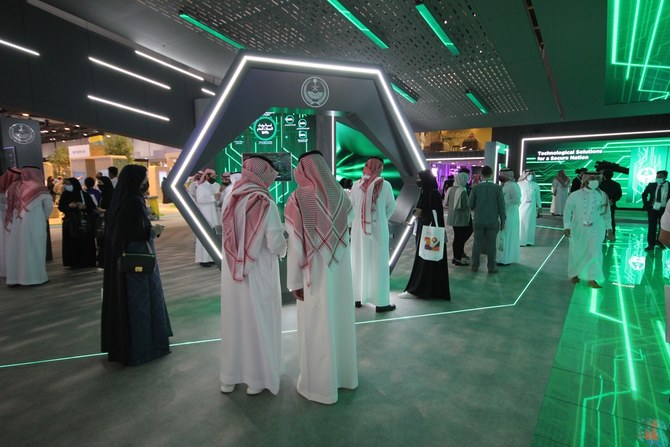
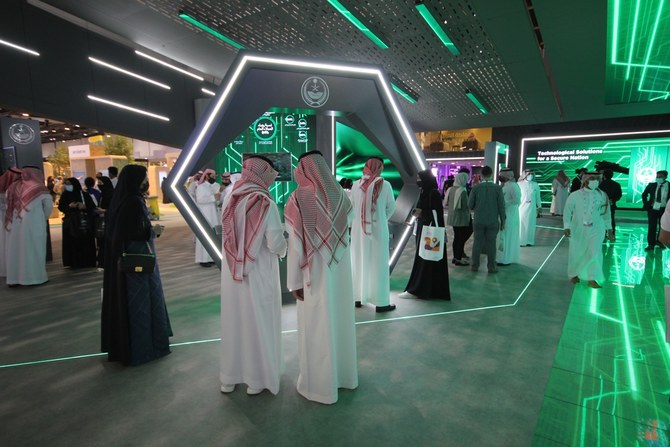
CAIRO: With an objective to host 525 fintech companies by 2030, Saudi Arabia has emerged as a prime destination for both regional and global firms eager to tap into its burgeoning market.
Following the financial sector development strategy unveiled last year, the Kingdom is on track to position itself as a regional hub for the industry.
On that note, US-based fintech company Tribal Credit has renewed its $150 million debt facility to fuel its expansion into Saudi Arabia.
Founded in 2016 in Silicon Valley by Amr Shady, Duane Good, Hariraj Jayakumar, Mark Graves, Mohamed El-Kasstawi, and Prasant Sudhakaran, the company offers enhanced financial solutions to small and medium enterprises in emerging markets.
The company aims to use its debt facility to develop its tech solutions as well as expand to other countries.
“This funding will equip us with the necessary resources to seize exciting market opportunities ahead,” Shady said.
“We’re eager to continue our journey of developing innovative tech solutions to help SMEs thrive in emerging markets, especially in Mexico and Saudi Arabia,” he added.
The debt facility, provided by the global lending firm Partners for Growth, is scheduled to remain in effect until 2025.
“Tribal Credit has consistently demonstrated strong credit performance even in challenging market conditions. Their continued investment in the credit process, tools, and the team has paid dividends,” says Armineh Baghoomian, managing director, head of Europe, Middle East and Africa, co-head of Global Fintech at PFG.
“In addition, they have innovated and launched financial products that truly meet the needs of SMEs in emerging markets. We’re thrilled to extend our partnership with Tribal and excited to support Amr, Duane and the team as they continue shaping the landscape of financial services,” he added.
Saudi digital payment company Cashin acquires counterpart
Saudi-based digital payment solutions provider Cashin has successfully completed the acquisition of Cardless, a prominent name in the Kingdom’s digital payment product landscape.
The acquisition aims to bolster the firm’s ambitions of incorporating procurement solutions for digital cards within its comprehensive platform.
This move is in line with the company’s strategy to diversify its services, making a foray into the digital card realm with its Cashin Cards offering.
This service is anticipated to empower over 20,000 merchants with the ability to issue virtual cards, allowing them to seamlessly integrate these cards into their product offerings and earn commissions via digital wallets, devoid of any credit constraints.
Omar Al-Ramah, Cashin’s CEO, emphasized that the integration of Cardless is a strategic move, aligning with the company’s mission to cater to the retail sector’s evolving demands.
He highlighted the value addition stemming from Cardless’s extensive customer database and a decade-long industry experience.
Cashin is renowned for delivering versatile solutions in the domains of point of sale, digital payments, e-invoicing, inventory management, and more, all fine-tuned to serve diverse retail scales.
Meanwhile, Cardless has made a mark with its holistic digital payment platform, constantly innovating to simplify payment processes for users.
Saudi Arabia’s Takadao raises $1.6m
Saudi fintech startup Takadao has secured $1.6 million in a pre-seed funding round spearheaded by Silicon Valley’s renowned investor, Tim Draper, and saw participation from BIM, Core Vision Ventures, and Prince Sultan bin Fahad bin Salman.
Originally established in Singapore and headquartered in Riyadh, Takadao was founded by Sharene Lee and Morrad Irsane to offer Shariah-compliant blockchain-based services with a specific focus on savings and loans as well as cooperative life insurance solutions.
Boasting a community that currently exceeds 10,000 members, Takadao claims to be on a growth trajectory with its user base expanding by approximately 5 percent on a weekly basis.
Tim Draper’s investment in the Saudi-based startup is a notable first. Draper, with a legacy of transformative investments in companies like Baidu, Skype, and Hotmail.
“Takadao is one of those companies that you don’t know quite where it’s going to go, but if it succeeds, it’s going to be really impactful and make a big difference in the world and this is a world that I want to live in,” Draper said.
Moreover, the founders expressed their excitement at having Draper as an investor.
“Tim Draper is a visionary. Throughout his career, he has shown foresight in anticipating where the world is going to go. He is also humble and embracing of diverse cultures and viewpoints. This is why we’re extremely excited to have him on board,” said Irsane.
XPANCEO raises $40m to launch AR contact lenses
The UAE-based deep tech firm XPANCEO has secured $40 million in a seed funding round spearheaded by Opportunity Ventures based in Hong Kong.
Established in 2021 by founders Valentyn Volkov and Roman Axelrod, XPANCEO is creating next generation technology with its smart contact lenses.
The company has successfully created and tested three separate prototypes of lenses that enable night vision and zoom, real-time health monitoring, and the ability to see video and graphic content in augmented reality.
The freshly procured funds are earmarked to expedite the company’s launch of its next prototype which will gather several features into one device.
“We are targeting, at least, the $790 billion augmented reality and contact lenses market, and creating the first device in the market that will allow us to use all apps and software in a single contact lens interface,” Volkov said.