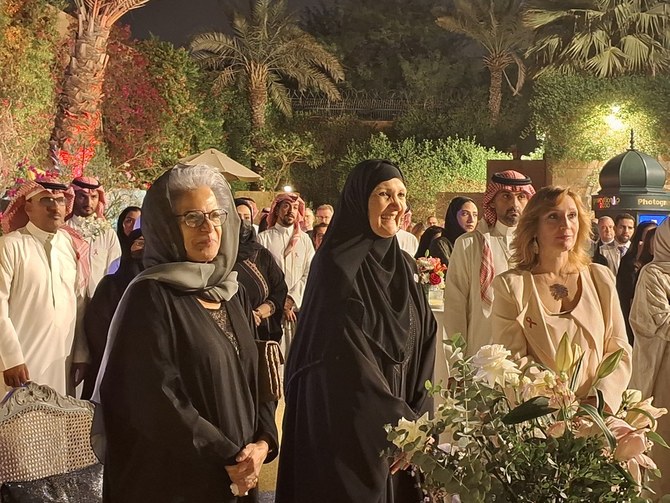
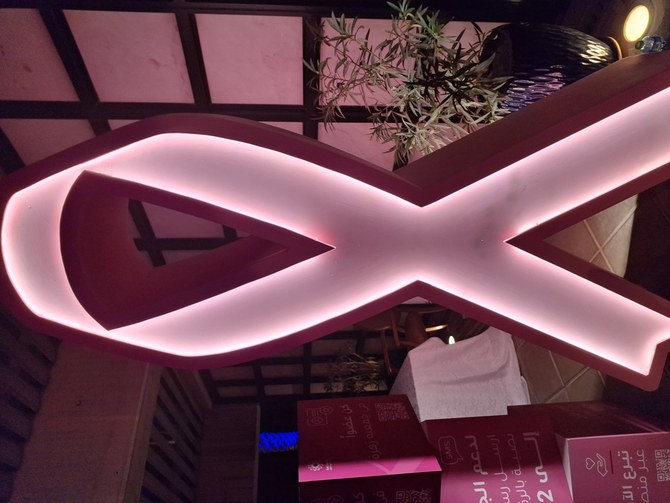
RIYADH: The French embassy marked Breast Cancer Awareness Month by teaming up with the Zahra Breast Cancer Association to organize a special event in Riyadh.
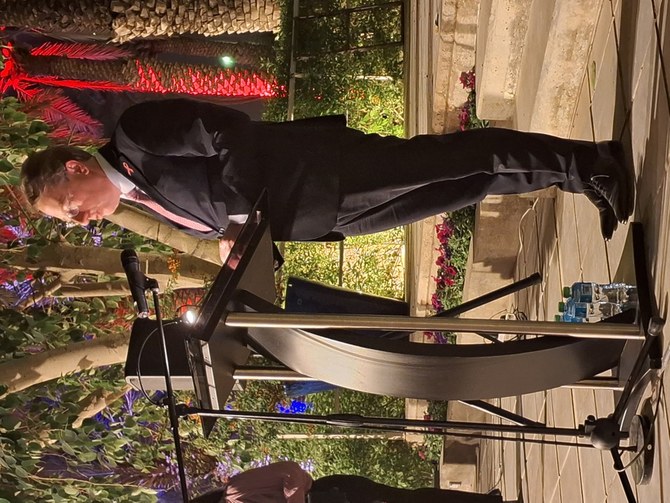
Speaking at the event, the French ambassador to Saudi Arabia, Ludovic Pouille, said: “This annual gathering is part of the awareness campaign for the fight against breast cancer, October Rose or Pink October. It is the most common cancer in women worldwide.”
He paid tribute to those who are working to fight the disease, to those who have survived it, and to the doctors, nurses and other healthcare professionals who continue to work in Palestine and Ukraine to help save the lives of innocent civilians.
Princess Haifa Al-Faisal, the founder and president of the Zahra association, told the guests: “Actually, I haven’t prepared a speech, I’m just happy to be with you tonight and wish you all the best of health.”
Breast cancer continues to be an important challenge faced by people of all nations.
Dr. Wafa Al-Khayal, a breast cancer specialist in the endocrinology department at King Faisal Hospital in Riyadh, said: “Cancer is a tragedy that affects many women around the world and in my country as well. This is a challenge we must all face together.
“I should note that awareness campaigns conducted by the Zahra (association) since 2003 have led to early detection of a large number of women with breast cancer in Saudi Arabia. We used to meet women with breast cancer, but at a very advanced stage where the chances of recovery are unfortunately minimal.
“I hope that all women learn to listen to their bodies and act immediately by contacting specialists. Don’t neglect any sign.”
Representatives of the Zahra association travel the Kingdom to highlight the importance of early diagnosis and treatment for breast cancer, and to gain the confidence of women, particularly in rural populations where taboos about the disease persist.
Dr. Jean-Marc Nabolt, a specialist with 35 years of experience in treating breast cancer, said that he is helping to develop a simple blood test that can detect the disease.
“I am collaborating with Saudi researchers at King Saud University to create a medical application that uses the movement of electrons, combined with the capabilities of artificial intelligence, to screen for cancer and enable patients and doctors to intervene faster and at lower costs,” he explained.
“This application is being tested in nine countries. The results obtained after four years of research show 98 percent that it is now possible to detect cancer by performing a simple blood test. This application would then be accessible to everyone.”
Hana Asiri, a breast cancer survivor, told the audience the very moving story of her own experience with the disease.
“In 2013, I learned I had breast cancer,” she said. “I was just 38 years old. I was a dynamic woman, a mother of three children, full of energy, enthusiastic, very fulfilled in my personal and also professional life.
“I will never forget when my doctor told me, it’s cancer. During this long period, and after several types of treatment, surgery, eight chemotherapy sessions, 25 radiotherapy sessions and five years of hormone therapy, I would only like to express my gratitude to the Zahra (association) and to Princess Haifa Al-Faisal for supporting me in ensuring and meeting all my needs.”


![]()
![]()
![]()

French embassy, Zahra association mark Breast Cancer Awareness Month in Riyadh
Short Url
https://arab.news/8ztre
French embassy, Zahra association mark Breast Cancer Awareness Month in Riyadh
- The French ambassador to Saudi Arabia pays tribute to those working to cure the disease, those who survived it, and health professionals who work in war zones
- Dr. Jean-Marc Nabolt, a specialist with 35 years of experience in treating breast cancer, says he is helping to develop a simple blood test to detect the disease


Latest updates


Recommended


© 2026 SAUDI RESEARCH & PUBLISHING COMPANY, All Rights Reserved And subject to Terms of Use Agreement.