

How Saudi women are coping with the psychological impact of breast cancer

1 / 2
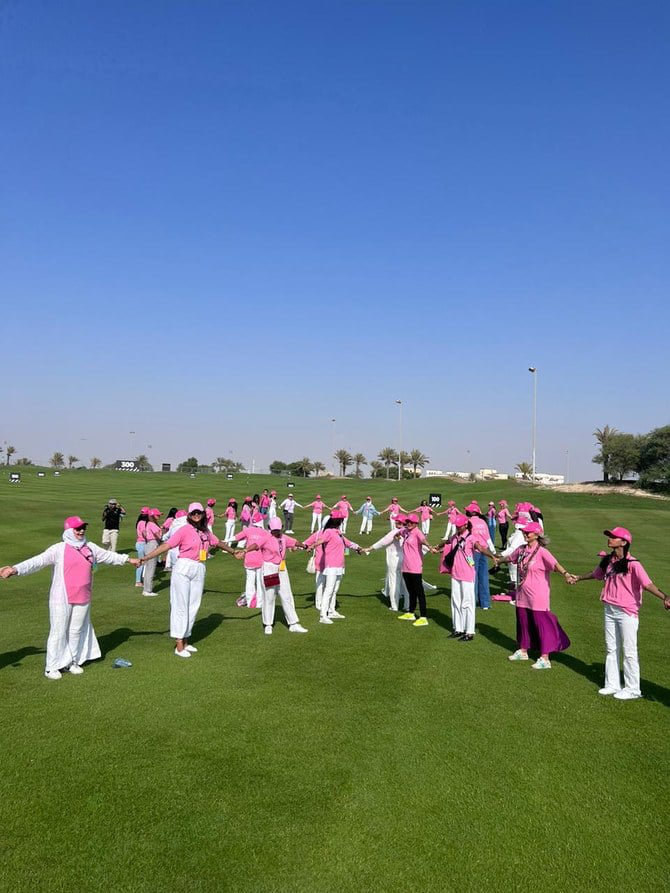
Earlier this month, a group of women launched the “Pink Walk” at King Abdullah Economic City (KAEC) in Rabigh to raise awareness on breast cancer. (Supplied)
2 / 2
The Breast Awareness campaign was launched in Qassim region earlier this month to educate people about the dangers and causes of breast cancer, and methods of prevention. (SPA)
Short Url
Updated 30 October 2022
Follow

How Saudi women are coping with the psychological impact of breast cancer

  • Saudis share stories of pain, friendship and newfound inner strength in their battle with cancer
  • Finding the right mental coping strategies after diagnosis can directly influence treatment outcomes 

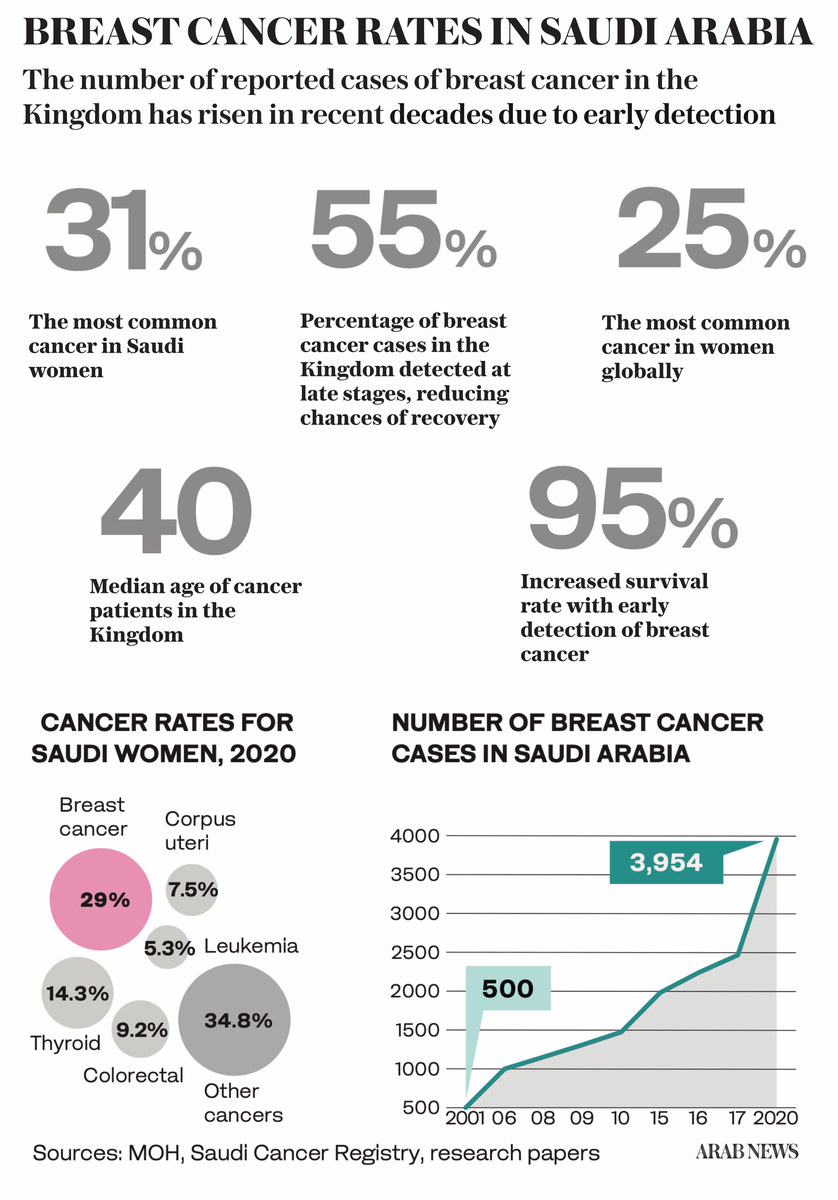
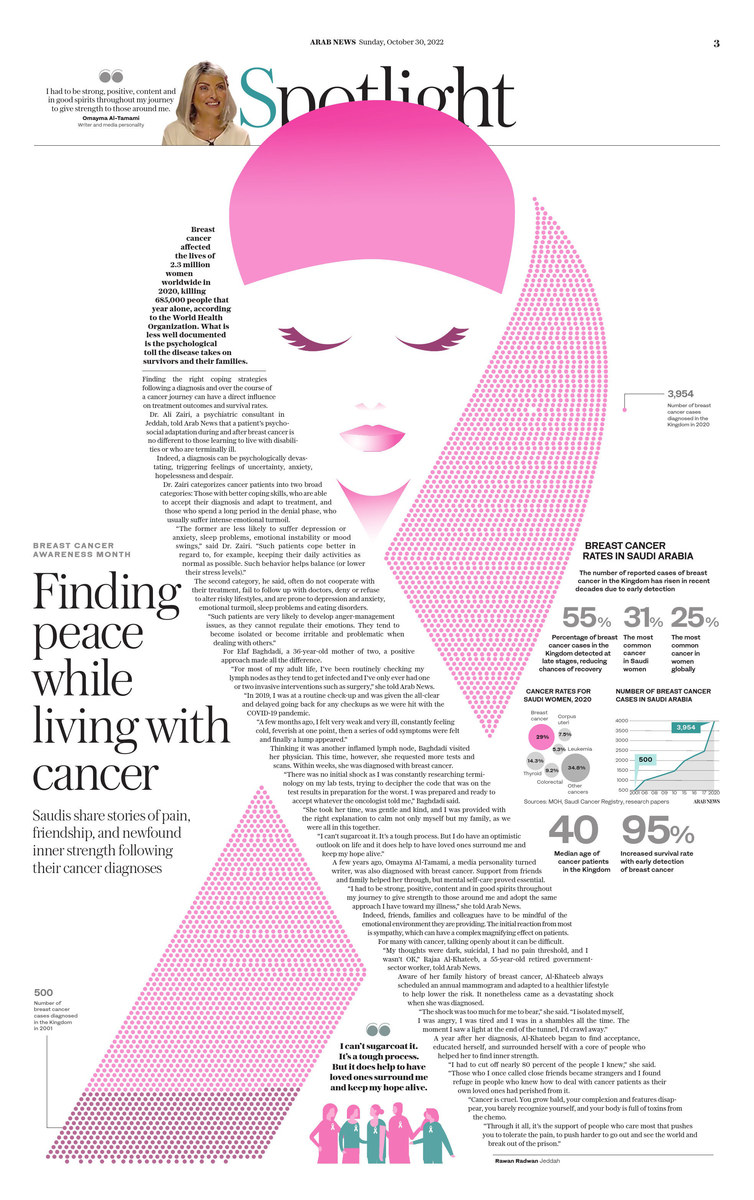
JEDDAH: Breast cancer affected the lives of 2.3 million women worldwide in 2020, killing 685,000 people that year alone, according to the World Health Organization. What is less well documented is the psychological toll the disease takes on survivors and their families.   

In Saudi Arabia, breast cancer accounts for 31 percent of all cancer diagnoses, making it the most common form of the disease. Although mammography was introduced to the Kingdom in 2002, 55 percent of cases are detected at a late stage, reducing chances of recovery. 

Several studies indicate that 20-30 percent of women diagnosed, treated and declared free of local or regional invasive breast cancer will suffer a recurrence. There is therefore a constant fear among survivors that their cancer could come back.
Finding the right coping strategies following a diagnosis and over the course of a cancer journey can have a direct influence on treatment outcomes and survival rates.

Cancer significantly impacts all spheres of life, provoking a variety of emotional and behavioral responses, which means there is no “one size fits all” approach to help patients cope. 

Dr. Ali Zairi, a psychiatric consultant in Jeddah, told Arab News that a patient’s psycho-social adaptation during and after breast cancer is no different to those learning to live with disabilities or who are terminally ill. 

Indeed, a diagnosis can be psychologically devastating, triggering feelings of uncertainty, anxiety, hopelessness and despair. Psychological distress, including depression, is common. 

Dr. Zairi categorizes cancer patients into two broad categories: Those with better coping skills, who are able to accept their diagnosis and adapt to treatment, and those who spend a long period in the denial phase, who usually suffer intense emotional turmoil.


Shutterstock image

“The former are less likely to suffer depression or anxiety, sleep problems, emotional lability or mood problems,” said Dr. Zairi. “Such patients cope better in regard to, for example, keeping their daily activities as normal as possible. Such behavior helps balance their stresses or buffer their stresses to the lowest possible degree.”

The latter, he said, often do not cooperate with their treatment, fail to follow up with doctors, deny or refuse to stop risky lifestyles, and are prone to depression and anxiety, emotional turmoil, sleep problems and eating disorders. 

“Such patients are very likely to develop anger mismanagement as they cannot regulate their emotions. They tend to be isolated or become irritable and problematic when dealing with others.”
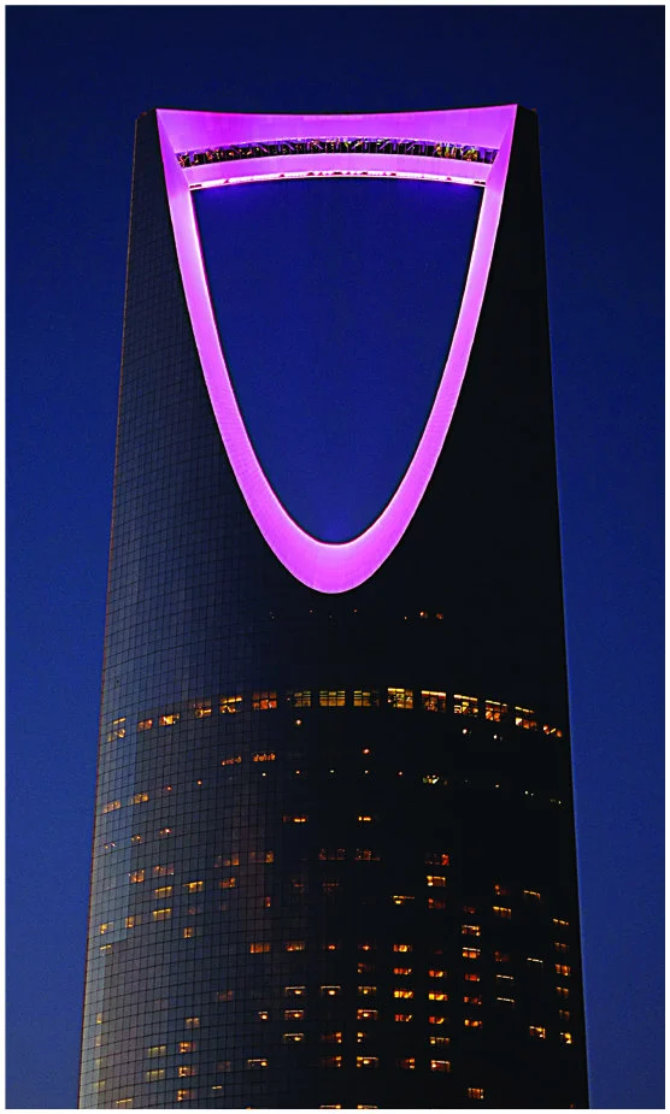


Every year, Riyadh's iconic Kingdom Tower goes pink to help promote breast cancer awareness. (AN file photo)

For Elaf Baghdadi, a 36-year-old mother of two, it never occurred to her that her history with lymphadenitis, an infection of one or more of the lymph nodes, could lead to a more severe problem. 

“For most of my adult life, I’ve been routinely checking my lymph nodes as they tend to get infected and I’ve only ever had one or two invasive interventions such as surgery,” she told Arab News. 

“In 2019, I was at a routine check-up and was given the all-clear and delayed going back for any checkups as we were hit with the COVID-19 pandemic. 

“A few months ago, I felt very weak and very ill, constantly feeling cold, feverish at one point, then a series of odd symptoms were felt and finally a lump appeared and it was odd enough to raise my concern but only by a fraction.”

Thinking it was another inflamed lymph node, Baghdadi visited her physician during the summer. This time, however, she requested more tests and scans, “to make sure.” Within weeks, she was diagnosed with breast cancer.

“There was no initial shock as I was constantly researching terminology on my lab tests, trying to decipher the code that was on the test results in preparation for the worst. I was prepared and ready to accept whatever the oncologist told me. 

“She took her time, was gentle and kind, and I was provided with the right explanation to calm not only myself but my family as we were all in this together.”



A diagnosis can be psychologically devastating, says psychiatrist Ali Zairi. (Shutterstock image)

It was thanks to her calm demeanor that Baghdadi could face the challenges of diagnosis, biopsy, surgeries and treatment. 

“The first time I broke down was right after my mastectomy. It was the second day, I had the Qur’an playing next to me, and one verse broke my tears free,” she said. 

“I knew that it was going to be difficult and I was ready, but you can never be ready enough. One short verse reminded me of how weak as humans we are and that played with my psyche. 

“I can’t sugarcoat it. It’s a tough process. And in my case, one thing led to the next. I’m due to start my chemotherapy by the end of the month. But I do have an optimistic outlook on life and it does help to have loved ones surround me and keep my hope alive,” she said.

A few years ago, Omayma Al-Tamami, a media personality turned writer, also began a battle with breast cancer, which had been picked up late owing to a misdiagnosis. Support from friends and family helped her through, but mental self-care proved essential.

“I had to be strong, positive, content and in good spirits throughout my journey to give strength to those around me and adopt the same approach I have toward my illness,” she told Arab News.

Indeed, friends, families and colleagues have to be mindful of the emotional environment they are providing cancer patients. The initial reaction for most is sympathy, which can have a complex magnifying effect on patients. 
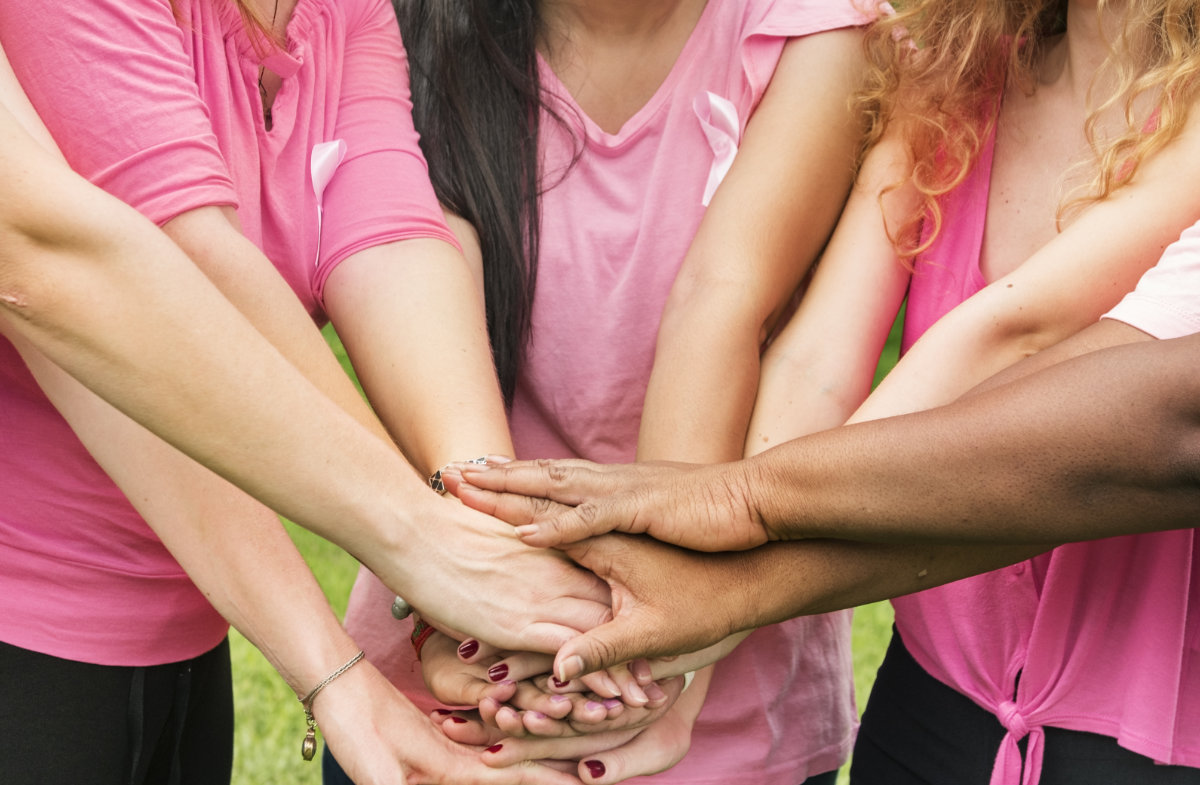


Support of people who care most can strengthen cancer patients into tolerating the pain, says one survivor. (Shutterstock image)

Al-Tamami says cancer patients do not need pity. Instead they need honest and open conversation to address the disease head on.

For some, however, such open conversation is easier said than done.

“My thoughts were dark, suicidal, I had no pain threshold, and I wasn’t OK,” Rajaa Al-Khateeb, a 55-year-old retired government-sector worker, told Arab News. 

Aware of her family history of breast cancer, Al-Khateeb always scheduled an annual mammogram and adapted to a healthier lifestyle to help lower the risk. It nonetheless came as a devastating shock when she was diagnosed. 

“The shock was too much for me to bear,” she said. “I isolated myself, I was angry, I was tired and I was in a shambles all the time. The moment I saw a light at the end of the tunnel, I’d crawl away.”

A year after her diagnosis, Al-Khateeb began to find acceptance, educated herself, and surrounded herself with a core of people who helped her to find inner strength.

“I had to cut off nearly 80 percent of the people I knew,” she said. “Those who I once called close friends became strangers and I found refuge in people who knew how to deal with cancer patients as their own loved ones had perished from it.

“Cancer is cruel. You grow bald, your complexion and features disappear, you barely recognize yourself, and your body is full of toxins from the chemo. 

“Through it all, it’s the support of people who care most that pushes you to tolerate the pain, to push harder to go out and see the world and break out of the prison.”


How Saudi Arabia’s five Founding Day symbols tell a 299-year story

Updated 22 February 2026
Follow

How Saudi Arabia’s five Founding Day symbols tell a 299-year story

  • The flag, the palm, the Arabian horse, the souq and the falcon are symbols that connect Saudi Arabia to its roots
  • Researcher Ismail Abdullah Hejles explains how the Kingdom’s symbols anchor identity, heritage and continuity

RIYADH: As Saudi Arabia prepares to mark its 299th anniversary this Founding Day — commemorating the establishment of the First Saudi State by Imam Muhammed bin Saud in 1727 CE — the moment invites reflection not only on history, but on the symbols that distill that history into enduring meaning.

Beyond ceremony and celebration, the Kingdom’s official Founding Day emblems tell a deeper story: of survival in a harsh landscape, of state-building against the odds, and of values carried forward across nearly three centuries. Together, they form a visual language that binds past to present and projects confidence into the future.

The five Founding Day symbols — the green flag, the palm tree, the Arabian horse, the souq, and the falcon — do not serve a purely celebratory function, Ismail Abdullah Hejles, a Saudi researcher in traditional architecture, told Arab News. Rather, they carry an intellectual and cultural role that connects society to its roots.

“Nations that understand their symbols and identity understand themselves and are better equipped to continue their journey with confidence and balance,” he said.

The Saudi flag. (SPA)

The Saudi flag, a representation of unity and sovereignty, embodies the values upon which the state was founded and reflects the continuity of the nation, linking its past to its present. The current design was adopted in 1937, refining historical banners from the first and second Saudi states.

The Shahada, the Islamic declaration of faith, symbolizes the Kingdom’s foundation on Islamic values, while justice and safety are echoed through the sword, which represents the unification of the Kingdom during the reign of the late King Abdulaziz Al-Saud.

The flag’s green color is traditionally associated with Islam, reflecting continuity and faith as central pillars of the Saudi state.

Additionally, the palm tree and the crossed swords — now synonymous with Saudi Arabia — officially appeared in the Kingdom’s emblem around 1950 following unification. Together, they express strength, justice, and the protection of unity.

The Saudi emblem

“The choice was not arbitrary,” Hejles said. “It brought together strength (the sword) and life and sustainability (the palm). It reflects a careful balance of firmness and generosity.”

The palm tree’s symbolic presence, however, predates the modern state, stretching back to the ancient civilizations of the Arabian Peninsula.

“In the simple oases, the palm tree was life, and the swords were dignity. The palm offered shade and sustenance, the swords protected the land and the name. Between the shade of the palm and the edge of the sword, the story of a nation takes place.”

The palm tree served numerous functions essential to the sustainability of civilizations. Its dates were a nutritious food; its fronds were used for roofing; its trunk built walls; its fiber made ropes; and it provided fuel and shade for communities.

In places such as Qatif and Al-Ahsa, the palm tree formed a complete life system with almost no waste. (SPA)

In places such as Qatif and Al-Ahsa, the palm formed a complete life system with almost no waste. It was not merely an agricultural symbol, but a genuine model of sustainability long before the term itself was coined, Hejles said.

Mentioned in the Qur’an more than 20 times, always associated with generosity and abundance, the palm formed the backbone of the agricultural economy in eastern Arabia.

“The souq (traditional market) was not merely a place of trade but a space for social interaction, knowledge exchange, and solidarity,” Hejles said. Through it, economic activity flourished and relationships between communities were strengthened.

A civilizational concept that emerged centuries before Islam, the souq arose from a simple human need: exchange. (Supplied)

“Nomads and desert dwellers possessed surplus goods and sought what they lacked through barter.”

A civilizational concept that emerged centuries before Islam, the souq arose from a simple human need: exchange. That exchange generated social mobility and fostered a culture of openness, which later contributed to the rise of cities.

A civilizational concept that emerged centuries before Islam, the souq arose from a simple human need: exchange. (Supplied)

In the pre-Islamic era, seasonal markets such as Souq ‘Ukaz, Souq Majanna, and Souq Dhu Al-Majaz were not only commercial hubs, but also literary forums, political arenas, and spaces for reconciliation and arbitration.

Once Islam was adopted, Souq Al-Madinah was established on principles prohibiting monopoly, forbidding fraud, and ensuring justice.

In the Saudi state, the souq evolved from traditional mud-and-wood covered bazaars into modern shopping centers and large commercial complexes. “Yet, the concept remained the same: a place of encounter before it is a place of sale,” Hejles said.

A civilizational concept that emerged centuries before Islam, the souq arose from a simple human need: exchange. (Supplied)

The Arabian horse, another Founding Day symbol, is associated with authenticity and courage. It accompanied the early stages of state-building, travel, and defense, becoming a symbol of strength and pride in Arab heritage.

The Arabs’ oldest companion, the Arabian horse is one of the oldest and purest breeds in the world. It was bred on the Arabian Peninsula for extreme endurance, speed, and agility.

Thanks to their lung capacity, endurance, and strong feet and bones, these horses could cover long distances in harsh desert conditions and survive on minimal resources, sometimes fed only dates and camel’s milk.

To protect them against theft and harsh weather, they were sometimes brought inside family tents, which led to the development of intense bonds with their owners. Arabian horses are known to be fearless and loyal, capable of protecting their masters in battle.

The Arabs’ companion, the Arabian horse is one of the oldest and purest breeds in the world. It was bred on the Arabian Peninsula for extreme endurance, speed, and agility. (SPA photo)

They also possessed a “war-sense,” allowing them to act intelligently in combat, known as well to have a high spirit in battle.

In Saudi Arabia, Arabian horses were vital in travel, trade, and warfare. Today, they symbolize nobility, pride, courage, and honor — reflecting and continuing the Kingdom’s equestrian legacy.

And finally, vigilance, insight, and high ambition are represented by the falcon. “It is tied to the practice of falconry, which requires patience and skill, and today symbolizes the continuity of heritage and elevated aspirations,” Hejles said.

The falcon was not merely a hobby but a hunting tool in a harsh desert environment, a companion to the Bedouin, and a symbol of strength, precision, and patience. (AN photo/AN Huda Bashatah)

Falconry was not merely a hobby, but a hunting tool in a harsh desert environment — a companion to the Bedouin and a symbol of strength, precision, and patience. The long training required to master falconry fostered discipline and strong leadership in its practitioners.

Over time, the falcon became associated with prestige and courage, linked to Bedouin identity and nobility, and embedded in poetry and storytelling.

A heritage passed through generations, falconry is now inscribed on UNESCO’s Representative List of the Intangible Cultural Heritage of Humanity, with Saudi Arabia and other participating countries, reinforcing its global cultural significance.

The falcon was not merely a hobby but a hunting tool in a harsh desert environment, a companion to the Bedouin, and a symbol of strength, precision, and patience. (SPA)

“These symbols were not chosen for their visual appeal,” Hejles said. “They were chosen because they were tested across centuries of lived experience.”

Representing more than their individual images, they are collectively an expression of the Saudi citizen’s relationship with land, environment, dignity, and continuity.