DAMASCUS: Israeli strikes knocked Syria’s two main airports out of service on Thursday, Syrian state media said, in the first such attack since a weekend Hamas assault on Israel triggered fierce fighting.
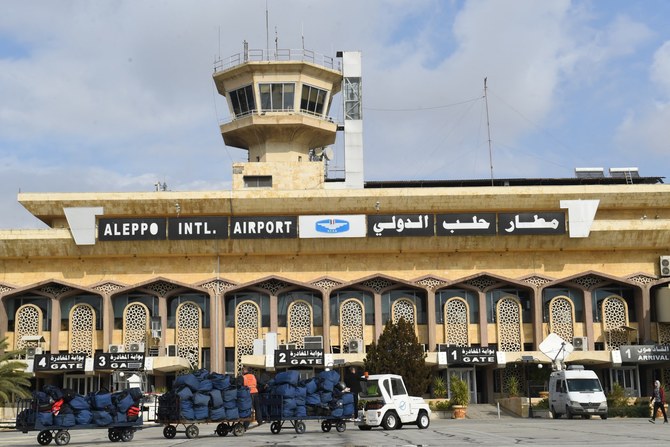
Israeli strikes have repeatedly caused the grounding of flights at the airports in the capital Damascus and northern city Aleppo, both of which are controlled by the government of war-torn Syria.
The “simultaneous” strikes “damaged landing strips in the two airports, putting them out of service,” state media said, citing an unidentified military source.
The latest strikes came as Hamas and Israel traded heavy fire for a sixth day, after hundreds of Hamas gunmen stormed across the Gaza border into Israel on Saturday and killed 1,200 people, most of them civilians.
They also came as US Secretary of State Antony Blinken visited Israel, and hours after Iranian President Ebrahim Raisi, in a telephone call with his Syrian counterpart Bashar Assad, called on Arab and Islamic countries to cooperate in confronting Israel.
The military source cited by Syrian state media described the strikes as a “desperate attempt” by Israel to “divert attention” away from the conflict with Hamas in Gaza.
During more than a decade of war in Syria, Israel has launched hundreds of air strikes on its northern neighbor, primarily targeting Iran-backed forces and Lebanese Hezbollah fighters as well as Syrian army positions.
Israel rarely comments on individual strikes it carries out on Syria, but it has repeatedly said it would not allow its arch-foe Iran, which supports Assad’s government, to expand its footprint there.
Iran, which backs Hamas, on Saturday celebrated Hamas’ assault on Israel, though it insisted it was not involved in it.

Syria’s two main airports out of service after Israel strikes: state media
Short Url
https://arab.news/9a28y
Syria’s two main airports out of service after Israel strikes: state media
- No one was hurt in the attacks
- The latest strikes came as Hamas and Israel traded heavy fire for a sixth day
Iraq says it will prosecute Daesh detainees sent from Syria
- Iraq government says transfer was pre-emptive step to protect national security
- Prosoners have been held for years in prisons and camps guarded by the Kurdish-led SDF
BAGHDAD: Iraq’s Supreme Judicial Council said on Thursday it would begin legal proceedings against Daesh detainees transferred from Syria, after the rapid collapse of Kurdish-led forces in northeast Syria triggered concerns over prison security.
More than 10,000 members of the ultra-hard-line militant group have been held for years in about a dozen prisons and detention camps guarded by the Kurdish-led Syrian Democratic Forces (SDF) in Syria’s northeast.
The US military said on Tuesday its forces had transferred 150 Daesh detainees from Syria to Iraq and that the operation could eventually see up to 7,000 detainees moved out of Syria.
It cited concerns over security at the prisons, which also hold thousands more women and children with ties to the militant group, after military setbacks suffered by the SDF.
A US official told Reuters on Tuesday that about 200 low-level Daesh fighters escaped from Syria’s Shaddadi prison, although Syrian government forces had recaptured many of them.
Iraqi officials said Prime Minister Mohammed Shia Al-Sudani mentioned the transfer of Daesh prisoners to Iraq in a phone call with Syrian President Ahmad Al-Sharaa on Tuesday, adding that the transfers went ahead following a formal request by the Iraqi government to Syrian authorities.
Iraqi government spokesperson Basim Al-Awadi said the transfer was “a pre-emptive step to protect Iraq’s national security,” adding that Baghdad could not delay action given the rapid pace of security and political developments in Syria.
Daesh emerged in Iraq and Syria, and at the height of its power from 2014-2017 held swathes of the two countries. The group was defeated after a military campaign by a US-led coalition.
An Iraqi military spokesperson confirmed that Iraq had received a first batch of 150 Daesh detainees, including Iraqis and foreigners, and said the number of future transfers would depend on security and field assessments. The spokesperson described the detainees as senior figures within the group.
In a statement, the Supreme Judicial Council said Iraqi courts would take “due legal measures” against the detainees once they are handed over and placed in specialized correctional facilities, citing the Iraqi constitution and criminal laws.
“All suspects, regardless of their nationalities or positions within the terrorist organization, are subject exclusively to the authority of the Iraqi judiciary,” the statement said.
Iraqi officials say under the legal measures, Daesh detainees will be separated, with senior figures including foreign nationals to be held at a high-security detention facility near Baghdad airport that was previously used by US forces.
Two Iraqi legal sources said the Daesh detainees sent from Syria include a mix of nationalities, with Iraqis making up the largest group, alongside Arab fighters from other countries as well as European and other Western nationals.
The sources said the detainees include nationals of Britain, Germany, France, Belgium and Sweden, and other European Union countries, and will be prosecuted under Iraqi jurisdiction.
More than 10,000 members of the ultra-hard-line militant group have been held for years in about a dozen prisons and detention camps guarded by the Kurdish-led Syrian Democratic Forces (SDF) in Syria’s northeast.
The US military said on Tuesday its forces had transferred 150 Daesh detainees from Syria to Iraq and that the operation could eventually see up to 7,000 detainees moved out of Syria.
It cited concerns over security at the prisons, which also hold thousands more women and children with ties to the militant group, after military setbacks suffered by the SDF.
A US official told Reuters on Tuesday that about 200 low-level Daesh fighters escaped from Syria’s Shaddadi prison, although Syrian government forces had recaptured many of them.
Iraqi officials said Prime Minister Mohammed Shia Al-Sudani mentioned the transfer of Daesh prisoners to Iraq in a phone call with Syrian President Ahmad Al-Sharaa on Tuesday, adding that the transfers went ahead following a formal request by the Iraqi government to Syrian authorities.
Iraqi government spokesperson Basim Al-Awadi said the transfer was “a pre-emptive step to protect Iraq’s national security,” adding that Baghdad could not delay action given the rapid pace of security and political developments in Syria.
Daesh emerged in Iraq and Syria, and at the height of its power from 2014-2017 held swathes of the two countries. The group was defeated after a military campaign by a US-led coalition.
An Iraqi military spokesperson confirmed that Iraq had received a first batch of 150 Daesh detainees, including Iraqis and foreigners, and said the number of future transfers would depend on security and field assessments. The spokesperson described the detainees as senior figures within the group.
In a statement, the Supreme Judicial Council said Iraqi courts would take “due legal measures” against the detainees once they are handed over and placed in specialized correctional facilities, citing the Iraqi constitution and criminal laws.
“All suspects, regardless of their nationalities or positions within the terrorist organization, are subject exclusively to the authority of the Iraqi judiciary,” the statement said.
Iraqi officials say under the legal measures, Daesh detainees will be separated, with senior figures including foreign nationals to be held at a high-security detention facility near Baghdad airport that was previously used by US forces.
Two Iraqi legal sources said the Daesh detainees sent from Syria include a mix of nationalities, with Iraqis making up the largest group, alongside Arab fighters from other countries as well as European and other Western nationals.
The sources said the detainees include nationals of Britain, Germany, France, Belgium and Sweden, and other European Union countries, and will be prosecuted under Iraqi jurisdiction.
© 2026 SAUDI RESEARCH & PUBLISHING COMPANY, All Rights Reserved And subject to Terms of Use Agreement.


