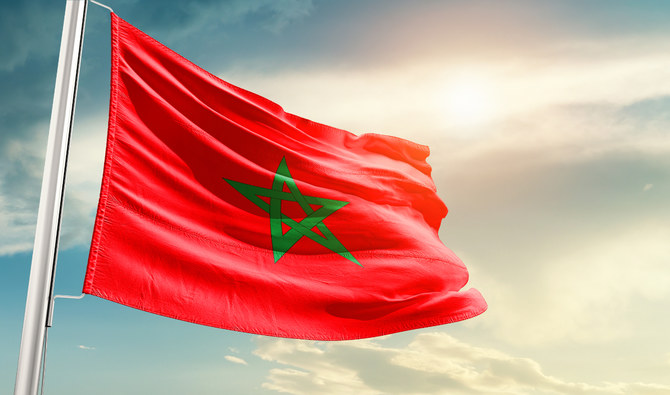
Morocco aims to become key player in green hydrogen

Hydrogen is seen as a clean energy source that can help the world phase out fossil fuels and reduce atmospheric carbon emissions in the battle to slow global warming. (Shutterstock)
Short Url
Updated 27 September 2023
Follow

Morocco aims to become key player in green hydrogen

RABAT: Morocco has voiced ambitious plans to become North Africa’s top player in the emerging “green hydrogen” sector, with plans to export the clean-burning fuel to Europe.

Hydrogen is seen as a clean energy source that can help the world phase out fossil fuels and reduce atmospheric carbon emissions in the battle to slow global warming.

Morocco, which already runs large solar power plants, also hopes to harness green hydrogen — the kind made without burning fossil fuels — for its sizeable fertilizer sector.

Around 1.5 million acres of public land — nearly the size of Kuwait — have been set aside for green hydrogen and ammonia plants, the economy ministry says.

King Mohammed VI has hailed a national green hydrogen plan dubbed l’Offre Maroc (the Moroccan Offer) and called for its “rapid and qualitative implementation.”

Speaking in July, before the country’s earthquake disaster, he said Morocco must take advantage of “the projects supported by international investors in this promising sector.”

Local media have reported about investment plans by Australian, British, French, German and Indian companies.

Hydrogen can be extracted from water by passing a strong electrical current through it.

This separates the hydrogen from the oxygen, a process called electrolysis.

If the power used is clean — such as solar or wind — the fuel is called “green hydrogen,” which is itself emission-free when burnt.

But there are problems: Hydrogen is highly explosive and hard to store and transport. This has set back hydrogen fuel cell cars in the race against electric vehicles using lithium-ion batteries.

However, experts say green hydrogen also has a big role to play in decarbonizing energy-intensive industries that cannot easily be electrified such as steel, cement and chemicals.

Powering blast furnaces with hydrogen, for example, offers the promise of making “green steel.”

Hydrogen can also be converted into ammonia, to store the energy or as a major input in synthetic fertilizers. Morocco is already a major player in the global fertilizer market, thanks mainly to its immense phosphate reserves.

It profited after fertilizer shortages sparked by Russia’s invasion of Ukraine sent prices up to 1,000 euros ($1,060) per ton.

Morocco’s state Phosphate Office has announced plans to quickly produce a million tons of “green ammonia” from green hydrogen and triple the amount by 2032.

Analysts caution that Morocco still has some way to go with its ambitious green fertilizer plans.

The sector is “embryonic and the large global projects will not see the light of day until three to five years from now,” said Samir Rachidi, director of the Moroccan research institute IRESEN.

Morocco’s advantage is that it has already bet heavily on clean energy over the past 15 years.

Solar, wind and other clean energy make up 38 percent of production, and the goal is to reach 52 percent by 2030.

For now green hydrogen is more expensive than the highly polluting “brown hydrogen” made using coal or “grey hydrogen” produced from natural gas.

The goal is to keep green hydrogen production below $1-$2 per kilogram, Ahmed Reda Chami, president of the Economic, Social and Environmental Counsel, told the weekly La Vie Eco.


Lebanese finance minister denies any plans for a Kushner-run economic zone in the south

Updated 45 min 44 sec ago
Follow

Lebanese finance minister denies any plans for a Kushner-run economic zone in the south

  • Proposal was made by US Envoy Morgan Ortagus but was ‘killed on the spot’
  • Priority is to regain control of state in all aspects, Yassine Jaber tells Arab News

DAVOS: Lebanon’s finance minister dismissed any plans of turning Lebanon’s battered southern region into an economic zone, telling Arab News on the sidelines of the World Economic Forum’s meeting in Davos that the proposal had died “on the spot.”

Yassine Jaber explained that US Envoy to Lebanon Morgan Ortagus had proposed the idea last december for the region, which has faced daily airstrikes by Israel, and it was immediately dismissed.

Jaber’s comments, made to Arab News on the sidelines of the World Economic Forum in Davos, were in response to reports which appeared in Lebanese media in December which suggested that parts of southern Lebanon would be turned into an economic zone, managed by a plan proposed by Jared Kushner, US President Donald Trump’s son in law.

Meanwhile, Jaber also dismissed information which had surfaced in Davos over the past two days of a bilateral meeting between Lebanese ministers, US Middle East Envoy Steve Witkoff and Kushner.

Jaber said that the meeting on Tuesday was a gathering of “all Arab ministers of finance and foreign affairs, where they (Witkoff and Kushner) came in for a small while, and explained to the audience the idea about deciding the board of peace for Gaza.”

He stressed that it did not develop beyond that.

When asked about attracting investment and boosting the economy, Jaber said: “The reality now is that we need to reach the situation where there is stability that will allow the Lebanese army, so the (Israeli) aggression has to stop.”

Over the past few years, Lebanon has witnessed one catastrophe after another: one of the world’s worst economic meltdowns, the largest non-nuclear explosion in its capital’s port, a paralyzed parliament and a war with Israel.

A formal mechanism was put in place between Lebanon and Israel to maintain a ceasefire and the plan to disarm Hezbollah in areas below the Litani river.

But, the minister said, Israel’s next step is not always so predictable.

“They’re actually putting pressure on the whole region. So, a lot of effort is being put on that issue,” he added.

“There are still attacks in the south of the country also, so stability is a top necessity that will really succeed in pushing the economy forward and making the reforms beneficial,” he said.

Lawmakers had also enacted reforms to overhaul the banking sector, curb the cash economy and abolish bank secrecy, alongside a bank resolution framework.

Jaber also stressed that the government had recently passed a “gap law” intended to help depositors recover funds and restore the banking system’s functionality.

“One of the priorities we have is really to deal with all the losses of the war, basically reconstruction … and we have started to get loans for reconstructing the destroyed infrastructure in the attacked areas.”

As Hezbollah was battered during the war, Lebanon had a political breakthrough as the army’s general, Joseph Aoun, was inaugurated as president. His chosen prime minister was the former president of the International Court of Justice, Nawaf Salam.

This year marks the first time a solid delegation from the country makes its way to Davos, with Salam being joined by Jaber, Economy and Trade Minister Amr Bisat, and Telecoms Minister Charles Al-Hage.

“Our priority is to really regain the role of the state in all aspects, and specifically in rebuilding the institutions,” Jaber said.