

How Riyadh’s new King Salman International Airport will provide hassle-free, seamless connectivity with the world 

1 / 9
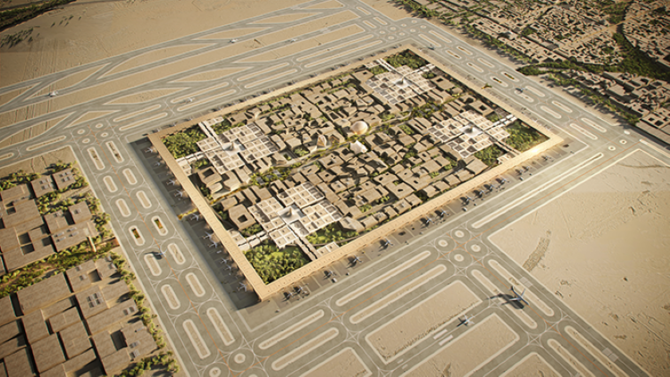
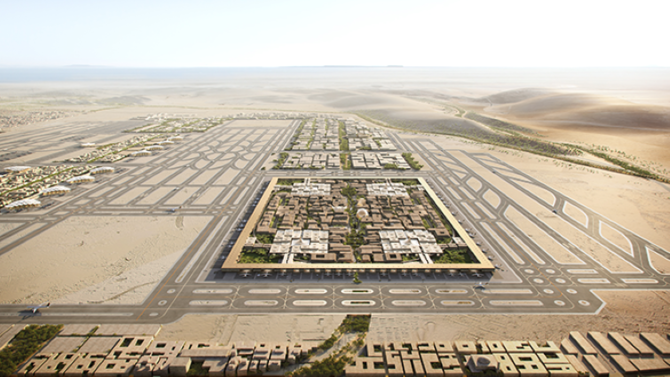
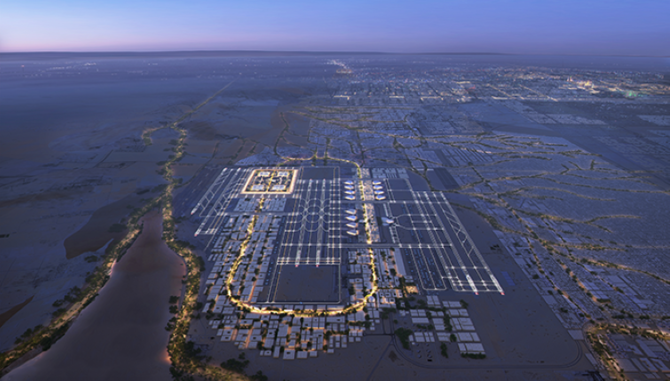
Saudi Arabia has announced that Riyadh Expo 2030 will be held near KSIA, making the exhibition easily accessible for visitors arriving at the airport. (PIF)
2 / 9
Saudi Arabia has announced that Riyadh Expo 2030 will be held near KSIA, making the exhibition easily accessible for visitors arriving at the airport. (PIF)
3 / 9
Saudi Arabia has announced that Riyadh Expo 2030 will be held near KSIA, making the exhibition easily accessible for visitors arriving at the airport. (PIF)
4 / 9
Saudi Arabia has announced that Riyadh Expo 2030 will be held near KSIA, making the exhibition easily accessible for visitors arriving at the airport. (PIF)
5 / 9
Saudi Arabia has announced that Riyadh Expo 2030 will be held near KSIA, making the exhibition easily accessible for visitors arriving at the airport. (PIF)
6 / 9
Saudi Arabia has announced that Riyadh Expo 2030 will be held near KSIA, making the exhibition easily accessible for visitors arriving at the airport. (PIF)
7 / 9
Saudi Arabia has announced that Riyadh Expo 2030 will be held near KSIA, making the exhibition easily accessible for visitors arriving at the airport. (PIF)
8 / 9
Saudi Arabia has announced that Riyadh Expo 2030 will be held near KSIA, making the exhibition easily accessible for visitors arriving at the airport. (PIF)
9 / 9
Saudi Arabia has announced that Riyadh Expo 2030 will be held near KSIA, making the exhibition easily accessible for visitors arriving at the airport. (PIF)
Short Url
Updated 23 September 2023
Follow

How Riyadh’s new King Salman International Airport will provide hassle-free, seamless connectivity with the world 

  • One of the world’s largest and most sustainable airports, KSIA will attract more tourists and investors
  • Officials aim to accommodate 120 million travelers by 2030 and process 3.5 million tons of cargo by 2050

JEDDAH: The under-construction Riyadh-based King Salman International Airport, one of the world’s newest, largest, and most sustainable airports, will be the first thing to impress visitors to the World Expo 2030 that Saudi Arabia has presented a bid to host.

According to the Public Investment Fund, the project, announced by Crown Prince Mohammed bin Salman on Nov. 28, 2022, is expected to cover an area of approximately 57 sq. km, allowing six parallel runways and including the existing terminals named after King Khalid.

PIF added that the airport will also include 12 sq. km of airport support facilities, residential and recreational facilities, retail outlets, and other logistics real estate.

“The airport aims to accommodate up to 120 million travelers by 2030 and 185 million travelers, with the capacity to process 3.5 million tons of cargo, by 2050,” PIF said in its statement.

Saudi Arabia has announced that Riyadh Expo 2030 will be held near KSIA, making the exhibition easily accessible for visitors arriving at the airport. Within minutes, they can reach the exhibition site by using the Riyadh Metro network.

The renewable energy-powered airport, which will include an integrated logistics special zone, will not only be a gateway for the Expo 2030 visitors if Saudi Arabia wins the bid but also to major projects of the capital city ‎such as Riyadh Sports Boulevard, King Salman Park, Diriyah Gate and Qiddiya Amusement Park.

Dr. Abdullah bin Ahmed Al-Maghlouth, member of the Saudi Economic Association, told Arab News that the establishment of KSIA will be Riyadh’s gateway to the world. 

“It is an economic project with a double economic value, which will resonate in all cities of the Kingdom, as many research studies have confirmed the close interdependence between the services airports provide and regional development,” he said. 

Al-Maghlouth added: “The more passengers, flights and cargo transport, the higher the gross domestic product, wages and incomes become. They encourage the growth of the city, build more hotels and restaurants, provide more services and express transportation to accommodate visitors and tourists.”

Furthermore, he pointed out that Riyadh is a large city witnessing steady growth in business movement and attracting the headquarters of the largest regional companies.

“Riyadh’s population is also expected to exceed 15 million individuals in 2030, and the city has proven its ability to attract visitors and tourists from all over the world as it is home to the largest entertainment festivals globally. KSIA will support the tourism and entertainment sectors and will encourage the opening of more facilities, shops and logistics,” he explained.

The economic expert went on to say that Saudi Arabia also stands to gain financially from the new airport.

“The airport’s revenues are expected to reach nearly SR27 billion [$7.2 billion] per year, which will add to the country’s non-oil economy, as Saudi Arabia seeks through its Vision 2030 to elevate its non-oil income,” Al-Maghlouth said.

He concluded that Riyadh, as an investment destination, is expected to attract more investors and tourists through this airport.

KSIA will help drive annual passenger traffic in Saudi Arabia from the current 29 million to 120 million travelers by 2030 and 185 million by 2050, with aircraft traffic in the Kingdom increasing from 211,000 to more than 1 million flights per year.

With sustainability at its core, the new airport will achieve LEED Platinum certification by incorporating cutting edge green initiatives into its design and will be powered by renewable energy, according to the Saudi Press Agency.

The SPA report added it will become an aerotropolis centered around a seamless customer journey, world-class efficient operations, and innovation. 

Decoder

King Salman International Airport

Now under construction, King Salman International Airport (KSIA) in Riyadh is envisioned to become one of the world's largest and most sustainable airports, covering an area of approximately 57 square kilometers. It will have six parallel runways including the existing terminals of King Khalid International Airport (KKIA). Once completed, the project, backed by the Kingdom's Public Investment Fund, is expected to accommodate up to 120 million travelers by 2030 and 185 million travelers by 2050.


Saudi POS transactions see 20% surge to hit $4bn: SAMA

Updated 05 December 2025
Follow

Saudi POS transactions see 20% surge to hit $4bn: SAMA

RIYADH: Saudi Arabia’s total point-of-sale transactions surged by 20.4 percent in the week ending Nov. 29, to reach SR15.1 billion ($4 billion).

According to the latest data from the Saudi Central Bank, the number of POS transactions represented a 9.1 percent week-on-week increase to 240.25 million compared to 220.15 million the week before.

Most categories saw positive change across the period, with spending on laundry services registering the biggest uptick at 36 percent to SR65.1 million. Recreation followed, with a 35.3 percent increase to SR255.99 million. 

Expenditure on apparel and clothing saw an increase of 34.6 percent, followed by a 27.8 percent increase in spending on telecommunication. Jewelry outlays rose 5.6 percent to SR354.45 million.

Data revealed decreases across only three sectors, led by education, which saw the largest dip at 40.4 percent to reach SR62.26 million. 

Spending on airlines in Saudi Arabia fell by 25.2 percent, coinciding with major global flight disruptions. This followed an urgent Airbus recall of 6,000 A320-family aircraft after solar radiation was linked to potential flight-control data corruption. Saudi carriers moved swiftly to implement the mandatory fixes.

Flyadeal completed all updates and rebooked affected passengers, while flynas updated 20 aircraft with no schedule impact. Their rapid response contained the disruption, allowing operations to return to normal quickly.

Expenditure on food and beverages saw a 28.4 percent increase to SR2.31 billion, claiming the largest share of the POS. Spending on restaurants and cafes followed with an uptick of 22.3 percent to SR1.90 billion.

The Kingdom’s key urban centers mirrored the national decline. Riyadh, which accounted for the largest share of total POS spending, saw a 14.1 percent surge to SR5.08 billion, up from SR4.46 billion the previous week. The number of transactions in the capital reached 75.2 million, up 4.4 percent week-on-week.

In Jeddah, transaction values increased by 18.1 percent to SR2.03 billion, while Dammam reported a 14 percent surge to SR708.08 million.

POS data, tracked weekly by SAMA, provides an indicator of consumer spending trends and the ongoing growth of digital payments in Saudi Arabia. 

The data also highlights the expanding reach of POS infrastructure, extending beyond major retail hubs to smaller cities and service sectors, supporting broader digital inclusion initiatives. 

The growth of digital payment technologies aligns with the Kingdom’s Vision 2030 objectives, promoting electronic transactions and contributing to the nation’s broader digital economy.