

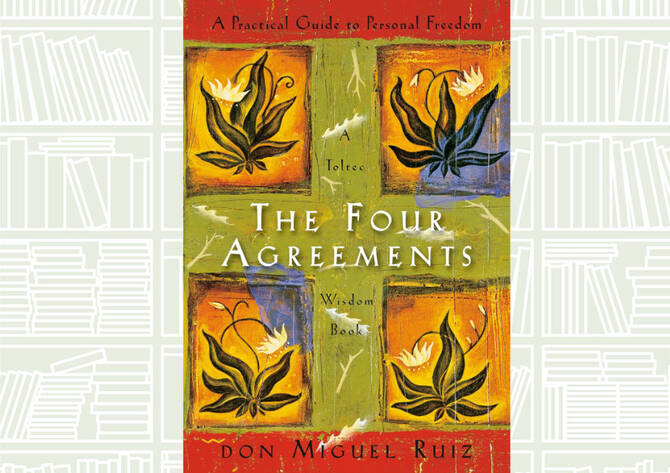

In “The Four Agreements,” Don Miguel Ruiz presents a compact guide to personal freedom rooted in Toltec tradition, focusing less on abstract philosophy and more on the everyday habits that shape how we think, speak and relate to others.
In this book, the “Toltec code” is basically Ruiz’s name for four simple rules to reduce stress and misunderstandings and feel more in control of your own life.
The book opens by describing how people are domesticated by social expectations and internalized rules, creating a kind of mental fog that can keep us stuck in self-judgment and misunderstanding.
The clearest strength of the book is its simplicity. Ruiz organizes his message around four agreements that function like practical guidelines rather than complicated self-help formulas.
The first, “be impeccable with your word,” stood out to me because it treats language as a real source of power, something that can either create confidence and trust or quietly destroy them through negativity, gossip or harsh self-talk.
I also appreciated how “impeccable” is framed less as moral perfection and more as refusing to use words against yourself.
The second agreement, “don’t take anything personally,” offers a useful shift in perspective by reminding readers that other people’s reactions often reflect their own experiences and beliefs.
That idea connects naturally to “don’t make assumptions,” which shows how quickly relationships can unravel when we fill in blanks instead of communicating clearly and asking questions.
The fourth agreement, “always do your best,” is a grounding conclusion, emphasizing that your best changes depending on your energy and circumstances, and that effort without constant self-punishment is what builds consistency.
While the tone can feel repetitive, the repetition reinforces the core principles and makes them easier to apply.
Ultimately, “The Four Agreements” works best as a straightforward guide for readers who want calmer self-talk, clearer communication and a more intentional way of moving through daily life.


