

Saudi authorities brief UNESCO World Heritage Committee on bid to host World Expo 2030

1 / 3
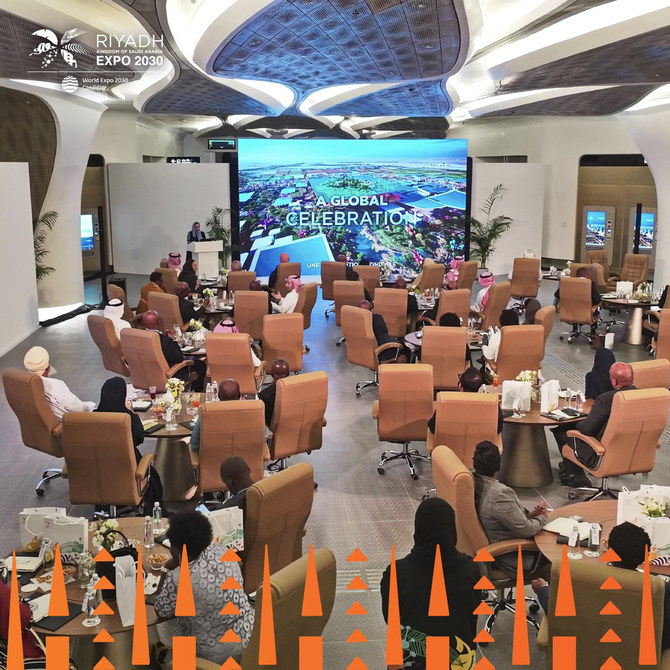
The reception was held on the sidelines of the Kingdom’s hosting of the meeting of the World Heritage Committee in Riyadh in its capacity as the current chair of the UNESCO World Heritage Committee. (X: @Riyadh_Expo2030)
2 / 3
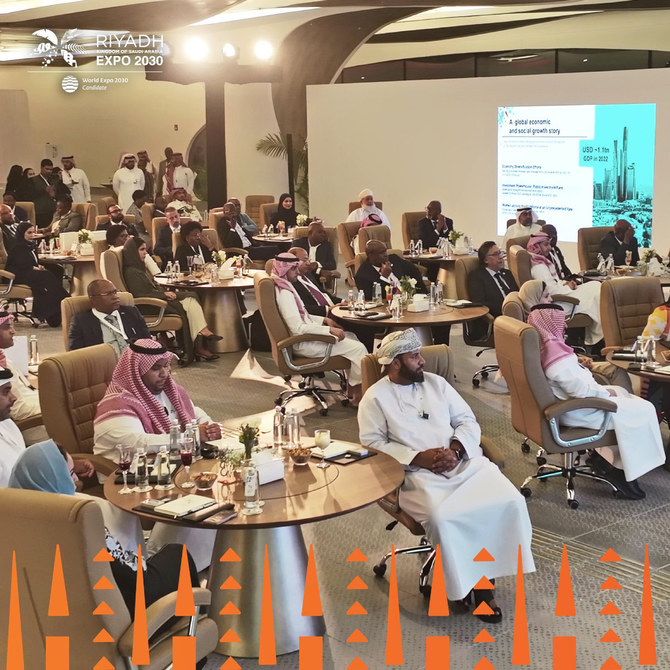
The reception was held on the sidelines of the Kingdom’s hosting of the meeting of the World Heritage Committee in Riyadh in its capacity as the current chair of the UNESCO World Heritage Committee. (X: @Riyadh_Expo2030)
3 / 3
The reception was held on the sidelines of the Kingdom’s hosting of the meeting of the World Heritage Committee in Riyadh in its capacity as the current chair of the UNESCO World Heritage Committee. (X: @Riyadh_Expo2030)
Short Url
Updated 23 November 2023
Follow

Saudi authorities brief UNESCO World Heritage Committee on bid to host World Expo 2030

  • Riyadh is ‘fully prepared’ to host the international exhibition, panel hears

RIYADH: The Royal Commission for Riyadh City held a reception for UNESCO World Heritage Committee members and briefed them on the Kingdom’s bid to host World Expo 2030 in the capital, Riyadh, the Saudi Press Agency reported on Friday.

Abdulaziz Alghannam, the technical director of the Riyadh Expo 2030 bid, said: “Riyadh Expo 2030 is part of the Kingdom’s endeavor to enable all countries to make an impact on the international scale, with the aim of creating a bright future for the planet under the theme ‘Together for a Foresighted Tomorrow.’”

Alghannam said that the “three sub-themes of Riyadh Expo 2030 represent the Kingdom’s vision to present the most impactful World Expo ever, collaborating for a better future, where ‘Prosperity for All’ seeks to achieve a prosperous and a peaceful planet in which science and innovation are accessible to all.”

He said that the sub-theme of ‘Climate Action’ promoted creative solutions to climate change by uniting international efforts, while ‘A Different Tomorrow’ sought to harness science, innovations and technologies to develop new tools for individuals and societies.
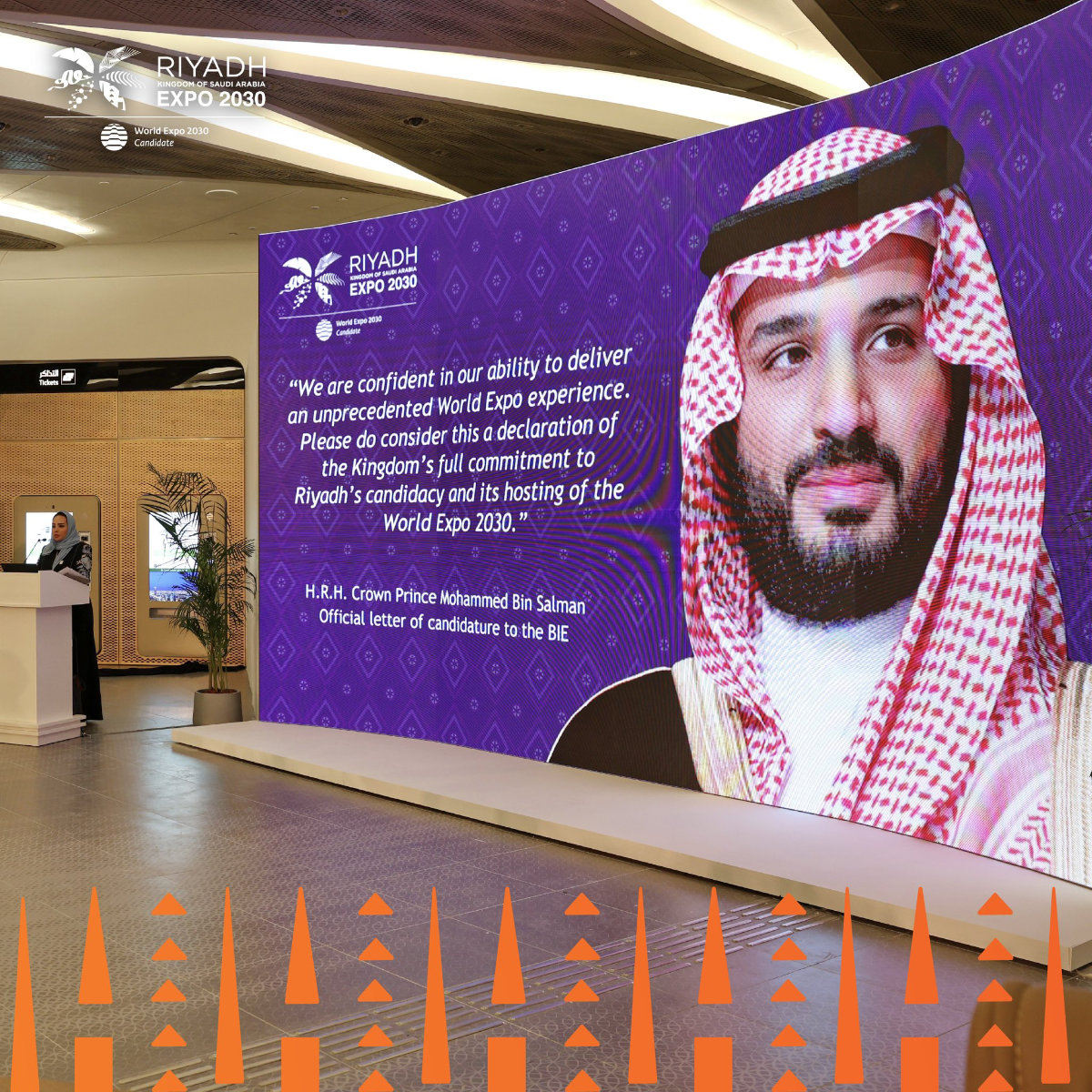


A picture of Saudi Arabia's Crown Prince Mohammed bin Salman is shown during the reception for the UNESCO World Heritage Committee in Riyadh. (X: @Riyadh_Expo2030)

Inspired by Saudi Vision 2030, Alghannam said: “Riyadh Expo 2030 pays great attention to the Kingdom’s civilization, rich heritage, ancient traditions, and cultural treasures, which we would be proud to showcase to visitors through immersive experiences.”

Alghannam said that the capital was “fully prepared to host the international exhibition and present the most impactful and unprecedented edition in the history of World Expo.”

The members of the UNESCO World Heritage Committee were briefed about the Kingdom’s ambitious goals for Riyadh Expo 2030 and the major development projects that will be ready by 2030.

They were also briefed on Riyadh Expo 2030’s sustainability plans, including clean energy, high standards of resource efficiencies, and detailed strategies to enhance and conserve biodiversity, eliminate food wastage, and green waste management and recycling.

The RCRC reception was held on the sidelines of the Kingdom’s hosting of the meeting of the World Heritage Committee in Riyadh from Sept. 10-25, in its capacity as the current chair of the UNESCO World Heritage Committee.


Riyadh philosophy forum explores relationship between beauty, wisdom

Updated 4 sec ago
Follow

Riyadh philosophy forum explores relationship between beauty, wisdom

  • John Armstrong emphasizes how aesthetic experience deepens human understanding and self-awareness
  • Sessions explored Eastern and Western philosophies, ethical frameworks, and the roots of philosophical thought

RIYADH: A panel discussion titled “The Future of Beauty,” presented by John Armstrong at the fifth Riyadh International Philosophy Conference, highlighted the deep connection between beauty and wisdom and the role of aesthetic experience in shaping human self-awareness and understanding of the world.

The three-day event, organized by the Literature, Publishing and Translation Commission from Dec. 4–6 under the theme “Philosophy Between East and West: Concepts, Origins, and Mutual Influences,” explored the roots and development of Eastern and Western philosophies.

It also examined their mutual influences and contemporary perspectives that enrich intercultural dialogue, the Saudi Press Agency reported.

Held at the King Fahd National Library, this year’s edition examined how philosophical traditions evolve and interact across cultures. The event attracted a distinguished audience of thinkers, researchers, and philosophy enthusiasts from Saudi Arabia and abroad.

Armstrong described beauty as a human experience rooted in simple forms — such as the curves of sand dunes or the lines of a wooden table.

He noted that “beauty exists within us as much as in the world around us,” referencing English philosopher Roger Scruton’s view of beauty as the subtle harmony found in natural and man-made objects.

Armstrong emphasized that contemplating beauty activates a cognitive process that deepens life understanding, calling the aesthetic experience “a gateway to life’s wisdom.”

The opening day featured in-depth discussions on the nature and methods of philosophizing in Eastern and Western traditions, exploring concepts such as mimesis, existence, and philosophical distance, and their roles in shaping meaning and schools of thought.

Sessions also traced the roots of philosophy in ancient civilizations, Greek thought, and Eastern traditions, reaffirming that the question of origins remains central to understanding how philosophical concepts evolved into the modern era.

Other sessions examined the relationship between philosophy, the absolute, and ethics; shifts in contemporary thought; and the need to reintegrate philosophy into a unified epistemic framework that can interpret the complexities of modern reality.

Participants discussed the essence of philosophizing across theoretical and practical dimensions, the importance of methodological tools for generating concepts and analyzing problems, and the future of philosophy education in the Arab world and its role in fostering critical thinking.

On the second day, the conference examined intersections between Eastern and Greek philosophies and the renewed global interest in Eastern thought since the 1970s.

It also highlighted the influence of Ibn Sina and the Qur’anic dialogical tradition as philosophical models for constructing meaning and forming logical arguments.

Participants engaged with theories of communicative action, frameworks of justice and respect in dialogue, and the role of the Arabic language in shaping concepts, developing terminology, and structuring philosophical discourse.

The final day featured broad discussions on philosophical interactions between East and West in the modern era and the transformations shaping today’s philosophical landscape.

Sessions covered topics such as geophilosophy, building intellectual bridges, and the relationship between children’s literature and philosophy. Additional panels examined intellectual coexistence, shared language across schools of thought, and how Eastern and Western philosophies address contemporary issues.

The conference also hosted a series of philosophical debates featuring students from Saudi universities, offering three days of thoughtful dialogue and rich intellectual exchange.

Participants presented an inspiring model for the future of philosophy in the Kingdom, marked by critical insight and a sincere pursuit of meaning.

The debates concluded with a final competition on the closing day, where the winning team was honored by the commission’s CEO Abdullatif Al-Wasel, reflecting the commission’s commitment to supporting and empowering young talent.

The conference offered workshops on philosophical argumentation, modern epistemic challenges, and ways to draw on philosophical heritage to shape contemporary intellectual visions. These sessions provided specialists and enthusiasts with practical training to bring philosophy from theory into practice.

The event hosted 60 speakers, philosophers, thinkers, and researchers from around the world, along with more than 40 dialogue sessions exploring the roots and development of philosophical thought.