

Pakistani musician Bilal Maqsood launches online puppet show for children 

Musician Bilal Maqsood addresses the audience at the launch of his puppet show, Pakkay Dost, at the Arts Council of Pakistan in Karachi on September 1, 2023. (Photo courtesy: ACP)
Short Url
Updated 02 September 2023
Follow

Pakistani musician Bilal Maqsood launches online puppet show for children 

  • Titled ‘Pakkay Dost’, the four-episode show features eight skits and 13 songs 
  • The show aims to provide local content to Pakistani children in Urdu language 

KARACHI: Famed Pakistani musician Bilal Maqsood on Friday launched an online puppet show, ‘Pakkay Dost,’ for Pakistani children, saying the show uses “humor” to educate kids in a fun way. 

Maqsood co-founded popular Pakistani pop rock band ‘Strings’ that ended its 33-year run in March 2021. Since then, the 52-year-old has been working on creating content for kids, an idea he says has been on his mind “for the longest time.” 

Last year, Maqsood created a few poems for children but that was more of a commercial venture. His latest production for Pakistani children has been released on his YouTube channel. 

Speaking at the show’s launch in Karachi, the musician said the fact that there were no songs for children in the Urdu language had troubled him since the birth of his son, Mikail, who is now aged 26. 

“This was my life-long passion project. When Mikael, my first son, was born, I used to wonder why don’t we have songs for children in Urdu,” Maqsood said at the launch. 
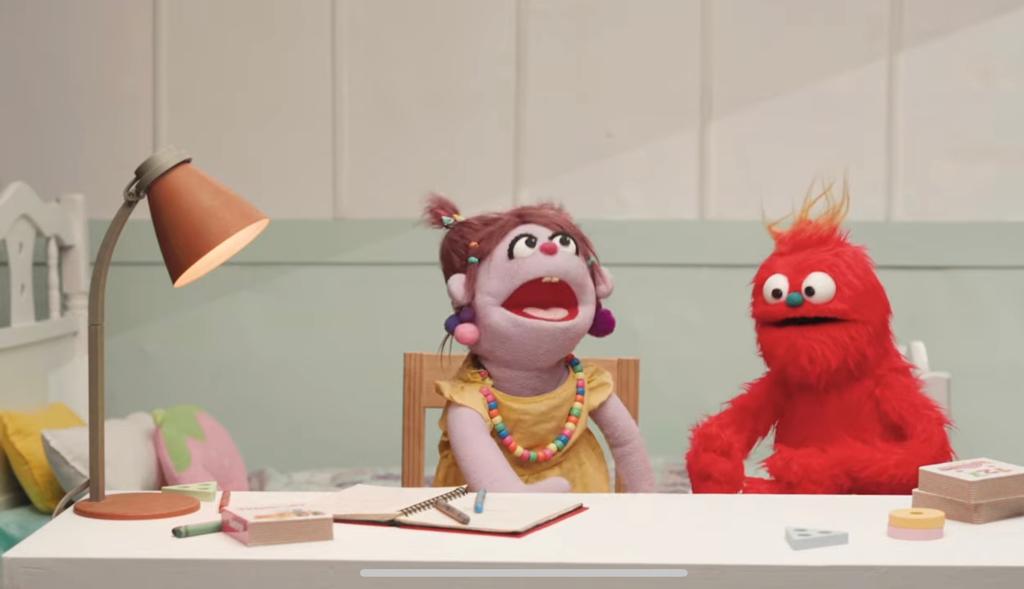


The screen grab taken on September 2, 2023, features characters Miraal and Laal Baig from children's puppet show, Pakkay Dost. (Photo courtesy: Pakkay Dost/YouTube)

“We grew up listening to Sohail Rana’s music. Even today, when we hear his songs, it takes us back to our childhood. These songs keep us connected to our values and our culture. But when my kids were growing up, there wasn’t any such thing. They instead listened to Sesame Street, Mary Poppins.” 

In the mid-70s, Pakistan’s state TV aired the children’s show ‘Kaliyan’ that featured famed puppet character Uncle Sargam, created and voiced by award-winning puppeteer and television director Farooq Qaiser. 

To date, Uncle Sargam and Maasi Museebtay are regarded as Pakistan’s legendary puppet duo, but the South Asian country has hardly ever produced a similar show again. 

Pakkay Dost is based on four episodes, each averaging a 15-minute duration and exploring “diverse” themes, according to Maqsood. 

The show includes a total of eight skits and 13 songs for children, ranging from education (alphabets, names of days) to life lessons, while a team of more than 100 people worked on the project that features six key characters. 

“There is a bit of fun and message but the engine the show is riding on is humor so that children learn and enjoy at the same time,” said Maqsood, who has already started working on the second season of the show. 

To create Pakkay Dost, Maqsood said, he studied Disney and Sesame Street songs in order to understand the “science behind it.” He said he wanted to create local content with a “foreign sound” and in three months, he developed a range of characters together with Canada-based puppet-maker Allison Ewert that suited his songs and vision. 

For the art direction, Maqsood got the husband-and-wife duo of Umer Adil and Beenish Umer on-board, who have a three-year-old daughter. 

“Our audience was at home. We have a three-year-old daughter. When we started working, she was one and starting to talk. She started picking up Urdu language words and we gauged what she resonated with,” Adil told Arab News. 

“So many things in Pakkay Dost are inspired from kids and only parents can understand that. The idea is to fill the major gap that’s there in kids’ content. Puppet shows are our legacy that we wish to carry forward so that it is visible in the new-age media.” 

Sarwat Gilani, an actor and a mother of two, also attended the launch, where she praised the show for focusing on children and adults alike. 

“As a mother, it is very tough for me to teach Urdu alphabets to kids. But teaching Urdu alphabets through this in the form of a rhyme, mothers will thank Bilal for this. I hope it gets the kind of attention that it truly deserves,” she told Arab News. 

“I would suggest all parents to google and to watch Pakkay Dost with their kids and entire family. The best part about this is, it has talked about friendship, values and things that we as adults also face in Pakistan.” 


Pakistan minister calls for integrating ocean awareness into education to preserve ecosystems

Updated 5 sec ago
Follow

Pakistan minister calls for integrating ocean awareness into education to preserve ecosystems

  • Pakistan’s maritime sector posted a record $360 million profit in 2025 following a year of sweeping reforms
  • Junaid Anwar Chaudhry says education equips youth to make informed decisions, contribute to blue economy

KARACHI: Pakistan’s Maritime Affairs Junaid Anwar Chaudhry has urged integrating ocean awareness into formal education systems and empowering youth as active partners in order to preserve marine ecosystems, his ministry said on Saturday.

Chaudhry said this at a meeting with Minister of State for Education and Professional Training, Wajiha Qamar, who called on him and discussed strategies for enhancing marine education, literacy, and youth engagement in sustainable ocean management.

Pakistan’s maritime sector posted a record Rs100 billion ($360 million) profit in 2025 following a year of sweeping reforms aimed at improving port efficiency, cost-cutting, and safeguarding marine ecosystems to boost the blue economy.

“Understanding our oceans is no longer optional, it is essential for climate resilience, sustainable development, and the long-term health of our maritime resources,” Chaudhry said, highlighting the critical role of marine literacy.

The minister said education equips youth to make informed decisions and actively contribute to marine conservation and the blue economy, urging inclusion of marine ecosystems, conservation and human-ocean interactions into curricula, teacher training and global citizenship programs.

“Initiatives like ‘Ocean Literacy for All’ can mainstream these elements in national policies, school programs, and community workshops to build proactive citizenship on marine challenges,” he added.

Ocean Literacy for All is a UNESCO Intergovernmental Oceanographic Commission–coordinated global initiative under the UN Ocean Decade (2021–2030) that promotes ocean awareness, education, and conservation.

Chaudhry announced reforms in maritime education, including granting degree-awarding status to the Pakistan Marine Academy, and the establishment of the Maritime Educational Endowment Fund (MEEF) to provide scholarships for deserving children from coastal communities.

“The scholarship program promotes inclusive development by enabling access to quality education for youth from over 70 coastal and fishing communities, particularly in Sindh and Balochistan,” he said.

The discussions underscored raising awareness about oceans, coastal ecosystems and marine resources, according to the Pakistani maritime affairs ministry. Both ministers stressed the need to integrate climate and marine education from classrooms

to community programs, addressing risks like rising sea temperatures, coastal erosion, biodiversity loss and pollution.

“Incorporating marine science and ocean literacy into curricula can help students connect local challenges with global trends,” Qamar said, underscoring education’s transformative power in building social resilience.

The meeting explored translating complex marine science into accessible public knowledge through sustained, solution-oriented awareness campaigns, according to the maritime affairs ministry.

With coastline facing pressures from climate change, pollution, and overexploitation, the ministers called for a coordinated approach blending formal education, informal learning and youth-led advocacy.

“A joint effort by the Ministries of Maritime Affairs and Education can cultivate an ocean-literate generation, transforming vulnerability into resilience and ensuring the long-term sustainability of coastal and marine ecosystems,” Chaudhry said.