

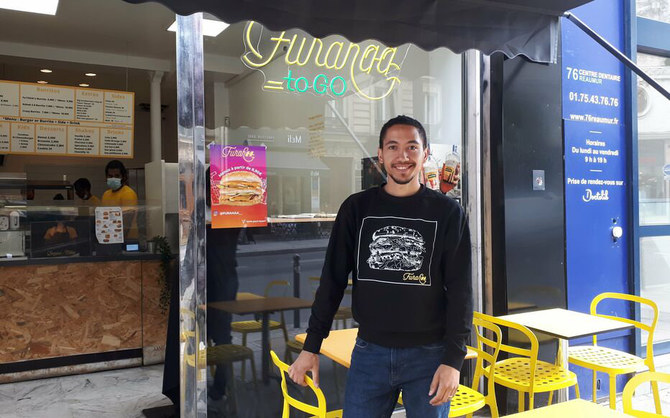

RIYADH: After making waves in France, Furahaa, famous for its delectable vegan menu, is sizzling its way into the heart of Saudi Arabia through a savory partnership with food delivery app HungerStation.
The expansion, promoted by Prince Khaled Alwaleed bin Talal’s investment firm KBW Ventures on social media, aims to tantalize taste buds of food lovers in Saudi Arabia with a range of plant-based options.
Founded in 2015 by entrepreneur Arthur Devillers, Furahaa’s Middle Eastern debut is a result of the support of Prince Khaled.
The French fast-food sensation’s venture into Saudi Arabia embodies both innovation and adaptability.
In an exclusive interview with Arab News, Devillers shared his company’s future course of action and revealed a vision that extends beyond virtual kitchens.
“We are considering one of Riyadh’s shopping centers to accommodate our customers on-site before the end of this year, 2023,” he said.

Furahaa’s launch through Hunger- Station echoes the demand for diverse and high-quality choices in the local market. (Supplied)
The plant-based brand plans to expand its presence to other Saudi cities in the coming years and aims to ensure its presence in Dubai before COP28 to captivate the region’s culinary enthusiasts.
In a market known for its unique preferences, Furahaa is not just entering but embracing the challenge. Outlining his company’s strategic approach, Devillers said: “We are adjusting our strategy to optimize pricing. Our goal is to offer a menu priced at SR45 ($12), an amount we see as both competitive and socially fair.”
This pricing strategy underscores Furahaa’s commitment to making quality plant-based options accessible to a wider audience, reflecting a harmony between taste and affordability.
Furahaa’s innovative spirit doesn’t stop at pricing. The company is keen on winning the hearts, or should we say stomachs, of the local population with its upcoming addition—a “chicken shawarma” option that stays true to their 100 percent vegan commitment while embracing the regional flavors.
Devillers’ plans are based on extensive research of the Saudi market. “Riyadh, with its population nearing 8 million, presents vast potential,” the entrepreneur told Arab News.
Beyond market research, he also succeeded in sourcing all products from local vendors. “Upon my arrival in Saudi Arabia, the challenges in sourcing 100 percent vegan products escalated. However, in a mere span of eight days, through sheer dedication and relentless effort, not only did I manage to secure essential products for Furahaa, but I also acquired them exclusively from Saudi distributors.”
Furahaa’s launch through HungerStation echoes the demand for diverse and high-quality choices in the local market.
Prince Khaled bin Alwaleed’s backing of Furahaa through KBW Ventures has been instrumental in the company’s journey. “Prince Khaled bin Alwaleed’s support, and that of KBW Ventures, as our investor since 2021 has been very helpful to us; he believes in Furahaa’s vision and mission,” acknowledged Devillers. This partnership is emblematic of the growing collaboration between innovative startups and visionary investors in the sustainable food sector.

Prince Khaled Alwaleed bin Talal, KBW Ventures founder and CEO. (Supplied)
KBW Ventures is known for its focus on sustainable and innovative ventures with a portfolio that includes other prominent players in the plant-based and food innovation sector, such as BlueNalu and Upside Foods.
Earlier this year, it reinvested in Rebellyous Foods’ initial Series A commitment, raising a $9.5 million equity round to build on its groundbreaking manufacturing technology for plant-based meats.
Beyond taste, Furahaa’s mission extends to fostering an inclusive job market. Prince Khaled bin Alwaleed praised Furahaa’s employment of team members with hearing impairment in its French operations, describing it as a global example for everybody to follow.
“An inclusive job market is key to wealth creation, it’s key to flourishing SMEs, it’s key to the launch of micro-enterprises that later evolve into startups that later employ more and more people,” noted Prince Khaled.
“We use the same criteria for all business models — we are sector agnostic and location agnostic,” explained KBW Ventures CEO.
This approach emphasizes the pivotal role of transformative ideas and dynamic founding teams in shaping successful business ventures. “We’re looking to invest in powerful ideas that make powerful, scalable business models. We look very closely at the founding team; team holds a lot of weight for us. Can the founders take this to the next level? A lot of our investments are early stage so this is a crucial question,” he added.
Prince Khaled also shed light on KBW Ventures’ commitment to offering comprehensive support to its portfolio companies. “We extend every support function to all of our portfolio companies,” he stated, illustrating the firm’s dedication to nurturing growth and innovation across diverse sectors.
Offering advice to aspiring entrepreneurs in the Middle East and North Africa, Prince Khaled said: “You need to treat every country as its own specific case scenario. What works in Saudi (Arabia) won’t work in Morocco, and vice versa.”
A tailored approach, combined with a deep understanding of local dynamics and collaboration with local talent, forms the bedrock for success.
After its inception, it did not take time for Furahaa in gaining recognition for its commitment to inclusivity and its vegan offerings. The company received the “Favorite Establishment” award at the December 2021 French Snack & Sandwich Show.
Furahaa France has three subsidiaries — a fast-food dining restaurant Furahaa, as well as ViVeg, a vegan cheese producer, and PlantB2B, which distributes 100 percent plant-based and gourmet products for professionals.
As the company tantalizes taste buds and promotes sustainability on a plate, it sets the stage for a future where culinary diversity and conscious choices converge to shape the gastronomic landscape.


