

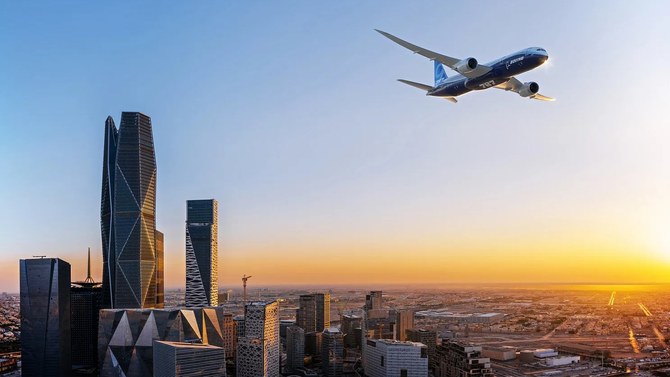
Saudi startup FlyAkeed secures $15.2m in a series A funding  

The funding injection comes as part of FlyAkeed’s strategic expansion thrust aimed at strengthening its presence in Saudi Arabia and the Gulf Cooperation Council countries. File
Short Url
Updated 23 August 2023
Follow

Saudi startup FlyAkeed secures $15.2m in a series A funding  

RIYADH: In recognition of a robust venture ecosystem and a growing aviation sector, Saudi Arabia’s travel technology startup FlyAkeed has secured $15.2 million in a series A funding round.  

The financing was led by Sanabil Investments, a subsidiary of the Public Investment Fund, and saw contributions from Elm Co., Artal Capital, and Al Rajhi Partners, according to venture news platform Jawlah. 

Founded in 2017, FlyAkeed’s platform integrates corporate travel policies, offering automated approval systems and enabling centralized management of employee bookings.  

FlyAkeed CEO Bassam Al-Mohammadi stated that the series A funding round is a pivotal moment in the company’s growth trajectory.   

“This significant financial milestone enables us to continue refining our current offerings while innovating new solutions that contribute to effective and satisfying travel experiences for both individual travelers and corporate travel managers,” said Al-Mohammadi.  

The funding injection comes as part of FlyAkeed’s strategic expansion thrust aimed at strengthening its presence in Saudi Arabia and the Gulf Cooperation Council countries. 

The capital infusion will also be directed toward the development of fintech solutions aimed at elevating user experiences for travelers while aiding corporations with cost-management tools for business trips. 

Al-Mohammadi added: “We aim to offer them a seamless and cost-effective experience. We will also work to empower our suppliers and service providers in the tourism and travel sectors with the products and tools that contribute to the flourishing of tourism in the Kingdom and achieving Vision 2030.” 

Moreover, a spokesperson from Sanabil Investments commended FlyAkeed for addressing the fundamental inefficiencies often associated with administrative tasks in corporate travel, affirming its full support for the firm’s future endeavors.   

A representative from Elm Co. stressed the alignment of FlyAkeed’s offerings with its strategic goal of driving innovation in key market segments.   

Saudi Arabia’s focus on nurturing entrepreneurship is yielding tangible results, as evidenced by startups in the Kingdom raising $446 million in the first half of 2023. 

This figure places Saudi Arabia at the forefront of the Middle East and North Africa region, with a particular emphasis on the venture capital landscape. 

According to the Dubai-based data analytics platform MAGNiTT, the Kingdom ranked second in terms of deal counts, facilitating 54 transactions compared to the UAE’s 60. 


EU investments in Saudi Arabia to prosper over next 5 years, says ambassador

Updated 8 sec ago
Follow

EU investments in Saudi Arabia to prosper over next 5 years, says ambassador

RIYADH: European investments in Saudi Arabia are set to see notable growth over the next five years, encompassing green energy, metals, critical raw materials, advanced industry, and the digital sector.

Christophe Farnaud, the EU Ambassador to Saudi Arabia, confirmed to Al-Eqtisadiah that an anticipated memorandum of understanding with the Kingdom in the energy field will provide an organized framework for cooperation in energy transition and sustainability, boosting investor confidence in the long-term partnership between the two sides.

The volume of trade in goods and services between Saudi Arabia and the EU amounts to €90 billion ($105.6 billion), according to the latest data from 2024, making the EU the Kingdom’s second-largest trading partner, according to Farnaud. 

Currently, 2,500 European companies operate within the Saudi market, highlighting the depth of economic relations between the two sides.

A qualitative development in relations

Farnaud affirmed that Saudi-European relations are witnessing qualitative development, especially since the EU’s adoption in 2022 of its strategy towards Gulf Cooperation Council countries, which is based on enhancing political, security, and economic cooperation, in addition to cultural and humanitarian exchange. 

He noted that Saudi Arabia’s Vision 2030 constitutes an attractive framework for strengthening this partnership.

The ambassador also pointed out that the launch of the European Chamber of Commerce in the Kingdom of Saudi Arabia during 2024 represented an important step to support cooperation between European and Saudi companies and enhance mutual investments, reflecting a positive outlook for the future of economic relations. 

Economic relations are no longer limited to traditional trade exchange but have transformed into a multi-sector partnership, including investment, services, manufacturing, energy, and sustainability, according to Farnaud.

Christophe Farnaud, the EU Ambassador to Saudi Arabia meeting Crown Prince Mohammed bin Salman in 2025. X/@EUAmbGCC

Relaunching Free Trade Agreement negotiations

The ambassador revealed ongoing discussions to relaunch negotiations for a Free Trade Agreement between the EU and GCC countries, which have been stalled since 2008, aiming to reach a modern agreement covering investment, services, intellectual property protection, technical standards, and government procurement.

He also indicated readiness to launch negotiations for a bilateral strategic partnership agreement with Saudi Arabia, including industrial cooperation, critical raw materials, energy, and sustainability, alongside working to sign a memorandum of understanding in the energy field in the coming period.

The EU, according to Farnaud, is the largest foreign investor in Saudi Arabia, holding 29 percent of the total foreign direct investment stock, which amounted to 30.7 billion euros in 2023. 

Investments are concentrated in the transport, energy, industry, tourism, education, and training sectors, with major European companies participating in strategic projects like the Riyadh Metro.

Sectors of common priority

The ambassador explained that the energy sector, especially renewable energy and green hydrogen, represents a common priority, amidst the global shift towards sustainability, in addition to significant opportunities in the high-tech manufacturing sector, industrial localization, and knowledge transfer.

He pointed to the growing interest of European investors in Saudi Arabia’s tourism sector, driven by Vision 2030’s targets to raise tourism’s contribution to the gross domestic product to 10 percent.

Wide opportunities stand out in areas of hospitality, tourist destination management, cultural tourism, transport, and sustainability, especially in major projects like NEOM, AlUla, the Red Sea Project, and Diriyah.

Farnaud cited existing partnerships with leading European companies such as Accor and Kempinski, in addition to French cooperation in developing AlUla as a global heritage and tourist site.