Iran says unblocked South Korea funds to be used for ‘non-sanctioned goods’

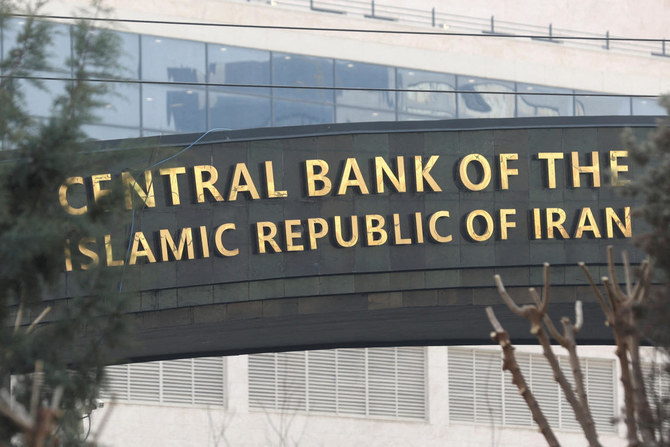
The sign of the Central Bank of the Islamic Republic of Iran is seen in Tehran, Iran. (File/Reuters)
Short Url
Updated 13 August 2023
Follow

Iran says unblocked South Korea funds to be used for ‘non-sanctioned goods’

  • Washington said there would be restrictions on what Iran could do with any funds unfrozen

LONDON: Iran’s central bank chief said on Saturday that all of Iran’s frozen funds in South Korea had been unblocked and would be used for “non-sanctioned goods.”
Mohammad Reza Farzin’s post on social media appeared to confirm comments a day earlier by Washington, which said there would be restrictions on what Iran could do with any funds unfrozen under an emerging deal that has led to the release of five Americans from prison to house arrest in Tehran.
White House spokesperson John Kirby said Iran could only access the funds “to buy food, medicine, medical equipment that would not have a dual military use.” An estimated $6 billion in Iranian assets have been held in South Korea.
The five Americans will be allowed to leave Iran once the funds are unfrozen, a source familiar with the matter told Reuters.
Farzin wrote in a post on messaging platform X, formerly known as Twitter, that the funds would be transferred to six Iranian banks in Qatar.
“Congratulations to the foreign exchange diplomacy team for successfully releasing seized foreign currency resources,” he said in the post.
He added that the costs of converting the funds from South Korea’s won currency to euros would be accepted by the “third country” where the money would be deposited to buy “non-sanctioned goods.”


US launches new retaliatory strikes against Daesh in Syria after deadly ambush

Updated 11 January 2026
Follow

US launches new retaliatory strikes against Daesh in Syria after deadly ambush

  • CENTCOM said operation ordered by President Donald Trump
  • Launched in response to the deadly Dec. 13 Daesh attack in Palmyra

WASHINGTON: The US has launched another round of retaliatory strikes against the Daesh in Syria following last month’s ambush that killed two US soldiers and one American civilian interpreter in the country.
The large-scale strikes, conducted by the US alongside partner forces, occurred around 12:30 p.m. ET, according to US Central Command. The strikes hit multiple Daesh targets across Syria.
Saturday’s strikes are part of a broader operation that is part of President Donald Trump’s response to the deadly Daesh attack that killed Sgt. Edgar Brian Torres-Tovar, Sgt. William Nathaniel Howard, and Ayad Mansoor Sakat, the civilian interpreter, in Palmyra last month.
“Our message remains strong: if you harm our warfighters, we will find you and kill you anywhere in the world, no matter how hard you try to evade justice,” US Central Command said in a statement Saturday.
A day earlier, Syrian officials said their security forces had arrested the military leader of Daesh’s operations in the Levant.
The US military said Saturday’s strikes were carried out alongside partner forces without specifying which forces had taken part.
The Trump administration is calling the response to the Palmyra attacks Operation Hawkeye Strike. Both Torres-Tovar and Howard were members of the Iowa National Guard.
It launched Dec. 19 with another large-scale strike that hit 70 targets across central Syria that had Daesh infrastructure and weapons.
The Kurdish-led Syrian Democratic Forces has for years been the US’s main partner in the fight against Daesh in Syria, but since the ouster of former Syrian President Bashar Assad in December 2024, Washington has increasingly been coordinating with the central government in Damascus.
Syria recently joined the global coalition against Daesh.